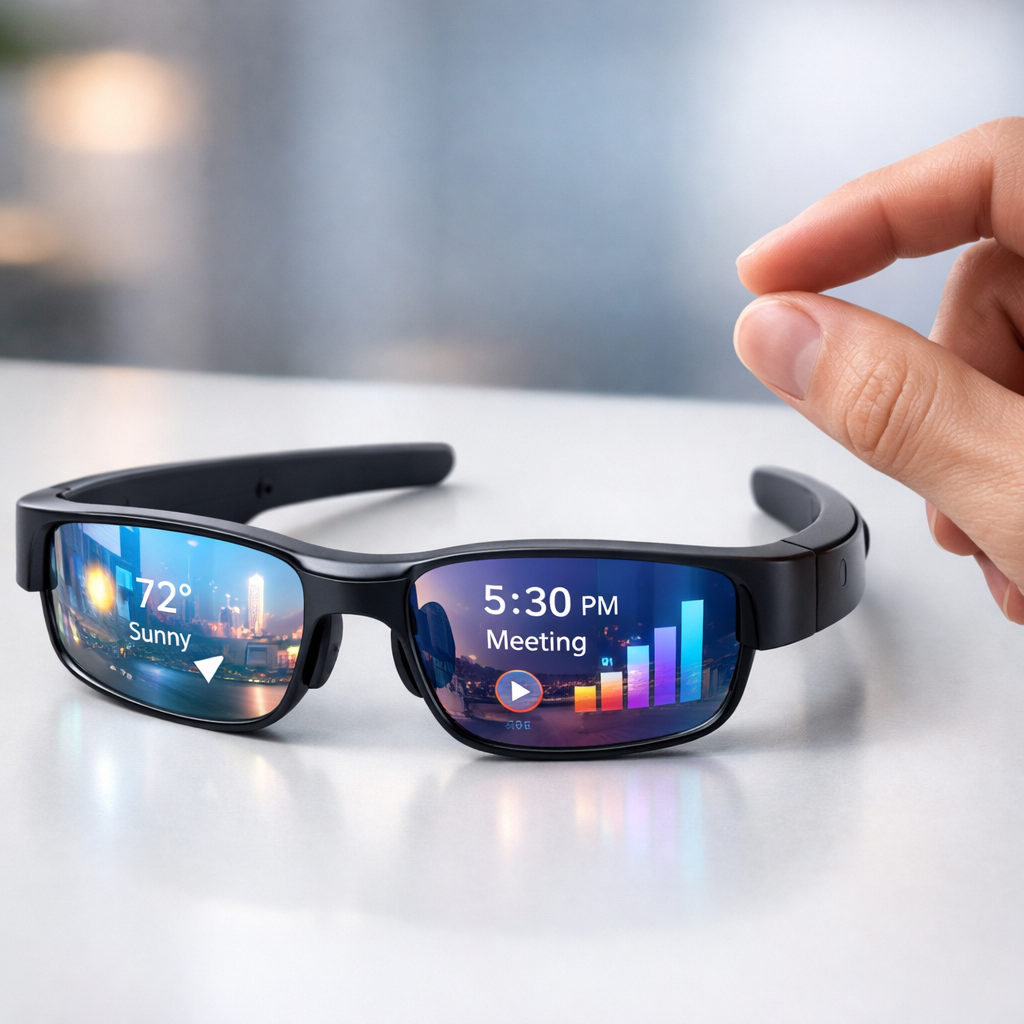
A Hong Kong startup, Savage Technology, has unveiled its first product: the Orrorin Glasses. The goal is bold—to bring Vision Pro-style controls, full-color displays in both lenses, and a lightweight frame to users for US$799.
Design and Interaction
The Orrorin frame weighs just 45 grams—roughly 25 times lighter than Apple’s Vision Pro when its battery pack is included. Users will interact through subtle pinches made at the side of their head, eliminating the need for external rings, wristbands, or controllers. Eye-tracking is used to avoid accidental selections; when the user looks away, the display dims instead of triggering unintended interface elements.
Still, the device skips some of what Vision Pro enables. It lacks positional tracking and spatial mapping, meaning it cannot anchor virtual windows in space, so experiences relying on immersive room-scale interfaces are out of scope.
Pricing, Availability, and Ecosystem
Preorders kick off with a US$29 reservation toward the full US$799 price. There are two tiers: Founder Edition orders will begin shipping in March 2027, followed by Early Bird shipments starting in May 2027.
Savage Technology—launched by Bill Pei and Elena Shi—is targeting developers first, hoping third-party apps and AI tools like Claude Code and Codex will help bring value. The company’s engineering validation phase is ongoing, so the delivered product may evolve.
Apple itself is expected to launch its first smart glasses in 2027. Early reports suggest this model won’t include full displays; instead, it may focus on speakers, mics, and Siri integration.
How Orrorin Compares
Meta’s Ray-Ban Display is priced similarly at US$799 but only offers a display in the right eye and requires a Neural Band wristband for gesture control. The Orrorin design replaces that wristband with pinch gestures, aiming for more seamless control. Additionally, many traditional Ray-Ban Meta glasses have no display hardware at all, placing Orrorin in a more capable category while still falling short of Vision Pro’s spatial computing features.
Orrorin is entering a crowded and evolving market, balancing weight, price, and functionality carefully. Its lack of spatial tracking, though, may keep it from being a full Vision Pro competitor—at least in use case.