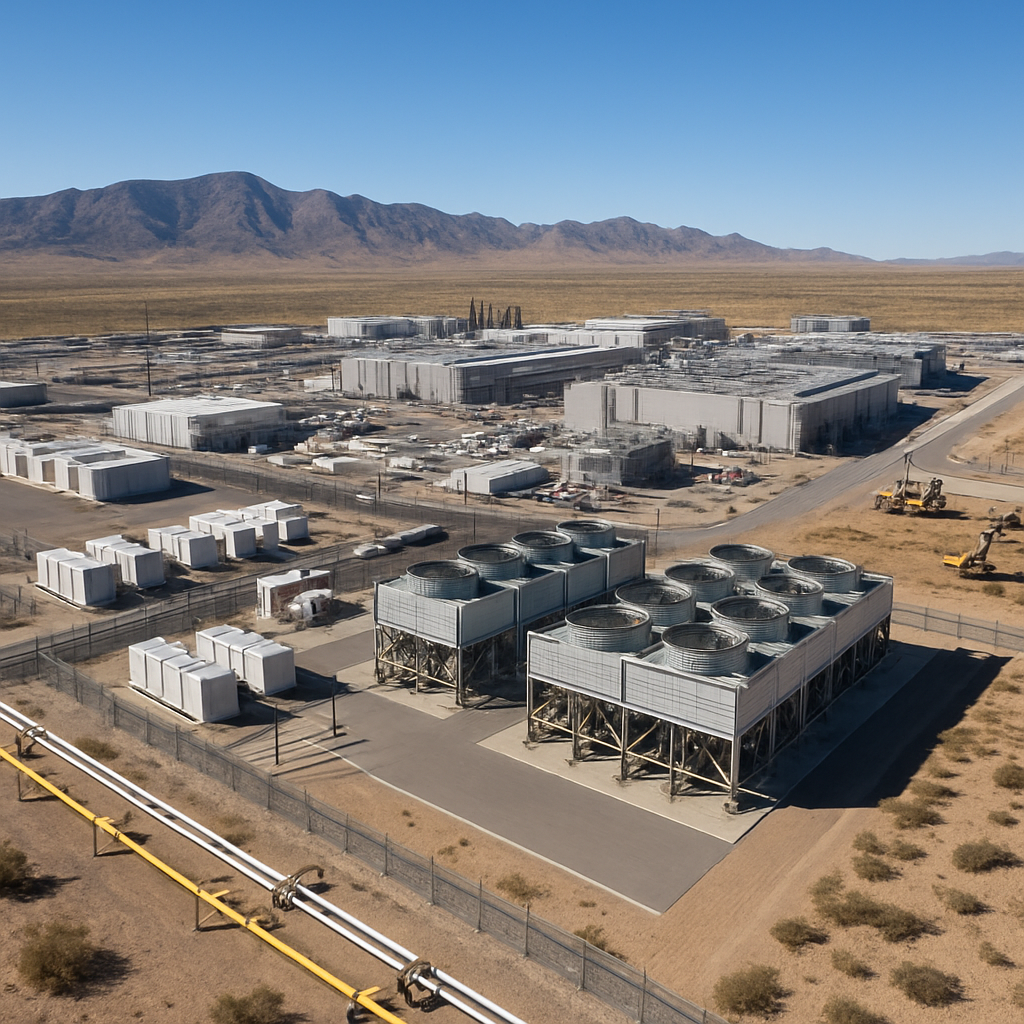
Oracle has issued a force majeure notice to the developer behind its Stargate data center campus in New Mexico, known as Project Jupiter, allowing for potential delays in accordance with contract provisions if the campus misses its 2028 deadline. However, Oracle isn’t attempting to back out of the project and remains committed as the flagship tenant.
Force majeure clauses, common in large energy or infrastructure contracts, enable one party to delay or suspend obligations when unforeseen events occur. In this case, Oracle could postpone payment milestones if components of the campus’s delivery or construction slip past projected schedules.
Supply Chain & Permitting Pressures
Project Jupiter is planned to accommodate 2.45 gigawatts of power, heavily relying on Bloom Energy fuel cells that depend on a consistent gas supply. A crucial Energy Transfer pipeline intended to feed gas to the site has been delayed by approximately six months. Regulators initially turned down permits for the route, forcing it to be revised, and the new target for the pipeline’s operation has been shifted to February 1, 2027.
In addition, securing the air quality permit for the fuel cell infrastructure remains outstanding. The state’s environmental regulatory agency is under a Nov. 23 deadline to make a decision, adding another layer of risk to the project’s timeline.
Political & Regulatory Crosswinds
Launched as a centerpiece of the Stargate initiative (a collaboration involving Oracle, OpenAI, and SoftBank), Project Jupiter has become a lightning rod in New Mexico. Local residents and environmental organizations have raised concerns about the project’s environmental impact, especially given its large scale and energy demands. Politically, the project has emerged as a hot-button issue ahead of the midterm elections, attracting scrutiny from both critics and supporters.
Oracle has pushed back on delay concerns, stating that Project Jupiter is still on schedule and fully committed to its New Mexico operations. Blue Owl Capital, the developer’s financial partner, echoed that the force majeure notice does not alter its long-term financial obligations toward the project.
Despite Oracle’s optimism, the timeline is under pressure from multiple angles—pipeline delays, permit hold-ups, and environmental opposition—any of which could trigger contractual consequences under the force majeure clause if the project cannot meet its committed benchmarks.
What this means for the broader AI data center buildout is significant. As the demand for AI infrastructure surges, one of its critical constraints—energy supply and environmental regulation—is proving just as pivotal as chip scarcity. How Oracle and its partners manage those pressures could foreshadow broader patterns in how major cloud and AI players execute massive infrastructure projects in an era of heightened regulatory scrutiny, supply chain risk, and environmental concern.