A recent release of OperTraitor, an open-source tool from Palo Alto Networks, highlights a rising risk in Kubernetes security: operators granted overly broad Role-Based Access Control (RBAC) permissions that pave the way to cluster administrator (cluster-admin) escalation. The tool exposes permission mismatch between what an operator says it needs and what it’s actually allowed to do — a discrepancy that attackers could exploit.
What Are Kubernetes Operators & Why Permissions Matter
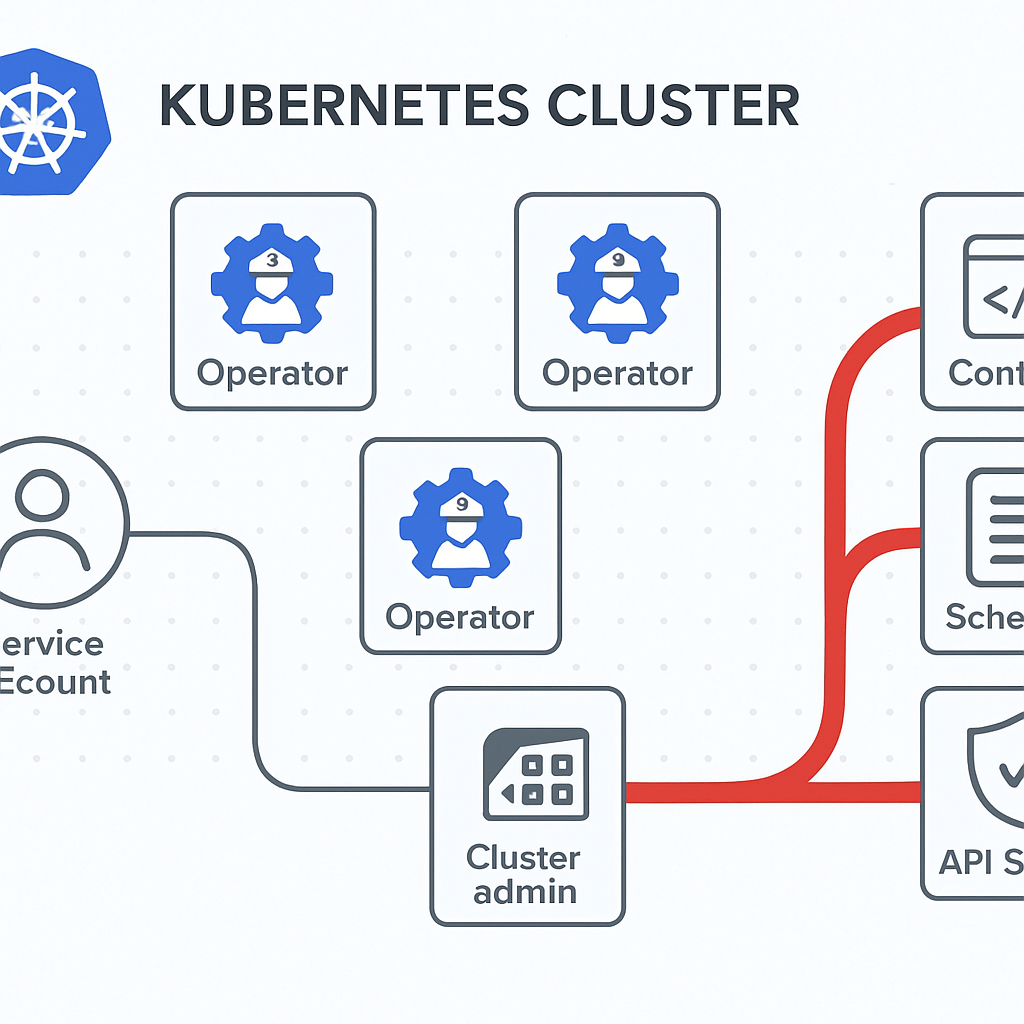
Kubernetes operators act like automation agents inside clusters: they use custom resource definitions and controllers to ensure your cluster’s desired state matches its actual state. To run, they use service accounts granted RBAC privileges. But in many setups, operators are assigned wildcard or cluster-wide permissions instead of being restricted to only necessary namespaces or resource types. If such an operator is compromised — via image flaws, supply-chain vulnerabilities, or other weaknesses — attackers may gain far more control than intended.
How OperTraitor Works & Key Findings
OperTraitor is designed to parse operator manifests — both local installs and components drawn from OperatorHub. It compares the operator’s stated purpose with permissions granted in its service account roles. An AI engine assigns a normalized risk score from 1 to 10 based on degree of privilege mismatch and escalation potential.
Analysis with OperTraitor unearthed that over 5% of examined operators request overly generous permissions, some even carrying implicit paths to full cluster-admin status. Older or neglected operators still hosted in registries like OperatorHub often bear the greatest risk, especially when newer, more restrictive versions are already available elsewhere.
One example flagged the IBM Prometurbo operator (used with IBM Turbonomic), which was found to have cluster-wide “get, list, watch” privileges over Kubernetes Secrets. In a compromised scenario, that could expose essential data like service account tokens, TLS certs, database credentials, or API keys across all namespaces.
Another case involved the Datadog operator, noted for broad access to Secrets and RBAC-related resources like ClusterRoles and ClusterRoleBindings. The Datadog team responded by detailing which permissions it uses and offering mitigations, helping customers assess and reduce exposure.
Security Implications & Hardening Steps
As Kubernetes operators are becoming more capable — with Agentic behavior and LLM-powered decision making — excessive permissions are no longer just a theoretical risk. They can serve as privilege escalation avenues, enabling attackers to access sensitive cluster-wide data or take actions with broad impact.
Security teams are advised to audit each operator’s service account, prefer namespace-scoped roles over cluster-wide ClusterRoles, avoid deploying old registry packages, and monitor audit logs for suspicious behavior — for example, operators reading Secrets outside their namespaces.
OperTraitor arms defenders with visibility into risky non-human identities before an attacker can exploit them as gateways to full cluster compromise.
Why this matters: Kubernetes is central to cloud infrastructure and containerized apps. Misconfigured operators can become a weak link that attackers exploit to break into your entire cluster. As operators grow smarter and more autonomous, ensuring they don’t have carte blanche privileges becomes mission-critical. The rise of tools like OperTraitor shows both how serious the problem has become and how essential it is to embed least-privilege RBAC practices from day one. Watch for expanded adoption of privilege-scanning tools, regulatory scrutiny of cloud configurations, and pressure on vendors to deliver operators with tight, well-documented permissions.