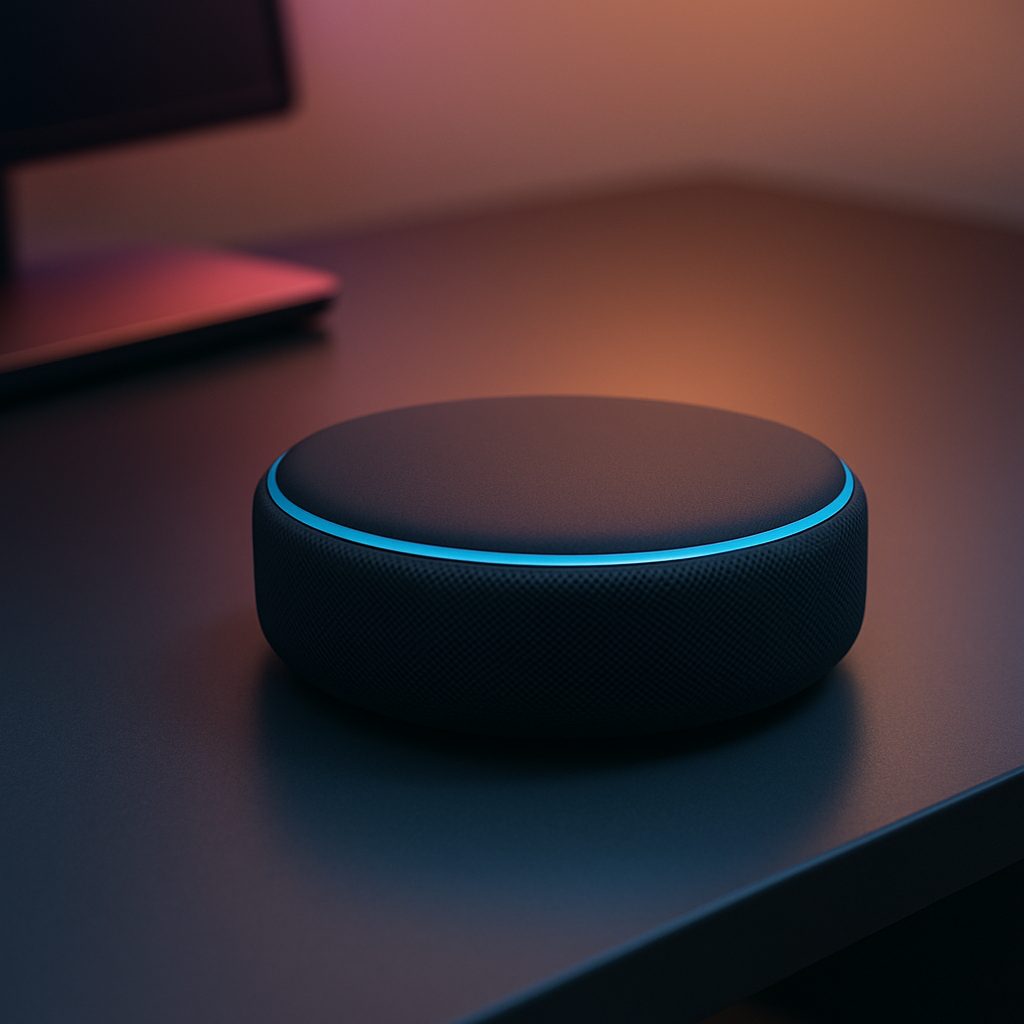
OpenAI is reportedly developing a new smart speaker, priced at $300, with a design and size reminiscent of Amazon’s second-generation Echo Dot. The device is expected to be hockey puck-shaped and donut-like, lacking a display but featuring motorized components to enhance user interaction.
This development aligns with OpenAI’s recent strategic moves in the hardware sector. In May 2025, OpenAI acquired Jony Ive’s AI startup for $6.5 billion, aiming to redefine human-technology interaction. Following this, in November 2025, Ive and OpenAI CEO Sam Altman confirmed the existence of a prototype for their first hardware device, with plans to ship as early as 2027. The device is envisioned as an AI “companion,” with ambitions to distribute 100 million units.
OpenAI has also been actively recruiting talent from Apple. In June 2026, Paul Meade, known for his work on the Apple Vision Pro, left Apple to join OpenAI’s hardware division. Additionally, in July 2026, Apple filed a lawsuit against OpenAI and former Apple VP of Product Design, Tang Yew Tan, alleging intellectual property theft to advance OpenAI’s hardware initiatives.
These developments suggest OpenAI’s commitment to establishing a significant presence in the consumer hardware market, particularly in AI-driven devices. The upcoming smart speaker could position OpenAI as a formidable competitor to established players like Amazon and Apple. However, the success of this venture will depend on the device’s unique features, user experience, and how it differentiates itself in a crowded market.