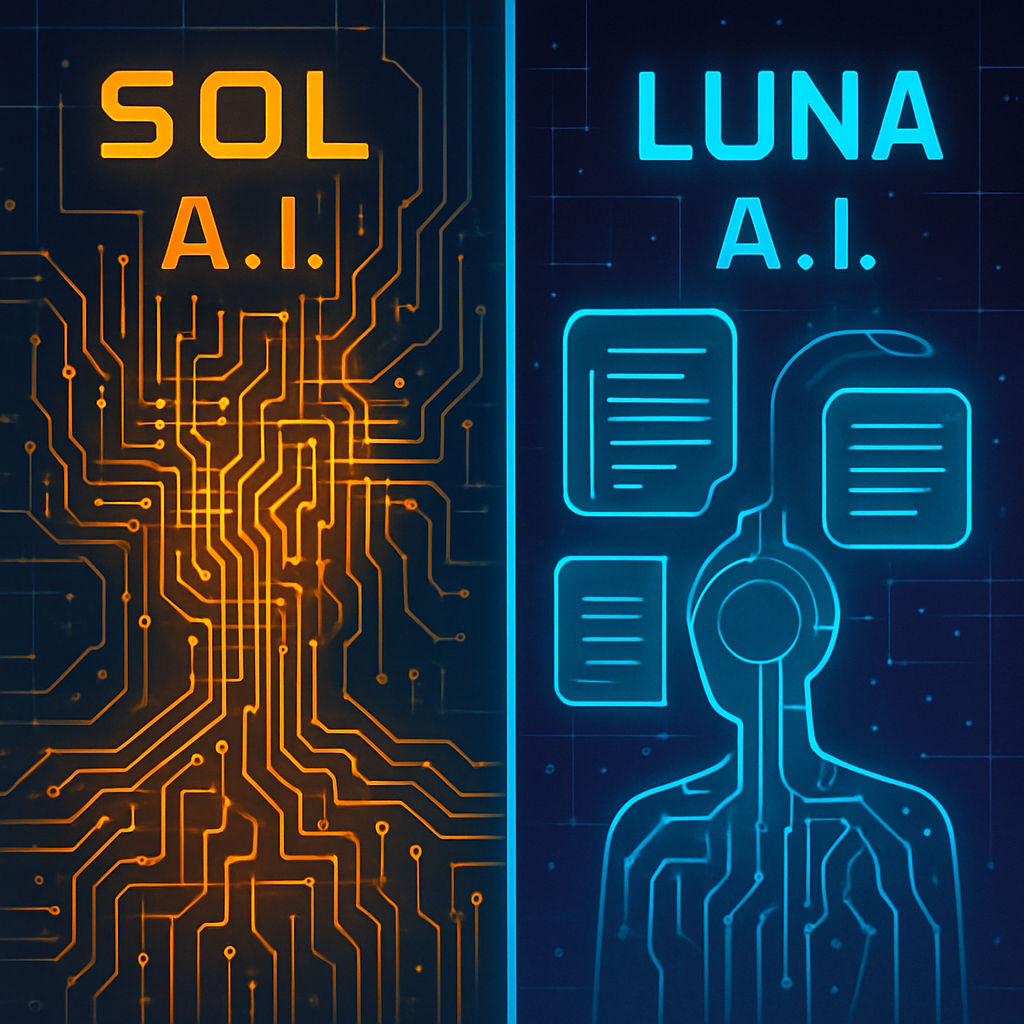
OpenAI has expanded its GPT-6 lineup with two refreshed models—Sol and Luna—that promise steeper cost reductions and fewer mistakes. Following the recent release of the flagship GPT-6 Astra, these streamlined variants are aimed at widening access to the next-gen architecture while carving out roles suited to different workflows.
What’s New in Sol and Luna
Earlier this year, OpenAI introduced Luna for high-volume, goal-driven tasks like summarization, information extraction, or quick queries. Sol was designed for more complex workflows such as coding tasks. The new versions of both models now leverage the power behind GPT-6 with improved efficiency. They achieve this mostly through better caching and inference optimizations.
A key upgrade is pricing. API access to the new GPT-6 Sol and Luna models will cost roughly half of the previous 5.6 series versions. Users get cutting-edge performance at a significantly lower price, opening up the tech for broader adoption.
Accuracy, Reliability, and Competitive Edge
OpenAI reports that the updated models make far fewer factual errors. In internal testing with real-world conversations—particularly where previous models had been flagged for mistakes—Sol cuts error rates by about half compared to its predecessor. It reportedly achieves a level of accuracy close to Astra, but at a far lower cost.
As for the competitive landscape, OpenAI insists that both Sol and Luna outperform leading models from rival company Anthropic, including Fable and Opus. Interestingly, Anthropic released a new version of its own model, Opus 5.5, just 90 minutes before OpenAI’s announcement—showing how tight this AI arms race has become.
Availability and Rollout
The updated Sol and Luna are now live within ChatGPT Work and Codex for most paying users, and through OpenAI’s API. Luna is seeing broader access—it’s being made available in the desktop version of ChatGPT as well as to Free and Go users. OpenAI will extend these releases across its platforms and user levels throughout the day.
OpenAI has emphasized that these aren’t just performance boosts—they’re designed for real efficiency gains and value.
Why this matters: making high-powered AI more affordable while reducing errors helps bridge the gap between bleeding-edge capabilities and real-world utility. These improvements matter not just to developers or businesses, but to all users who rely on trust and cost predictability. What to watch: how Sol and Luna actually fare in public use—especially against Anthropic’s models—and whether the reduced error rates hold up under diverse, unfiltered inputs.