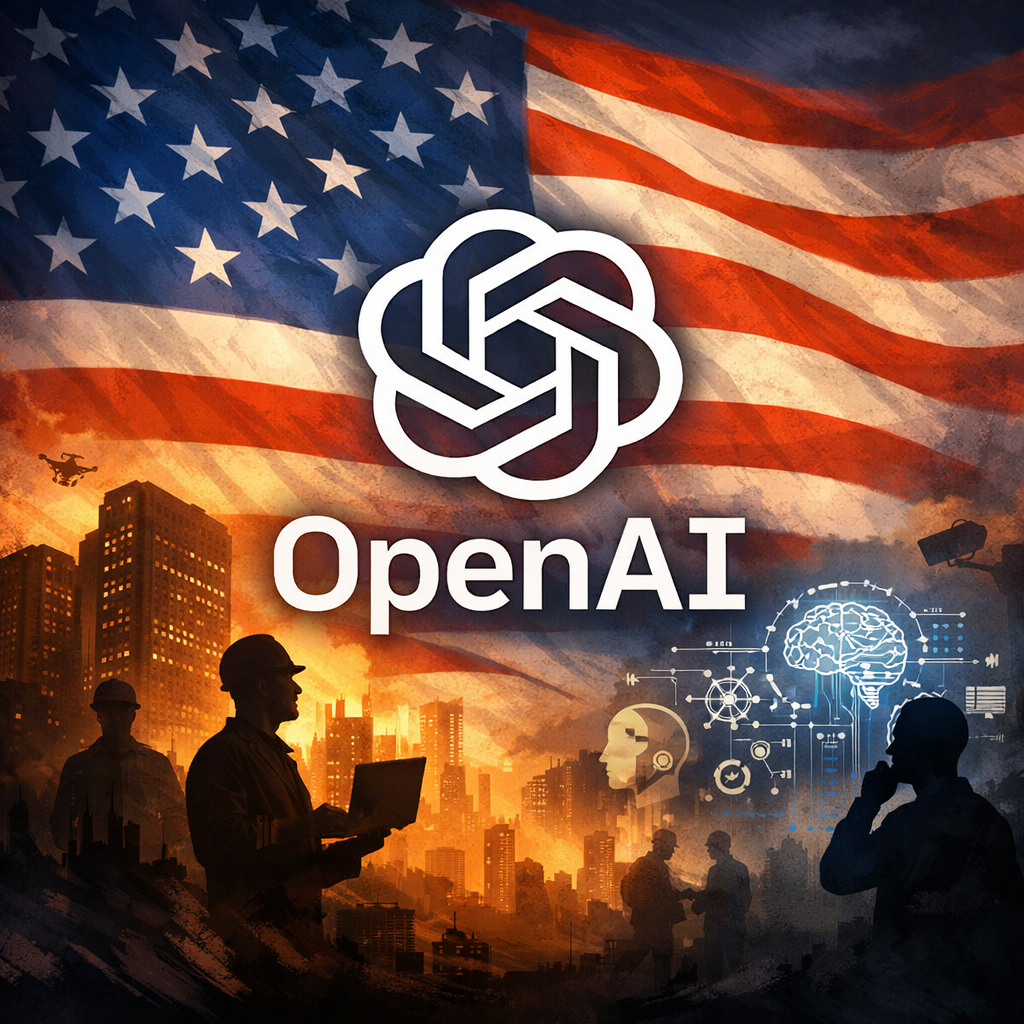
OpenAI is positioning itself to influence the policy landscape leading into the 2028 U.S. presidential election, pushing lawmakers to move beyond generic anti-AI statements and instead craft laws that address public unease over economic upheaval, data privacy, and AI infrastructure.
The call comes from Chris Lehane, OpenAI’s chief global affairs officer, who argues that AI could become as transformative as Franklin D. Roosevelt’s New Deal. With Americans increasingly worried about their economic futures, Lehane urges politicians to pave a “third way” in policy—one where citizens share in the economic gains from AI rather than suffer its costs. Lehane outlines five major policy areas including worker protections, safety standards, education reforms, and data center regulation as essential to that vision.
This policy manifesto marks a shift for OpenAI. In the past year, its priorities centered on speeding up AI development, loosening regulatory obstacles, and scaling up infrastructure. But recent public sentiment—especially frustration over living costs and resentment over data center expansion—has forced a recalibration in messaging. No longer is it enough to champion innovation alone; OpenAI wants to be seen as responding to the anxieties of everyday workers and communities.
Main Proposals and Points of Contention
Lehane proposes incentives in the tax code for employees to acquire AI skills and mechanisms for profit sharing among workers. Though these gestures are designed to spread opportunity, critics point out that they fall short of binding requirements to ensure equity or to hold companies responsible for job displacement. Skeptics argue that such policies reflect a preference for prospective benefits rather than enforceable protections.
On the infrastructure front, OpenAI acknowledges concerns about data centers—where fears around environmental impact, electricity demands, and local disruption have stirred political opposition. Still, Lehane emphasizes the economic upside: job creation, local tax revenue, and preserving U.S. leadership in AI versus geopolitical rivals like China. He likens resistance to data center development to restrictive foreign policy positions, suggesting that stalling such growth undermines national competitiveness.
Lehane also underscores the need for enforceable AI safety standards—public oversight, independent evaluations, and mechanisms to disable AI systems in emergencies—as well as protections targeted at minors and efforts to avoid excluding rural or under-resourced students from AI-enhanced education. Critics, however, point to OpenAI’s past resistance to regulation—such as opposing California’s SB 1047 in 2024—and say the company’s recent pivot toward embracing safety oversight lacks convincing detail.
2028 Election: The Stakes for AI
The 2028 election is emerging as a pivotal moment for how AI will be embedded in U.S. political debate. The midterm elections saw voters deeply worried about economic factors like inflation, housing, and inequality. While AI did not dominate, backlash against data center expansion proved politically potent. That suggests AI infrastructure and its consequences will surface more prominently in upcoming campaigns.
Lehane’s essay tries to straddle a fine line: portraying AI both as a necessary engine of economic opportunity and as something that must be guided to serve broader public good. The proposals offer potential, but many of them lean toward incentives rather than mandates. Whether they translate into meaningful policy or merely serve branding remains to be seen.
What to Watch: Will lawmakers respond with legislation that requires companies to share AI’s economic benefits, not just let private firms dictate the terms? As debates sharpen over AI safety, education, and economic equity, 2028 promises to be a test of whether AI is governed or simply enabled.
Analysis: This marks a strategic turn for OpenAI, acknowledging the political risk the company faces if AI is framed purely as a tool for elite advantage. By adopting more socially-conscious policy language now, OpenAI appears to be preparing the terrain for tighter regulation—while also seeking to influence how that regulation is shaped. The coming years will reveal whether these proposals result in binding obligations or become another layer of reactive corporate PR.