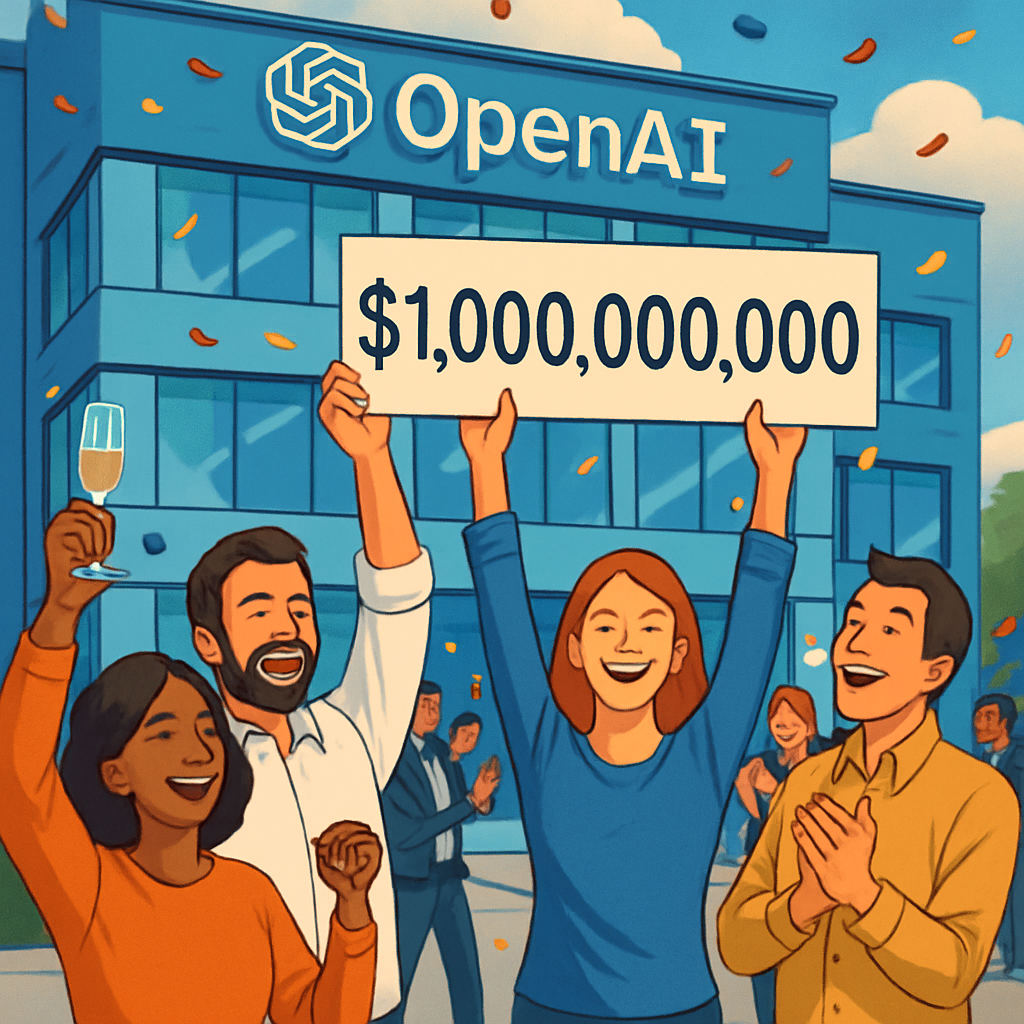
OpenAI has successfully executed a $7 billion employee tender offer, allowing its staff to sell shares back to the company. This move provides liquidity to employees holding equity in the privately held artificial intelligence firm.
The tender offer values OpenAI at $852 billion, consistent with its valuation from the most recent fundraising round in March, which added $122 billion to the company’s capital reserves.
In June, OpenAI confidentially filed with the Securities and Exchange Commission (SEC) to prepare for a potential initial public offering (IPO) later this year. However, the completion of this tender offer suggests that an IPO may not be imminent. Many technology companies are opting to remain private longer, utilizing private tenders to offer employees a means to realize the value of their stock compensation without the complexities associated with going public.
OpenAI has not provided a comment on this development at the time of publication.
Last month, CEO Sam Altman acknowledged that the company did not have its best year, attributing the shortcomings primarily to himself. He expressed optimism about the upcoming year, indicating expectations for significant improvements. Companies typically aim to showcase strong financial performance before going public to attract investors. Reports from April indicated that OpenAI had missed internal financial targets, which may influence the timing of an IPO.
OpenAI’s rapid growth and innovative products have garnered substantial interest in public markets. However, the potential public debut of competitor Anthropic, which reportedly achieved profitability earlier this year, adds pressure for OpenAI to present a robust financial position. The recent tender offer may signal a strategic decision to delay the IPO, allowing time for the company’s new focus on streamlining operations and enhancing its enterprise business to yield positive results.
By providing employees with liquidity through this tender offer, OpenAI demonstrates a commitment to its workforce while strategically positioning itself for future financial endeavors. This approach reflects a broader trend among tech companies to balance employee incentives with long-term growth strategies, especially in the dynamic and competitive field of artificial intelligence.