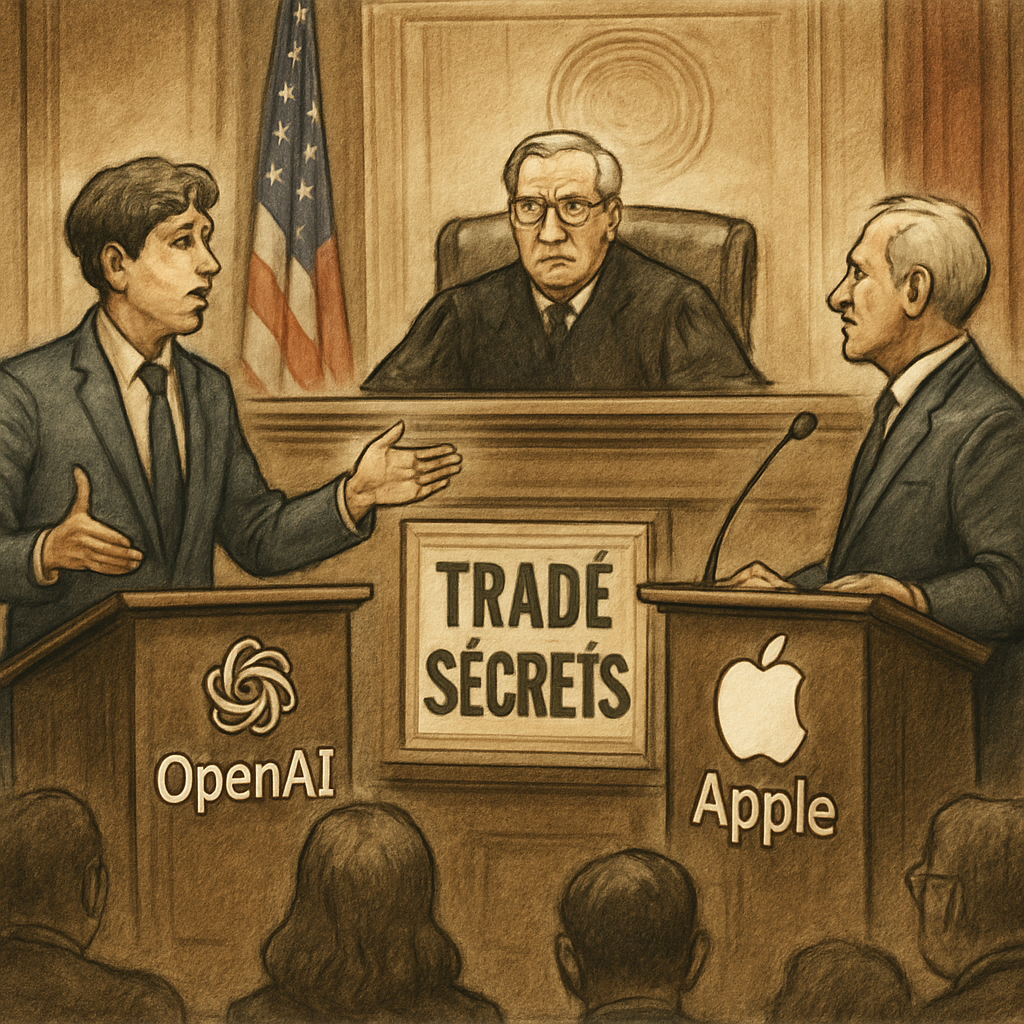
OpenAI has publicly refuted Apple’s recent lawsuit alleging misappropriation of trade secrets, marking a significant escalation in the legal battle between the two tech giants.
Apple initiated legal action on July 10, accusing OpenAI and two former Apple employees—Chang Liu and Tang Tan—of orchestrating a scheme to funnel confidential product information to OpenAI’s hardware division. Apple contends that this alleged misconduct has caused irreparable harm and has sought a preliminary injunction to prevent OpenAI and the individuals involved from accessing or disclosing its proprietary information.
In response, OpenAI published a blog post titled “Apple is getting this wrong,” characterizing the lawsuit as “careless, aggressive, and oddly personal.” The company disputes Apple’s account of pre-litigation communications, highlighting an incident where Apple’s legal team mistakenly contacted the wrong individual due to a surname mix-up. OpenAI provided the email exchange to substantiate this claim, noting that after the initial contact in February, there was no further communication from Apple regarding the allegations until the lawsuit was filed five months later.
OpenAI also released iMessage conversations indicating that after Liu’s departure from Apple on January 22, Apple employees continued to seek his assistance in locating files and technical information. Notably, an Apple employee directed a colleague to AirDrop files from Liu’s Apple-linked iCloud account. These messages suggest that as late as March 5, Apple staff were still requesting internal files from Liu, with one participant describing the situation as “highly irregular.”
Regarding Tang Tan, who spent 24 years at Apple before co-founding io Products—a hardware startup that merged with OpenAI in July 2025—OpenAI stated that Tan has consistently emphasized the importance of not using any confidential information from other companies. The company underscored its commitment to ethical practices and fair competition.
Apple’s complaint also alleges that over 400 former Apple employees have joined OpenAI, raising concerns about potential breaches of confidentiality and intellectual property rights. A hearing on Apple’s request for a preliminary injunction has yet to be scheduled.
This legal confrontation underscores the intensifying competition in the AI and consumer hardware sectors. As companies like Apple and OpenAI vie for dominance, the protection of intellectual property becomes paramount. The outcome of this case could set significant precedents for how trade secrets are safeguarded and how talent mobility is managed within the tech industry.