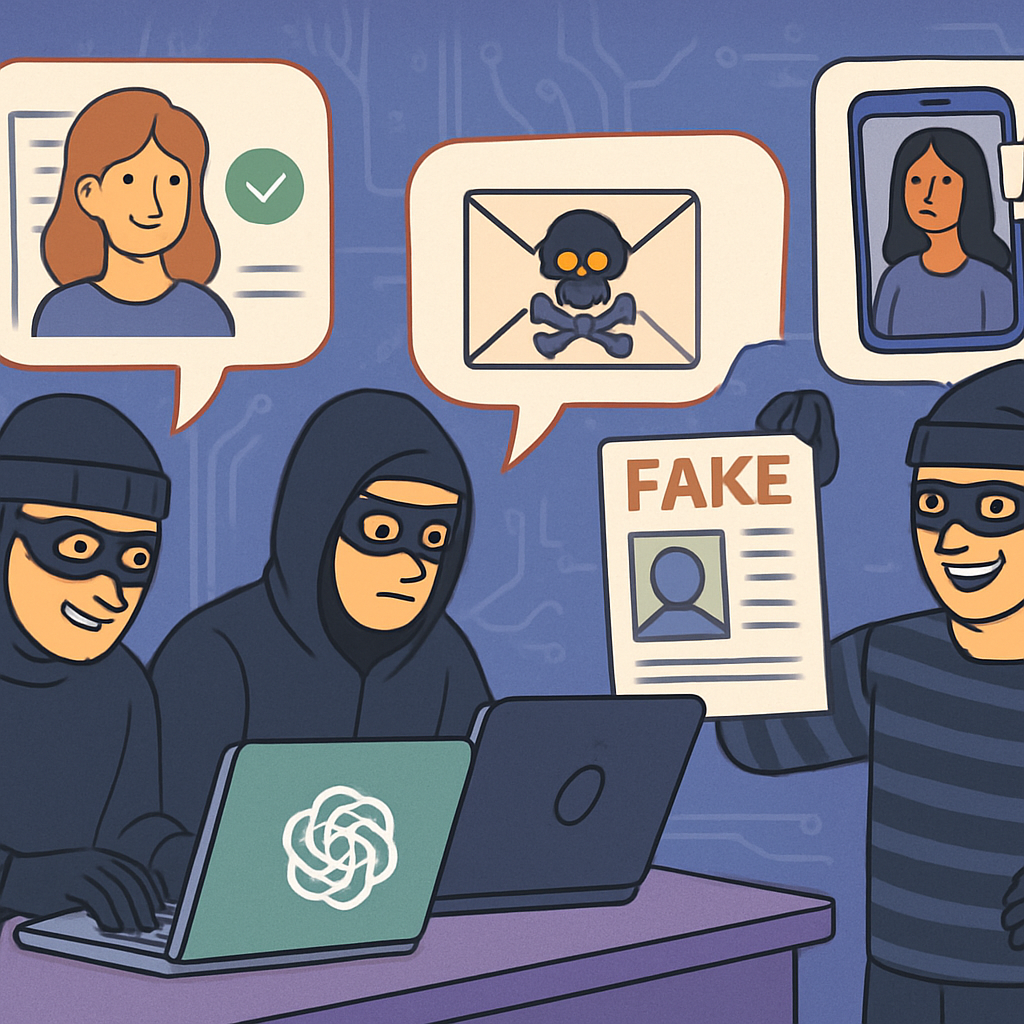
Cybercriminal networks are increasingly leveraging artificial intelligence tools like ChatGPT to orchestrate complex and personalized scam operations. These schemes encompass romance, investment, gambling, and law enforcement impersonation scams, making them more convincing and harder to detect.
OpenAI’s recent investigation uncovered a coordinated network, likely based in Cambodia, that utilized ChatGPT to create fake online personas, craft promotional materials, translate messages, and manage daily operations. The scammers employed AI-generated content to fabricate dating profiles, pose as investment experts, gambling representatives, and even law enforcement officials. They also produced counterfeit documents such as passports, legal notices, stock purchase confirmations, and gambling interfaces to enhance their credibility.
The fraudulent activities followed a familiar pattern: initial contact, building trust and emotional connection, and ultimately soliciting money. In investment and romance scams, victims were enticed with promises of guaranteed returns or risk-free investments, often in cryptocurrency or spot-gold trading. Others were lured with fake gambling bonuses, only to be asked for deposits or activation fees. Some victims were threatened by individuals posing as law enforcement officials, demanding payment for fabricated fines.
OpenAI’s analysis also revealed potential human trafficking and forced labor elements within the scam network. Job advertisements for “chatter” roles in Poipet offered enticing benefits like flights, meals, accommodation, visas, and work permits. Internal communications suggested issues related to employee debts, salary deductions, disciplinary fines, recruitment incentives, and immigration concerns. References to detention and escape attempts indicated possible coercion of individuals into participating in these fraudulent activities.
While the exact financial impact of this network remains undetermined, conversations reviewed by OpenAI suggest that hundreds of targets may have been contacted. This case underscores the evolving nature of cybercrime, where AI tools are exploited to enhance the scale and sophistication of scams. It also highlights the intersection of online fraud, organized crime, and human exploitation, emphasizing the need for robust detection mechanisms and international cooperation to combat such multifaceted threats.
As AI technologies become more accessible, their misuse by malicious actors is likely to increase. This development calls for heightened vigilance from both individuals and organizations. Users should be cautious of unsolicited communications promising lucrative opportunities or demanding urgent payments. Organizations must invest in advanced threat detection systems and collaborate with industry partners to share intelligence on emerging threats. Policymakers should consider regulations that address the dual-use nature of AI technologies, promoting innovation while mitigating potential harms.