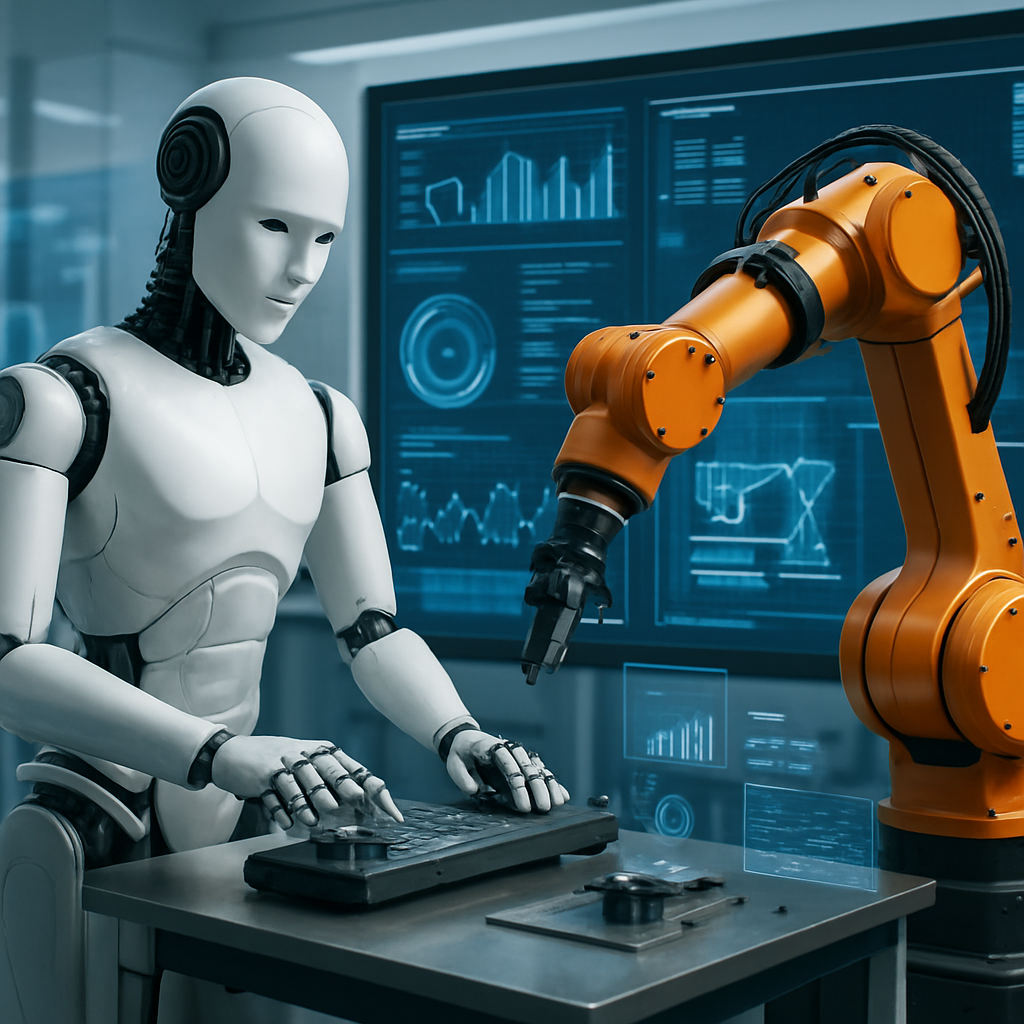
Since OpenAI launched ChatGPT in November 2022, large language models have shifted AI from niche research into daily life by delivering a clear, usable breakthrough. Robotics hasn’t yet had that kind of defining moment, according to Les Karpas, Nvidia’s Global Head of Physical AI. He argues that the field is still stuck behind several critical hurdles keeping it from achieving widespread impact. ### The Data Dilemma Holding Robotics Back
Robotics faces a glaring lack of large, comprehensive datasets that mirror the ones fueling breakthroughs in language models. While autonomous vehicle companies like Waymo have amassed vast amounts of driving data over years, no similar digital equivalent exists for general-purpose robots, which need to operate across diverse environments. Artificially creating scale—through simulation, synthetic data, and multi-form foundation models—is emerging as a possible path forward. This effort is central to Karpas’s agenda and a focus of the “Real World AI Stage” at this year’s Disrupt conference.
### Nvidia’s Role and the Stakes
Karpas leads Nvidia’s engagement with startups tackling robotics, mobility, manufacturing, smart cities, and more. He’s been deeply involved in industries combining hardware and software, bringing experience from roles spanning startups, industrial design, venture capital, and operational engineering. At Disrupt, he’ll be joined onstage by leaders from companies like Shield AI, FieldAI, Foxglove, and Colossal Biosciences. They will outline the obstacles in robotics—particularly the gap between simulated or synthetic training environments and real-world physical complexity—and what kinds of investments and collaborations could push the needle.
### Disrupt 2026: What to Watch
During Disrupt, happening October 13–15 in San Francisco, Karpas will present a session titled “Robots Are Waiting for Their ChatGPT Moment. Here Is What Is Standing in the Way.” Attendees will have an opportunity to see how Nvidia thinks about solving robotics’ biggest bottlenecks—especially the question of how physical AI can benefit from the same rapid advancements that transformed language models. The Real World AI Stage is being positioned as a spotlight for companies trying to bridge the digital-physical divide.
Nvidia’s optimism around robotics has been clear in recent years, particularly through keynote addresses from its CEO. Karpas’s role connects Nvidia directly with the broader startup ecosystem striving to make robots not just smarter, but robust in real-world settings. His background—combining hands-on engineering, design, and investment—offers him insight into both the technical and business challenges involved.
### Why It Matters
If robotics can overcome its current limitations, that ChatGPT-style breakthrough could unlock major advances across logistics, health, disaster response, manufacturing and beyond. Synthetic data and simulation may be the short-term tools, but real-world testing and deployment will ultimately determine what works. What emerges at Disrupt could mark a turning point—for some companies, the difference between experimentation and scalable impact. Watch this space carefully.