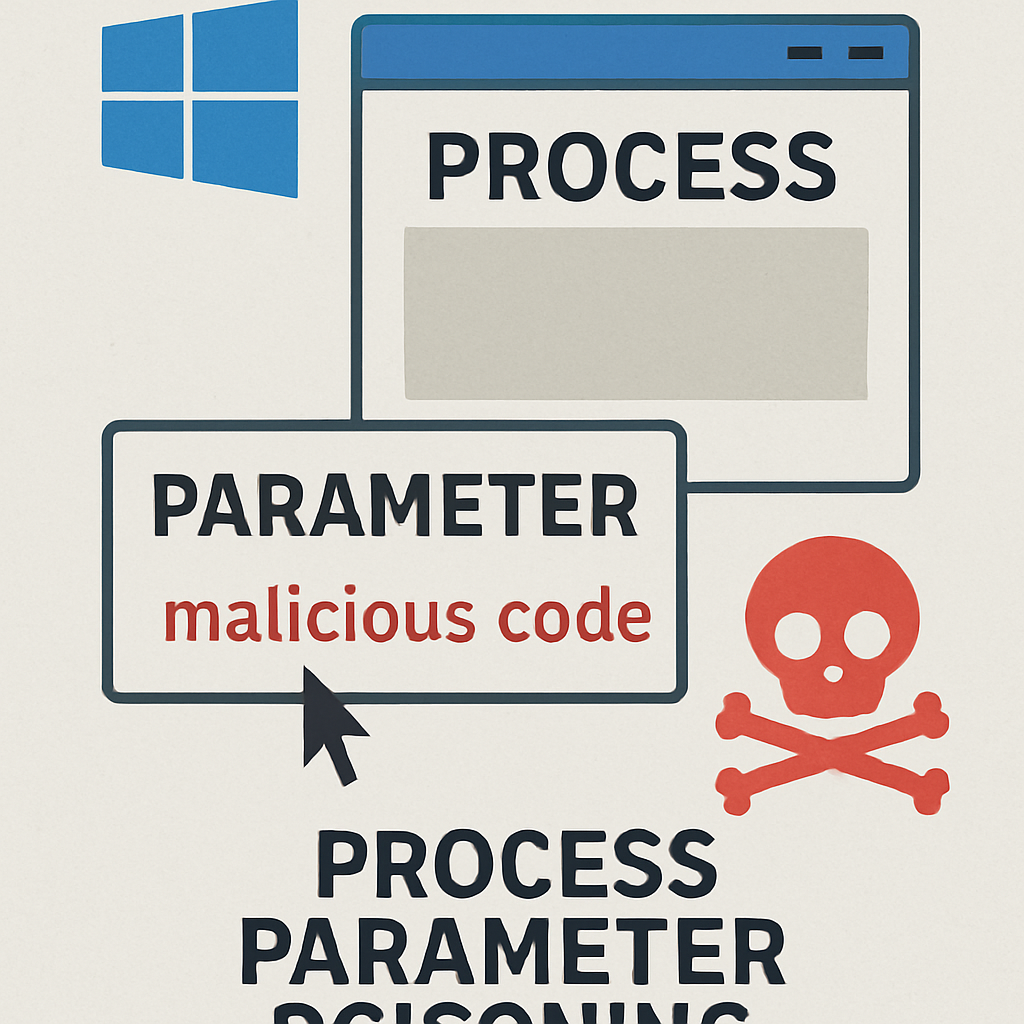
A recently disclosed Windows proof-of-concept demonstrates a novel method for injecting malicious code into legitimate processes while circumventing detection by leading Endpoint Detection and Response (EDR) systems. This technique, termed Process Parameter Poisoning, leverages process startup parameters to execute harmful code without triggering common security alerts.
Understanding Process Parameter Poisoning
Traditional process injection methods typically involve a series of steps: opening or creating a target process, allocating memory within it, writing the malicious code, setting the memory as executable, and initiating a thread to run the code. Security tools often monitor for these actions, especially API calls like VirtualAllocEx, WriteProcessMemory, and CreateRemoteThread, to detect potential threats.
In contrast, Process Parameter Poisoning takes advantage of how Windows initializes new processes. When a process is created using the CreateProcessW function, Windows copies command-line arguments, environment variables, and other startup information into the Process Environment Block (PEB) of the new process. By embedding the malicious payload within these parameters, the technique avoids the need for direct memory allocation or writing operations that typically raise red flags.
Once the target process starts, the injector reads the PEB to locate the embedded payload. It then modifies the memory permissions to allow execution and alters the main thread’s instruction pointer using the NtSetContextThread function. This approach redirects the process’s normal execution flow to the injected code without employing common indicators associated with traditional injection methods.
Implications for Endpoint Security
Security researchers tested this method against four prominent EDR solutions and found that it successfully evaded detection in each case. The technique’s ability to bypass standard monitoring mechanisms highlights a significant blind spot in current endpoint security strategies, which often focus on detecting memory allocation and process creation anomalies.
While the proof-of-concept is not linked to any active malware campaigns, its public availability raises concerns about potential misuse by threat actors. The technique could be particularly appealing to attackers who already have code execution capabilities on a target system, as it provides a stealthy means to escalate privileges or maintain persistence.
To counter such sophisticated evasion tactics, security teams must adopt a more holistic approach to threat detection. This includes monitoring for unusual process behaviors, analyzing process startup parameters, and implementing heuristics that can identify anomalies beyond traditional memory manipulation patterns.
As attackers continue to develop innovative methods to circumvent security measures, it is imperative for defenders to stay informed and adapt their strategies accordingly. The emergence of Process Parameter Poisoning serves as a reminder of the ever-evolving nature of cyber threats and the need for continuous vigilance in the cybersecurity landscape.