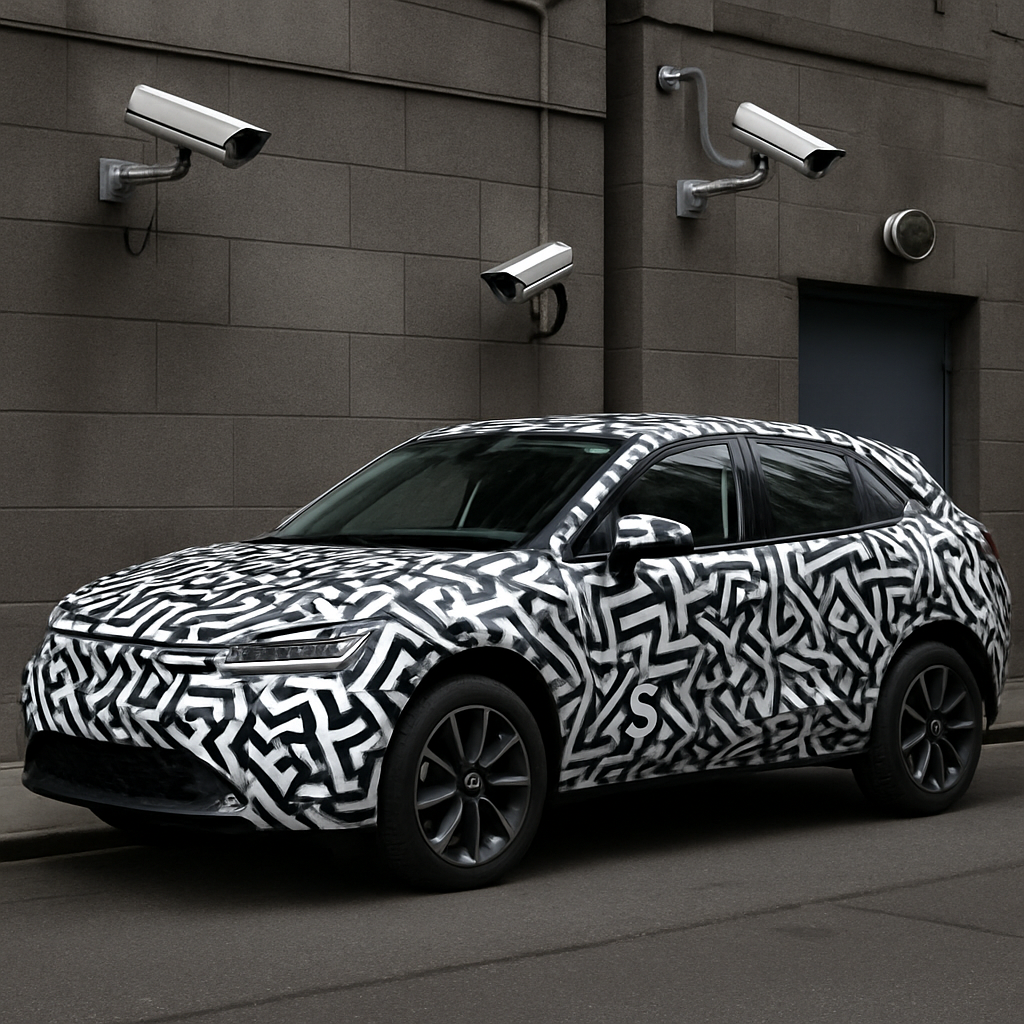
In an era where surveillance cameras are ubiquitous, a new development offers individuals a means to evade automated detection systems. Bill Swearingen, a cybersecurity professional from Kansas City, has created a computer-generated pattern capable of preventing certain surveillance cameras from recognizing objects, including people and vehicles, covered by this design.
Swearingen’s initiative, termed ‘noRecognition,’ aims to provide a method for individuals to opt out of pervasive surveillance. Over the past year, he conducted approximately 31 million tests to refine these patterns. When applied to clothing or objects, they effectively disrupt the detection algorithms of commonly used surveillance cameras and license plate readers, rendering the covered entities undetectable to these systems.
It’s important to note that these patterns do not obstruct the recording capabilities of surveillance cameras. Instead, they interfere with the cameras’ ability to identify and alert on specific objects or individuals. This disruption reintroduces a level of anonymity, making it more challenging for automated systems to single out individuals without prior knowledge of their presence.
Swearingen’s motivation stems from concerns over the extensive deployment of surveillance cameras in his community, often installed without public consent. He emphasizes the fundamental right to privacy and views his patterns as a tool for individuals to reclaim control over their personal data and movements.
During a public demonstration at the Def Con cybersecurity conference in Las Vegas, Swearingen showcased the effectiveness of his patterns by applying them to a vehicle. The demonstration confirmed that these designs can successfully prevent real-world surveillance systems from detecting the covered vehicle.
Historically, various methods have been explored to counteract surveillance technologies. For instance, certain clothing brands have introduced apparel designed to defeat facial recognition systems. However, Swearingen’s approach focuses on disrupting the detection capabilities of surveillance cameras themselves, offering a broader application.
As surveillance technologies continue to advance and proliferate, the development of countermeasures like Swearingen’s patterns highlights the ongoing tension between security measures and individual privacy rights. This innovation prompts a broader discussion on the balance between public safety and personal freedoms in the digital age.