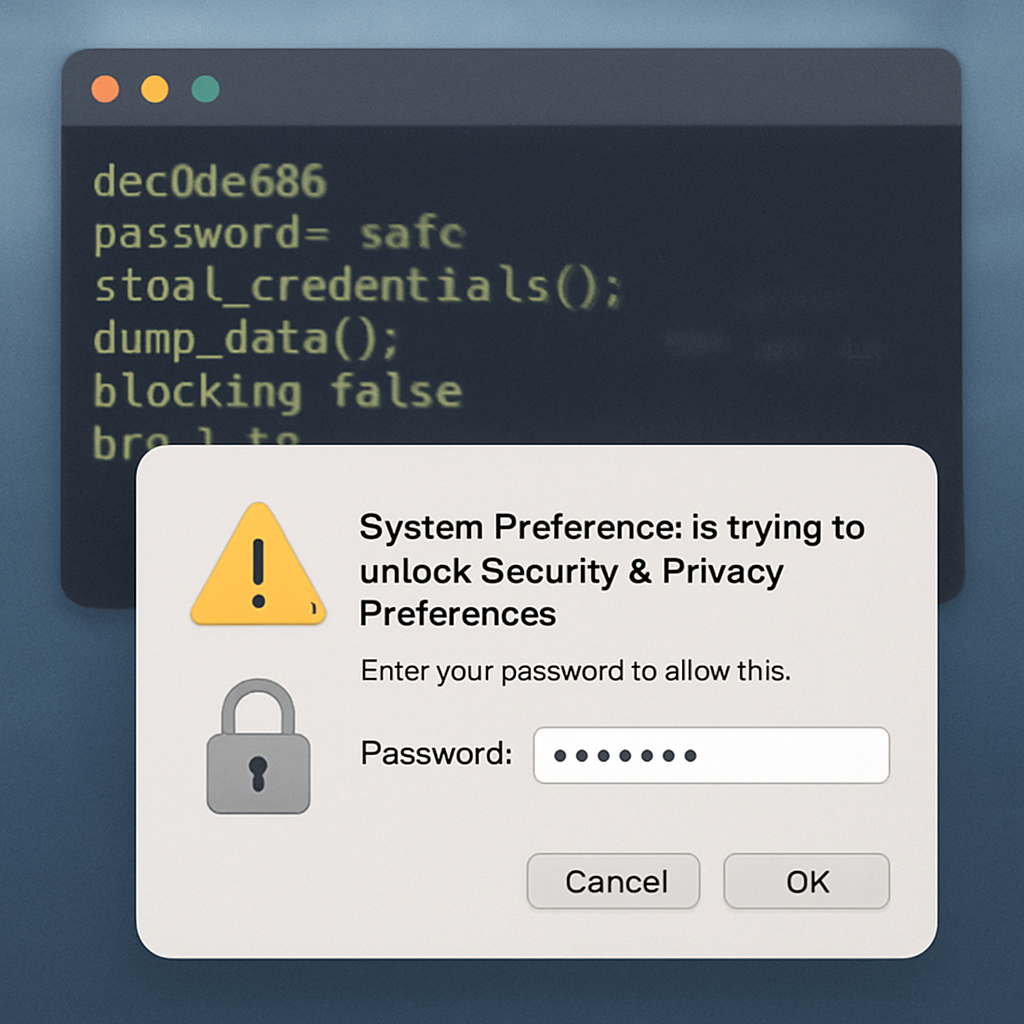
A recent report from Netskope Threat Labs has unveiled a sophisticated macOS ClickFix campaign that employs advanced social engineering tactics to infiltrate systems. This attack method involves directing users to malicious websites that mimic legitimate services, such as macOS optimization tools or GitHub repositories. These sites instruct users to copy and paste specific commands into the macOS Terminal, initiating a fileless infection chain that operates entirely in memory, thereby evading traditional malware detection mechanisms.
Once the malicious script is executed, it displays a counterfeit System Preferences dialog box, prompting users to enter their macOS login credentials. Upon obtaining these credentials, the malware unlocks the macOS keychain, extracting sensitive information including saved passwords, session cookies, and data from messaging applications. Notably, the malware targets 25 different desktop cryptocurrency wallets by terminating the legitimate application, replacing it with a trojanized version, and applying an ad hoc code signature. This process allows the compromised application to run without triggering macOS Gatekeeper warnings, posing a significant risk to users’ digital assets.
To maintain persistent access, the malware installs a remote access trojan (RAT) that enables attackers to control the infected system remotely. This persistent backdoor facilitates ongoing data exfiltration and potential deployment of additional malicious payloads. The emergence of such sophisticated attacks underscores the critical importance of user vigilance and the necessity for organizations to implement robust security measures.
In response to the growing prevalence of ClickFix attacks, Apple introduced a security feature in macOS Tahoe 26.4 that warns users when pasting commands into the Terminal. This measure aims to prevent users from inadvertently executing malicious scripts. However, attackers have already developed methods to bypass this warning, highlighting the need for continuous security enhancements and user education.
The rapid evolution of these attack vectors suggests that traditional security practices, such as deferring software updates for extended periods, may no longer be sufficient. Organizations are encouraged to adopt more proactive security strategies, including reducing update deferral windows and enhancing user training programs to recognize and avoid social engineering attempts. By staying informed and implementing comprehensive security protocols, enterprises can better protect their systems and data from emerging threats.
The sophistication of the latest ClickFix campaign serves as a stark reminder of the ever-evolving threat landscape. It emphasizes the necessity for organizations to remain vigilant, continuously update their security measures, and educate users on recognizing and mitigating potential threats. As attackers refine their techniques, a proactive and informed approach to cybersecurity becomes increasingly vital.