Apple’s latest iPad mini launches with its most dramatic redesign yet—slimmer profile, OLED screen, and major performance upgrades leave the last model looking dated. Here are all the changes and what they mean.
Design: Sleeker build, lighter, and camera tweaks
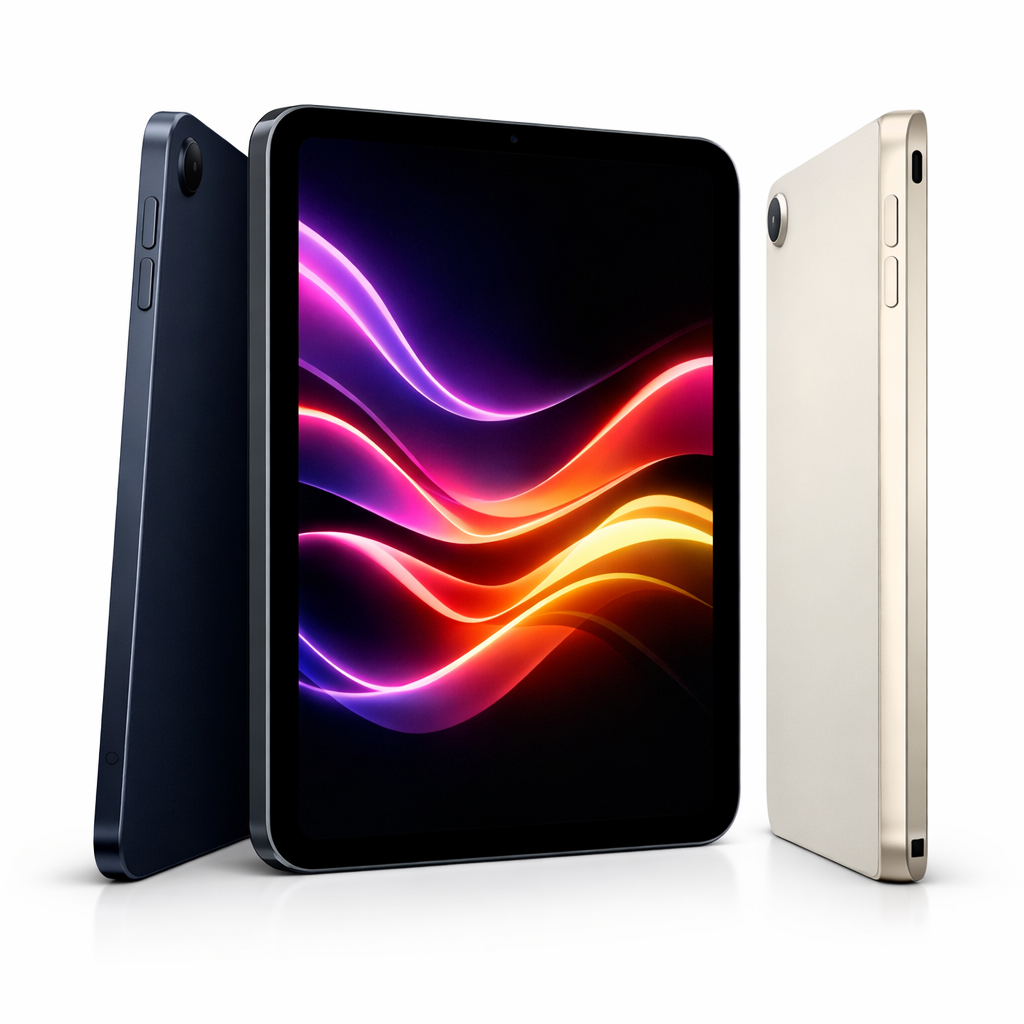
The new iPad mini is thinner at just 5.4mm compared to the previous model’s 6.3mm thickness. Its bezels are reduced by about 24%, making for a tighter visual fit. The width is slightly narrowed (132.6mm vs. 134.8mm), and it’s lighter too—Wi-Fi models now weigh 255 grams instead of 293. For video calls and landscape usage, the front camera has been shifted to the landscape edge instead of its former portrait placement. It drops several past color options in favor of two new finishes: Midnight and Starlight.
Display & visuals
This iteration introduces an 8.5-inch OLED display—a jump up from the 8.3-inch LCD of before. OLED brings deeper blacks, better contrast, and wider P3 color support. Peak brightness now hits 1,200 nits, double the previous model’s max of 600, while typical SDR/HDR brightness rises to 600 nits from 500. For low-light environments, OLED allows a dim setting down to 1 nit. The iPad mini with 256GB or more now offers an optional nano-texture glass finish—something the mini line has never had before.
Processor & performance boost
Powering it all is Apple’s new A20 Pro chip, built on 2-nanometer tech, first seen in the iPhone 18 Pro and Duo models. It includes a 7-core GPU and a Neural Accelerator in each GPU core. The performance leap is substantial: graphics are up to 2.7× faster, multithreaded tasks on the CPU see up to 60% faster performance, and AI processing is boosted up to 4.5×. But not all models are created equal—only the top 512GB version gets the full 6-core CPU and Dual 16-core Neural Engine; others ship with 5 CPU cores and a single 16-core Neural Engine.
Sound, durability, and connectivity
Apple replaces its stereo speakers with an Acoustic Display system. It embeds woofers behind the screen for richer bass and integrates tweeters between the glass and metal frame for clearer highs. A sealed construction now gives the mini an IP67 rating for water and dust resistance. Wireless standards are also upgraded: Wi-Fi 7 replaces Wi-Fi 6E, Bluetooth moves to version 6 from 5.3, and cellular is handled by Apple’s new C2 chip instead of Qualcomm. Fast charging is now supported—up to 50% in 30 minutes using a 35W (or higher) power adapter.
Pricing & release
The starting price rises to $699, up from the previous model’s $599 base. Pre-orders open October 28 at 10:10 AM PT, with deliveries beginning November 6.
Apple’s new iPad mini represents more than incremental updates—it marks a clear shift toward bringing premium features into its entry and mid-range tablet lines. The OLED display, A20 Pro chip, and design refinements show Apple leaning hard into performance and experience, especially for creative work and on-device AI. Buyers will want to compare model tiers carefully however, since only the 512GB version unlocks full performance specs. Going forward, the watershed will be seeing how these upgraded features stack up in everyday use: battery life, display durability, and whether the value aligns with the higher price.