In the digital age, numerous apps have emerged to assist individuals in learning musical instruments, offering convenience and accessibility. However, while these applications provide valuable support, they cannot fully replace the nuanced guidance of a human instructor.
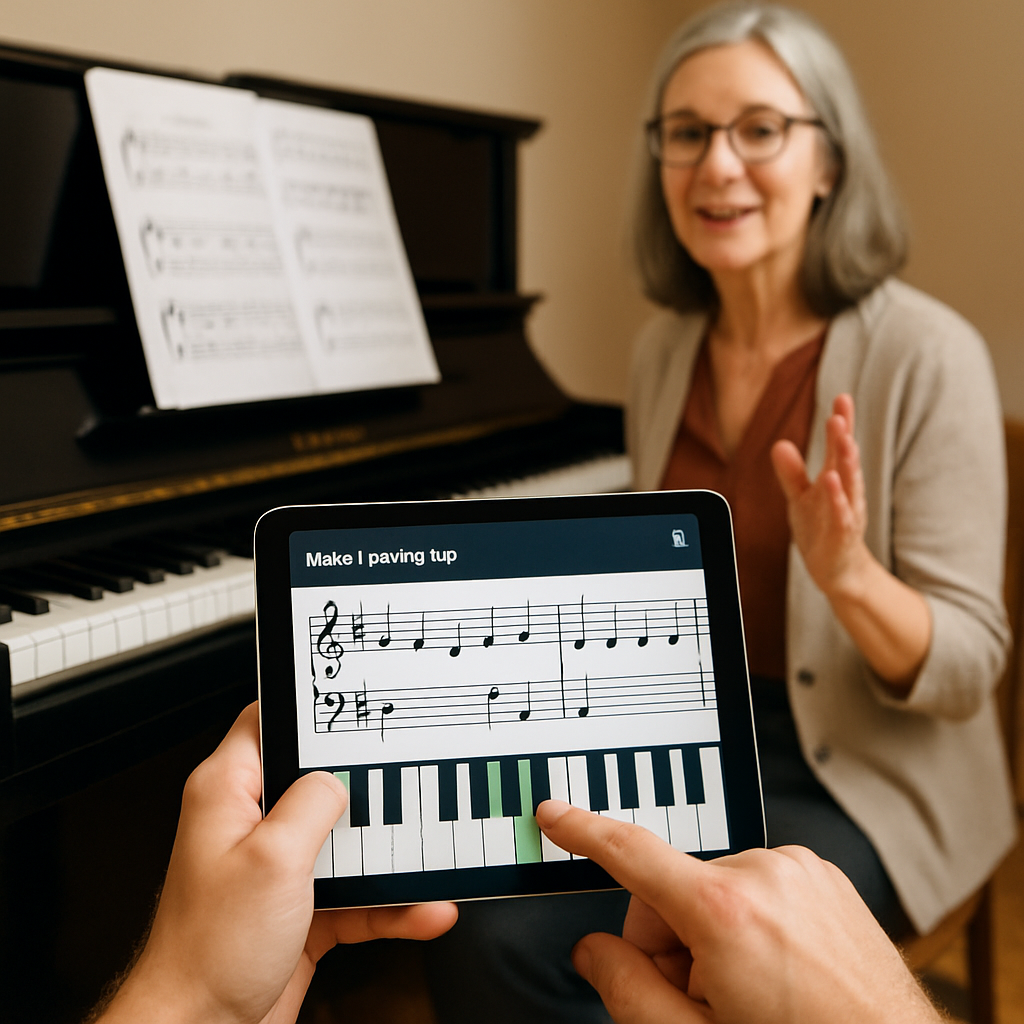
Apps like Duolingo have expanded beyond language learning to include music courses, such as piano instruction. These platforms often utilize gamified lessons and instant feedback mechanisms to engage users. For instance, Duolingo’s music app focuses on teaching users to play a virtual keyboard on their devices, making it accessible for beginners. However, this approach has limitations, particularly when transitioning to a real piano. The virtual keyboard’s small size can hinder proper finger placement and technique, potentially leading to challenges when applying skills to a traditional instrument. Additionally, the app may not adequately teach the location of middle C on a real piano, causing confusion and slowing progress. ([duolingoguides.com](https://duolingoguides.com/is-duolingo-music-good/?utm_source=openai))
Similarly, other piano learning apps like Simply Piano, flowkey, Skoove, Yousician, MuseFlow, and ROLI Learn aim to reduce the initial friction of learning by providing structured lessons and feedback. While they effectively introduce beginners to the basics, they often fall short in addressing the physical aspects of playing. These apps may not correct issues such as rigid hands, locked wrists, or poor posture, which can lead to musculoskeletal problems over time. Moreover, many students using gamified piano apps encounter a ‘Level 5 Plateau’ within three months, where the music’s complexity surpasses the app’s ability to provide meaningful feedback, leading to stagnation and potential discouragement. ([thelearningstandard.org](https://thelearningstandard.org/news/why-2026-piano-apps-still-can-t-replace-a-real-teacher?utm_source=openai))
Beyond piano, guitar learning apps also face challenges, especially with complex styles like fingerstyle playing. While these apps offer a plethora of resources, they often lack the personalized feedback necessary for mastering intricate techniques. The absence of real-time, individualized instruction can result in the development of bad habits and hinder progress. ([kunstplaza.de](https://www.kunstplaza.de/en/music/guitar-apps-fingerstyle-limits/?utm_source=openai))
Furthermore, the lack of personalized instruction is a common drawback across various music learning apps. While they can provide general guidance, they cannot offer the tailored feedback that a human teacher can. For example, an app might indicate that a note is played incorrectly but cannot diagnose underlying issues like poor finger positioning or posture. This limitation can impede the development of proper technique and musicality. ([allasmusicstudio.com.au](https://allasmusicstudio.com.au/can-i-learn-to-play-music-instruments-using-mobile-apps/?utm_source=openai))
In conclusion, while music learning apps serve as excellent supplementary tools, they should not be relied upon as the sole method of instruction. The combination of app-based learning for convenience and human instruction for personalized feedback offers a more comprehensive approach to mastering a musical instrument. Aspiring musicians should consider integrating both methods to achieve a well-rounded and effective learning experience.