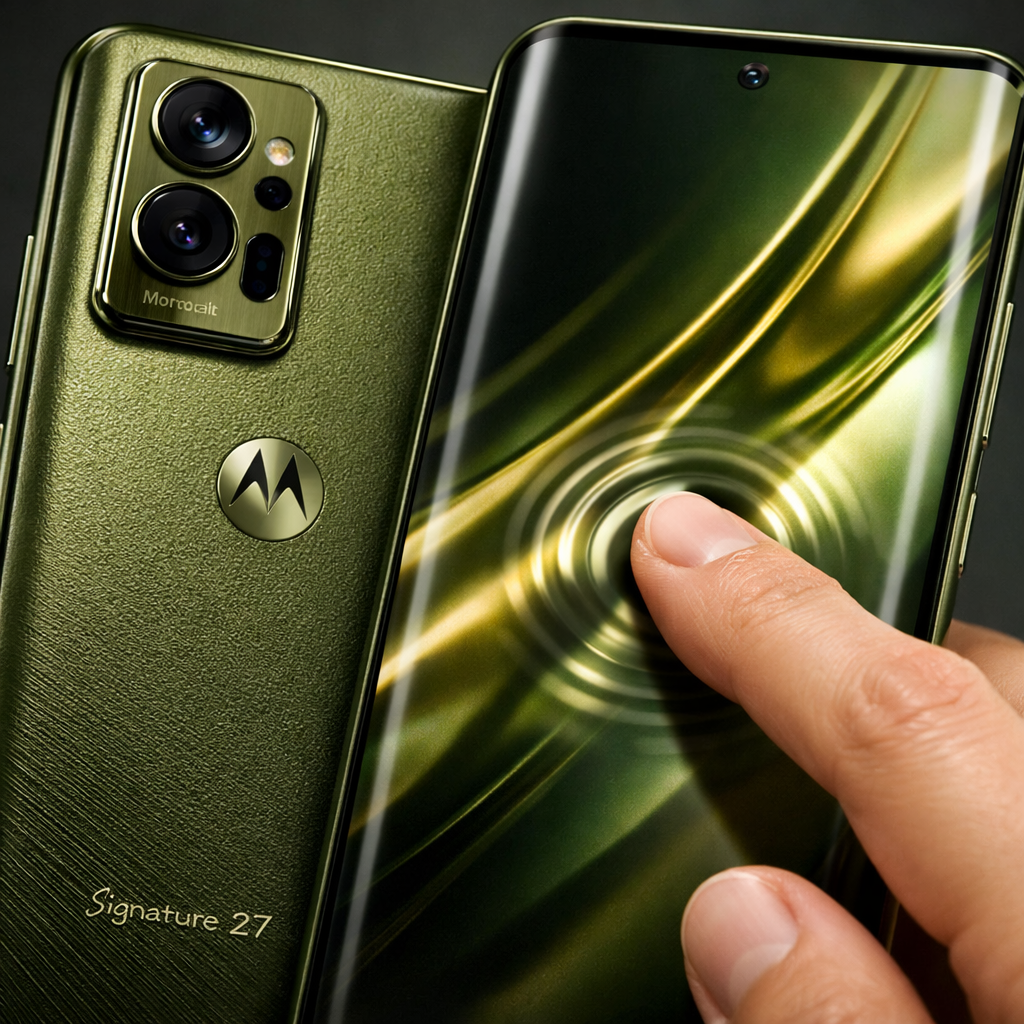
Motorola’s latest flagship, the Signature 27, finally delivers haptic feedback that rivals the refined experience long associated with Pixel phones. The upgrade comes after years of Motorola shipping phones with underwhelming vibration and touch responses. The improved haptics here don’t just feel better—they heighten every interaction.
In early impressions, the Signature 27’s design immediately impresses. It sports curved front and back panels with gently rounded edges, creating a pebble-like form that’s comfortable in hand. The texture of the Capulet Olive colorway adds a tactile richness that complements the sophisticated build. Yet what truly elevates the experience is what you can’t see—the new haptic engine.
More tactile typing, unlocks that pop
Text entry on the Signature 27 exhibits a notable step up: each tap of the on-screen key delivers a sharp, distinctly physical click that mimics pressing real hardware buttons. Unlocking the phone yields a satisfying punch to the thumb, confirming biometric success in a way that simply feels more intentional. Moving through apps and sending messages also register with subtle feedback cues that dramatize the interaction—something Pixel users have taken for granted for a while.
That said, Motorola’s upgrade isn’t perfect. Other areas of the interface—like adjusting brightness or volume—lack the same level of haptic polish. These controls still feel smooth and clean, but they miss the tactile dimension found in comparable features on Pixel devices. Motorola doesn’t yet apply the upgraded motor across every UI element, limiting moments where your fingertips can fully sense the machine beneath the glass.
A long-awaited step forward
Historically, Motorola phones have lagged behind when it comes to fine motion and feedback. Haptics, though invisible, deeply influence how premium a phone feels. Users may overlook them—until they’re bad, or surprisingly good. The Signature 27’s sound design and motor work combine to restore some of the lost magic.
Design matters here too: it’s not just the motor, but how the device houses it. The rounded edges, curved surfaces, and tactile back panel don’t just look sleek—they cradle the hardware underneath in ways that amplify haptic output. Despite these physical gains, Motorola still has room for deeper software integration to match what Pixel phones do—especially around interactive controls like the volume and brightness dials.
The Signature 27 arrives into a market saturated with flagships where any edge in haptics feels like a subtle differentiator. In phones like Google’s Pixel line, the haptic feedback system is part of their identity—a tactile “highlighter” across menus, typing, unlocking, and transitions. Motorola’s renewed emphasis here means the company is finally layering that same intentionality into its own premium offering.
Upgrading the feel of touch may not seem headline-grabbing, but it underpins every moment of use. The Signature 27’s step toward Pixel-style haptics suggests Motorola understands that raw specs aren’t enough—the sensory experience counts. What to watch now: whether software updates bring those missing dial interactions, and whether Motorola’s components hold up over months of real-world use. If it does, this could mark the start of Motorola reclaiming ground in premium feel.