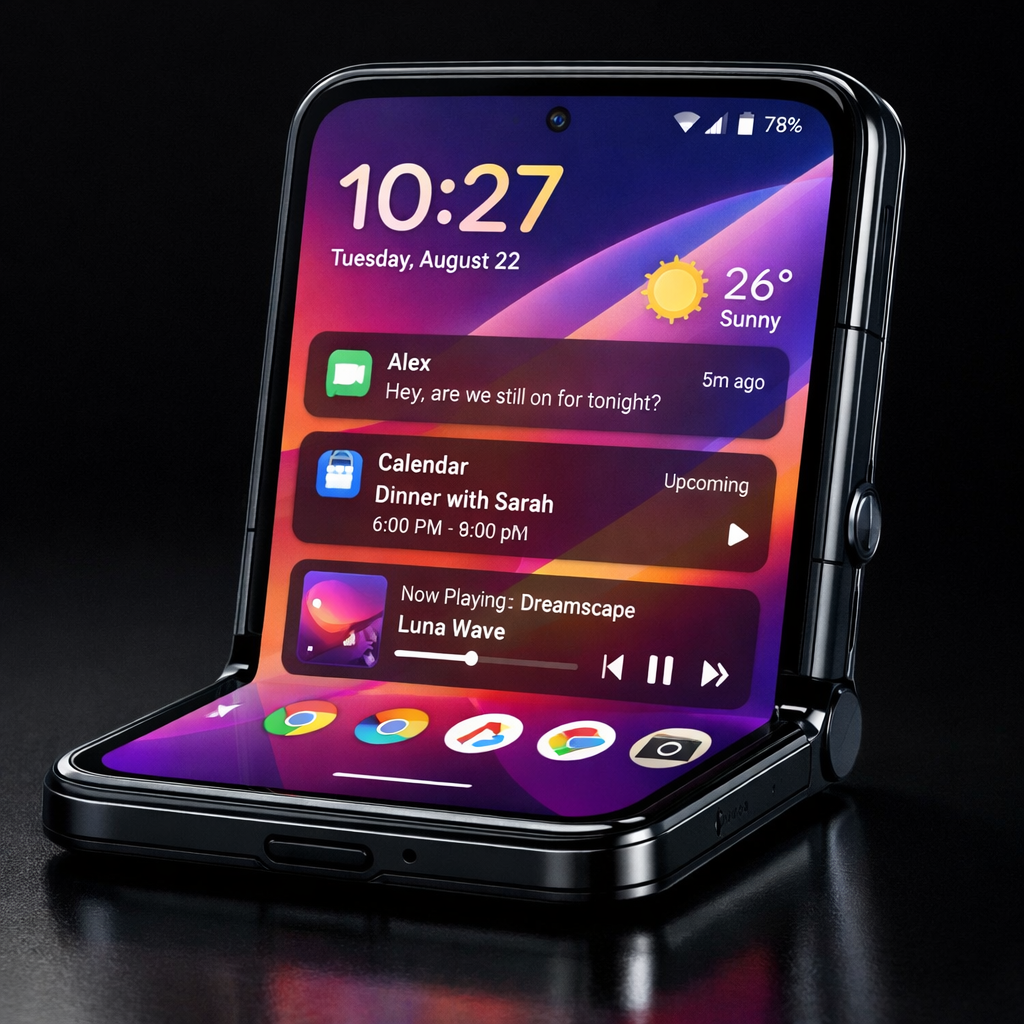
Motorola’s Razr Fold is now getting its Android 17 update, marking its first major software refresh since the device debuted in May 2026. Despite its solid hardware and a pledge for 7 years of OS and security support, the rollout has lagged behind other Motorola models.
What’s New in Android 17 for Razr Fold
The update weighs in at around 4.15 GB and has begun appearing in multiple regions — notably Hungary and other parts of Europe, with some reports from Spanish-speaking areas. Motorola’s changelog highlights a refreshed visual style, smarter notifications, enhanced multitasking to keep more apps easily accessible, and bolstered security protections and controls. Users have also noticed a fix for a UI glitch involving Telegram, a problem spotted earlier this year.
Timing and Expectations
Razr Fold launched with Android 16 in May 2026, amid praise for its strong specs and Motorola’s promise of long-term updates. Android 17 has already been rolled out to other Motorola devices for several weeks, but Razr Fold only now joins the list, more than three months after the company first announced its intention to update the model.
Still, despite being Motorola’s flagship book-style foldable and one of its few phones guaranteed 7 years of software care, the Razr Fold didn’t get priority over some lower-tier devices that received Android 17 earlier. As of now, there’s no confirmed rollout in the United States; units here are reportedly still waiting in the update queue.
Also worth noting: the $1,600 Motorola Signature 27, launching in the near future, carries the same long-term software support promise — raising expectations for a speedier update cadence going forward.
What this means: The Android 17 release for the Razr Fold is welcome, especially for early buyers expecting timely support. But the delay suggests Motorola has some work to do in aligning its update schedule with promises. Going forward, users will be watching closely: will the company deliver on its support timeline, especially for its premium devices, or will delays become the norm?