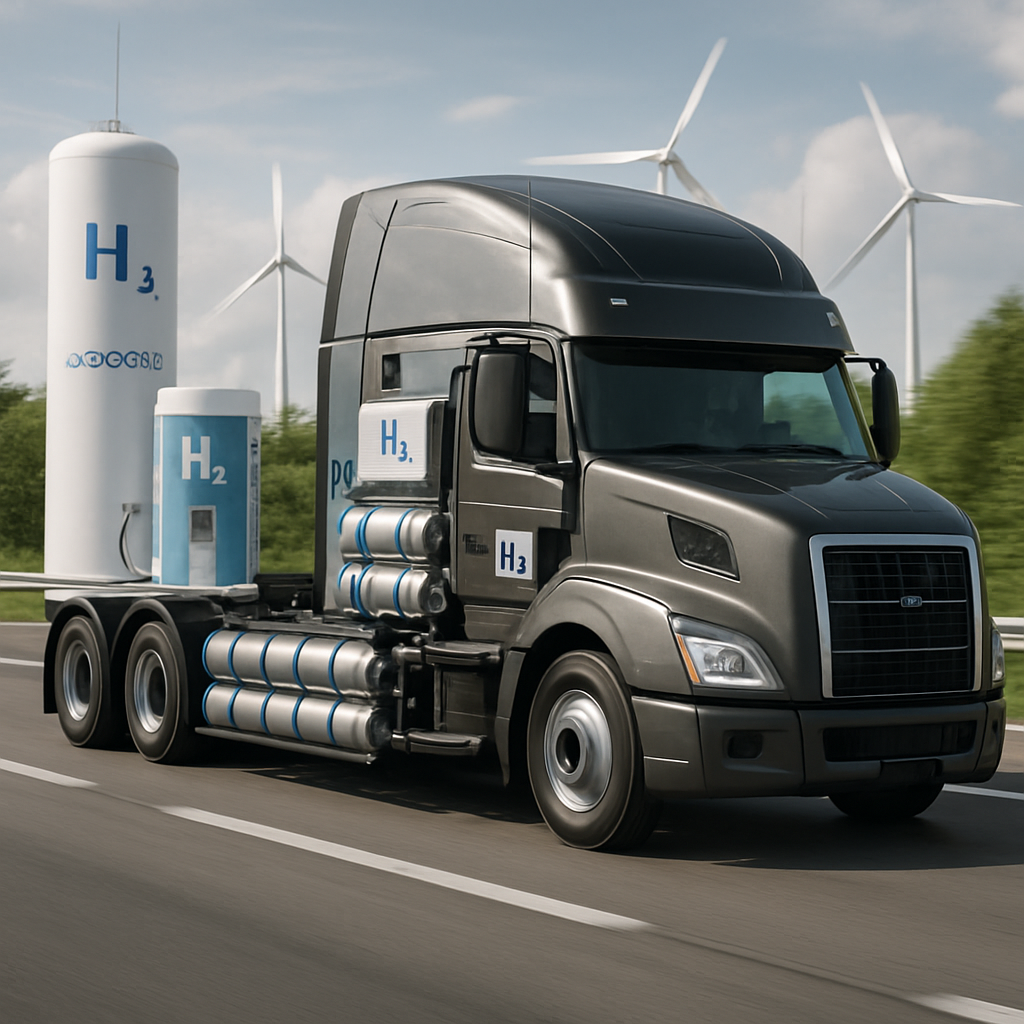
That massive diesel rig rolling down the highway could soon be powered by hydrogen—without a completely new truck. A startup born at MIT has developed a retrofit solution that can convert existing heavy-duty (Class 8) diesel trucks into hydrogen-fuel machines while promising lower operating costs and less pollution.
How the Retrofit Works
The company, LNK Energies, uses liquid organic hydrogen carriers (LOHCs), which are compounds that hold hydrogen in liquid form and release it on demand. Unlike traditional hydrogen fuel systems that store hydrogen under extreme pressure (above 11,000 psi or about 800 bar), LOHCs allow hydrogen to be carried as a liquid, eliminating the need for bulky, energy-intensive high-pressure storage. The real breakthrough is shrinking the reactor—the device that pulls hydrogen from the LOHC—down from something the size of a shipping container to roughly the size of a mini-fridge, small enough to be installed onboard a truck’s frame.
Once released, the hydrogen can fuel a slightly modified internal combustion engine, using engine waste heat to help operate the reactor. For fleets wanting zero combustion emissions, there’s an option to pair the LOHC setup with fuel cells, enabling electric powertrain operation. The LOHC itself can be handled much like diesel: stored in conventional fuel tanks and dispensed using standard fuel pumps.
Cost, Scale, and Timing
LNK estimates that once 50 to 100 of their retrofitted trucks are built, the total cost of ownership will drop below what it costs to run them on diesel—without factoring in government subsidies. Based on their modeling, operations could be cheaper than diesel when oil prices are elevated, especially in scenarios like international supply disruptions. Though the upfront cost of retrofitting is higher, savings over time are expected to more than offset that.
As of now, LNK has a lab-scale reactor capable of powering small engines (a lawnmower has been used for demonstration). Their next goal: integrate a full-size version in a commercial Class 8 truck over the next 18 months. The team will be presenting live at the Disrupt 2026 conference in San Francisco’s Startup Battlefield competition October 13-15.
Under their assumptions, total cost of ownership of a retrofitted Class 8 truck could be about 13% cheaper than its diesel equivalent. That estimate assumes LOHC retrofits are available at modest scale (50-100 trucks), and excludes subsidies. Intersperse that with high diesel prices, and the economics become even more compelling.
Closing the gap on hydrogen’s infrastructure limitations is key. Because the fuel delivery via LOHC doesn’t require ultra-high pressure dispensing, existing diesel fueling stations may play a role in hydrogen supply, easing one of the primary barriers to hydrogen adoption.
What this means for the trucking industry is significant: diesel price volatility remains a heavy burden. By using chemical carriers, retrofits, or fuel cells, LNK’s solution could offer a path toward more affordable hydrogen adoption—if the scaling challenges hold. Over the next year and a half, all eyes will be on whether the full-scale truck conversion performs as modeled, what retrofits cost up front, and how regulatory and fueling infrastructure adapt. Hydrogen may yet become a practical fuel for long-haul freight—and not just in concept, but on the road.