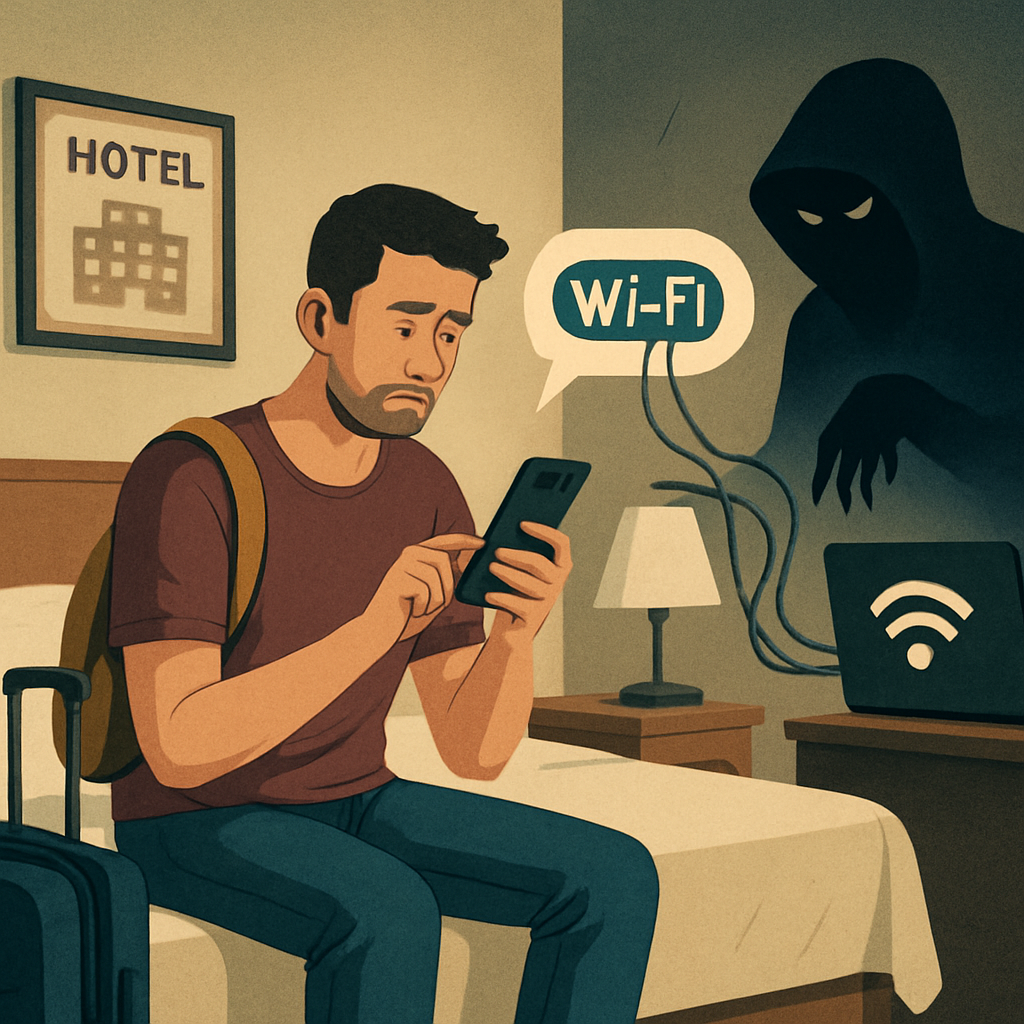
Travelers connecting to hotel Wi-Fi networks are now prime targets for a sophisticated cyberattack orchestrated by Midnight Blizzard, a Russian state-sponsored hacking group. This campaign, identified as ‘CaptiveCrunch’ by Microsoft analysts, manipulates the trusted login pages of hotels, conference centers, and other public networks to compromise business travelers’ devices and steal cloud credentials.
Unlike traditional phishing methods that rely on deceptive emails, this attack exploits the network infrastructure itself. Upon connecting to a compromised Wi-Fi network, users are redirected through a counterfeit sign-in process that appears legitimate. This process may include prompts for software updates or cloud account logins, which, when accepted, lead to malware installation on the user’s device.
Mechanism of the Attack
Midnight Blizzard gains control over hotel Wi-Fi gateways, which manage the captive portals displayed before granting internet access. By altering DNS responses, the attackers can reroute a user’s browser to malicious servers instead of the intended legitimate pages. The manipulated portal may closely mimic a standard Wi-Fi access page but is designed to deliver malware through fake browser updates or system prompts.
This method is particularly effective because it targets users at a moment when they are less vigilant—while attempting to connect to the internet in a trusted environment. The attack also leverages the Web Proxy Auto-Discovery Protocol (WPAD) to influence how a device routes web traffic, potentially exposing authentication activities that users believe are secure.
Targeting Cloud Credentials
The ultimate objective of this campaign is to gain access to cloud accounts. By capturing passwords, session tokens, or device authorization information, attackers can infiltrate services without needing physical access to the victim’s device. This poses a significant risk to organizations that rely on cloud-based identity systems for remote work, as a single compromised account can expose sensitive emails, files, business applications, and identity data.
Once inside a cloud account, attackers can read confidential material, impersonate employees, send internal messages, or establish a foothold for broader intrusions. This tactic reflects a growing trend of adversary-in-the-middle phishing attacks, where cybercriminals intercept authentication traffic to bypass common security measures.
To mitigate these risks, it’s crucial for organizations to treat hotel and public Wi-Fi networks as untrusted. Travelers should employ always-on, full-tunnel VPNs before accessing sensitive work materials. Additionally, while multi-factor authentication (MFA) remains a vital security measure, it should not be solely relied upon to prevent token or session theft attempts.
This development underscores the evolving nature of cyber threats, where attackers are increasingly exploiting trusted network infrastructures to bypass traditional security defenses. Organizations must adapt by implementing comprehensive security strategies that account for these sophisticated attack vectors.