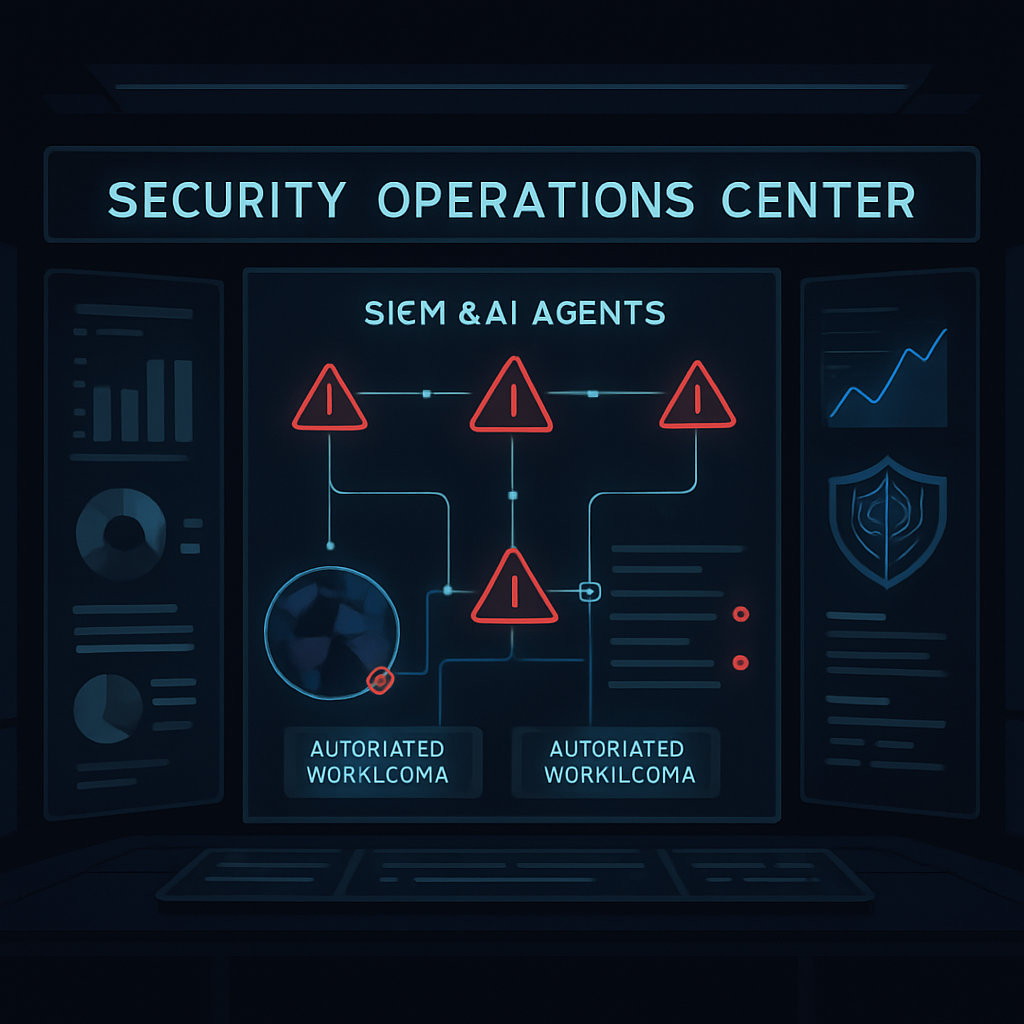
Microsoft has proposed a major overhaul of the Security Operations Center (SOC), introducing a unified model called Integrated SOC (ISOC) designed to blend threat protection with SIEM (Security Information and Event Management), all underpinned by AI agents. The idea: close the widening gap between attackers running at machine pace and defenders still switching between tools.
A Convergence of SIEM and Threat Protection
Traditional SOC setups force analysts to piece together alerts from one tool, then pivot to another to respond. Microsoft says this siloed setup slows defenders. ISOC, now in preview as of September 23, collapses that separation, bringing Microsoft Defender’s threat protection and SIEM under a single workflow. Analysts and agents should share both the context and control needed to identify issues and act quickly, without repeatedly rebuilding incident timelines. That design hinges on a unified architecture: signals, context, and response controls live in one place. Human decision-making still matters—it sets priorities and judges trade-offs.
AI Agents, Continuous Defense & What’s Missing
ISOC leans heavily on AI agents. These agents are expected to run continuously, triage alerts, chase down investigations, and even take automatic steps while defenders oversee the results. Microsoft mentions Project Perception and its cyber stack from July 2026 as sibling efforts focused on models and specialized agents. ISOC also introduces the concept of an “integrated protection loop”—defensive systems learning during an attack to harden defenses before the next phase. Threat intelligence and exposure visibility feed into this loop to prioritize what matters most.
That said, important details are still unknown. Microsoft hasn’t said which third-party tools ISOC will integrate with, exactly what actions agents can take autonomously versus what needs human sign-off, or when ISOC will roll out beyond preview. No independent performance data—on detection speed, breach prevention, or alert fatigue reduction—has been shared. Users evaluating ISOC will need clarity on evidence trails behind AI decisions and the degree of human oversight built into the automation.
ISOC represents a deliberate attempt to bring SOC operations closer to attackers’ speed. As cyber threats increasingly exploit automation, defenders need more than alerts—they need responsive systems that understand context, adapt over time, and let AI assist without replacing human judgment.
What this means: Businesses could see faster incident response times and fewer gaps in detection—*if* the promise of unified context and automation translates cleanly from preview to real environments. Watch for Microsoft’s detailed disclosures on agent scope, third-party compatibilities, and validation metrics. Whether ISOC truly redefines SOC capability will depend on whether it helps security teams stay ahead.