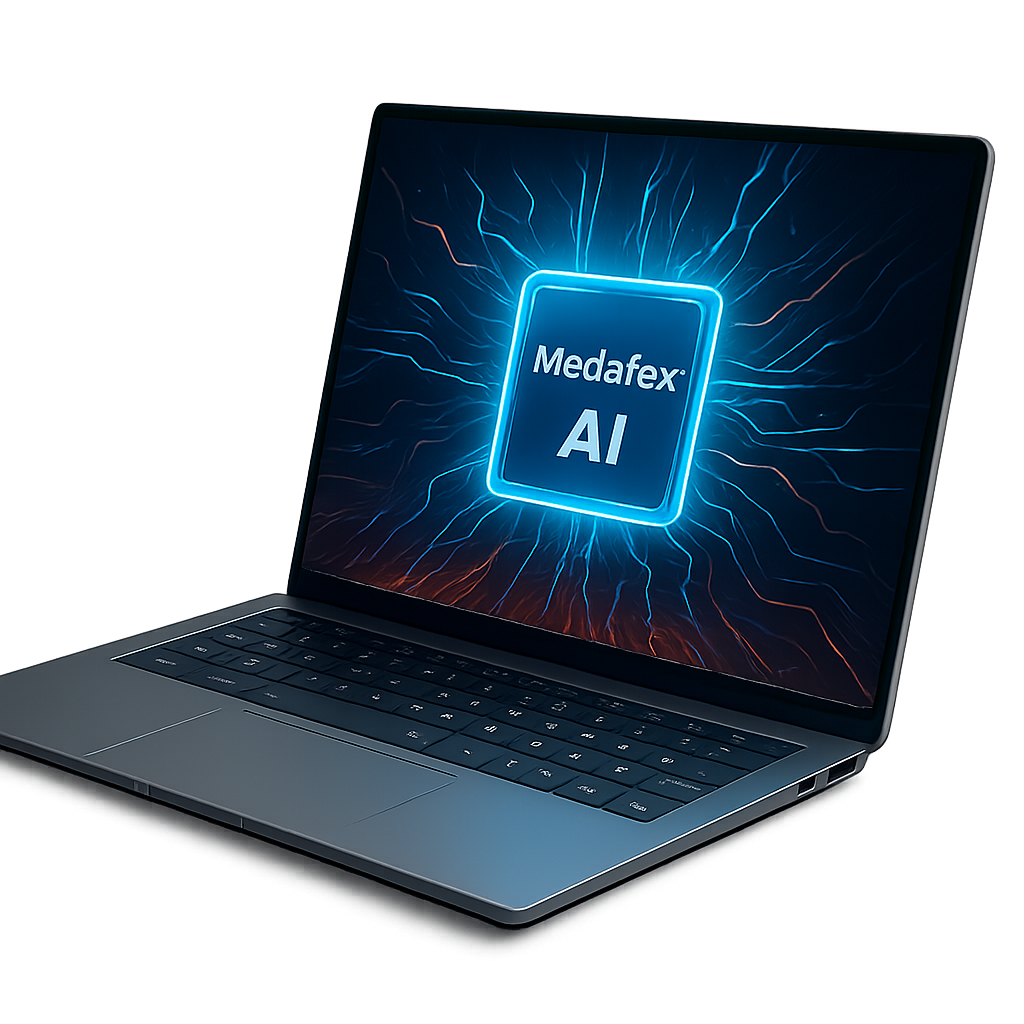
MediaTek has launched its flagship “Compute Experiences” processor, the Dimensity CX C10 Max, marking its entry into the newly revealed Googlebook laptop platform. Revealed on September 21, 2026, this state-of-the-art chip will power a forthcoming Lenovo Googlebook variant.
What’s Inside the CX C10 Max
The Dimensity CX C10 Max is built using TSMC’s advanced 3nm process and features an all-big-core CPU configuration: one Arm Cortex-X925, three Cortex-X4, and four Cortex-A720 cores. Graphics are handled by an 11-core GPU, and there’s a dedicated NPU (MediaTek’s 8th generation) to accelerate AI workloads. Claims include up to 55 TOPs (trillions of operations per second) of performance for AI tasks. The architecture is optimized for power efficiency, enabling thin, fanless designs with extended battery life. Connectivity specs include Wi-Fi 7 and Bluetooth 6.0, though the Googlebook models may omit Bluetooth support.
Googlebook and Device Context
Googlebook represents Google’s new laptop platform, designed to compete in hybrid hardware-software ecosystems. Lenovo is among the first manufacturers onboard. The initial Lenovo Googlebook released earlier in 2026 came with Intel and Qualcomm chips rather than MediaTek silicon. The CX C10 Max is intended for a later model—possibly Lenovo’s rumored Googlebook tablet—rather than the original 15-inch laptop design.
This chip aims to expand the Googlebook lineup’s flexibility. Its fanless design and emphasis on battery life suggest a move toward ultraportable devices, while its AI capabilities indicate readiness for increasingly smart software and services integrated with Chrome or Android ecosystems.
Background: MediaTek introduced its CX family of chips to address a rising demand for high-performance laptop processors optimized for AI workloads, especially in thinner, more mobile form factors. With Apple, Intel, and Qualcomm already pushing into similar territories, MediaTek’s entry is significant.
Why It Matters: The CX C10 Max brings high-end performance and AI readiness to Googlebook machines, potentially altering the balance in laptop platforms. As AI moves from cloud to device, chips like this one will define user experience and hardware design choices. What to Watch: communication around laptop form factors and launch timing; how Googlebook devices will leverage on-device AI; the impact on competitors like Apple’s silicon, Intel, or Qualcomm depending on power, AI, and battery trade-offs.