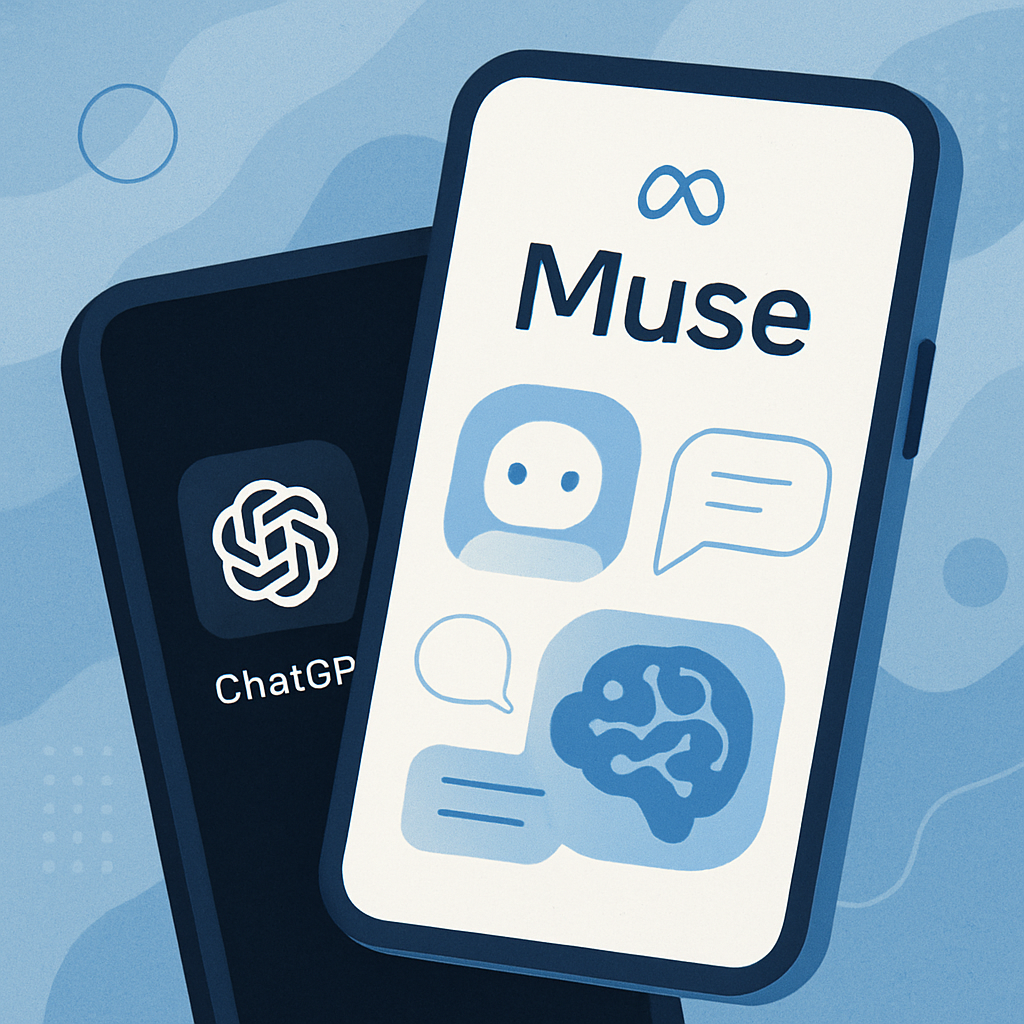
Meta’s freshly launched Muse AI agent has quietly usurped OpenAI’s ChatGPT as the most-downloaded free app on the U.S. iPhone App Store. Though only released earlier this month, Muse’s rise reflects surging user demand for conversational AI that feels more like engaging with a personable assistant than a tool.
Muse officially hit the top spot for free iPhone apps in the U.S., pushing ChatGPT down the ranks after Meta made the app available for just a few weeks. This climb isn’t solely driven by Muse’s initial release day traffic — ongoing new installs have kept it ahead in the charts.
Muse Gains the Upper Hand
Beyond its iPhone dominance, Muse has now expanded to macOS, allowing desktop users to experience the AI agent. However, those Mac installs don’t affect its App Store ranking, since the desktop version is distributed via Meta’s website rather than the App Store.
Muse joins fellow agents like SpaceXAI’s Grok Bot in treating users to “agentic workflows” packaged like messaging apps. Instead of being hidden features inside broader AI products, these agents sport personalities and functions that feel conversational. This toy-like design aims to make interacting with AI agents feel natural and familiar.
Competition Heats Up with Siri AI
Meta isn’t alone in pushing the envelope. Apple recently rolled out Siri AI, a revamped assistant that spans iPhone, iPad, Mac, and Apple Watch across its newest OS 27 releases. In addition to system-wide capabilities like editing photos and using on-screen content for context, Siri AI also offers a dedicated chat app.
That means Siri AI now operates both as an integrated assistant and a standalone experience, placing it squarely in competition with agents like Muse and Grok. Each of these tools signals how major tech companies are refining user experience through more personal and proactive AI.
What this means: Muse’s rapid ascent suggests market demand favors AI agents that are both integrated and personality-rich. As Muse settles into its top position on mobile, the battle lines vs ChatGPT and Apple’s Siri AI are clearly drawn. Moving forward, developments in personalization, cross-platform fluidity, accessibility, and privacy will likely decide which agents truly lead the next wave of consumer AI engagement.