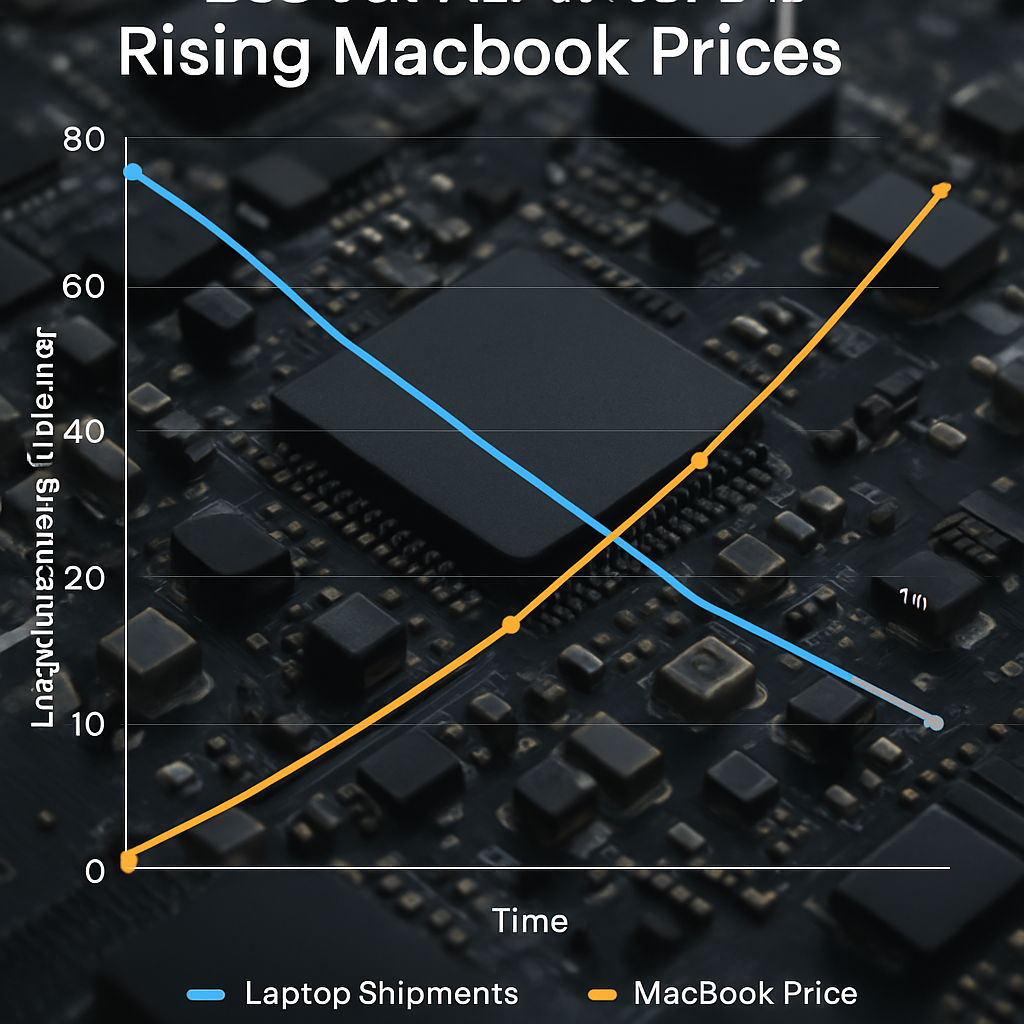
Recent analyses indicate that Apple’s decision to raise MacBook prices is a significant factor in the anticipated 13.6% decline in global laptop shipments for 2026. This trend underscores the broader impact of escalating component costs on the tech industry.
Apple’s price adjustments across its MacBook lineup reflect the company’s response to rising memory and semiconductor expenses. These increases have narrowed the price gap between MacBooks and premium Windows laptops, potentially prompting price-sensitive consumers to consider alternative brands. However, the overall effect on market dynamics is expected to be limited, as higher prices are a widespread issue affecting the entire industry.
Despite these challenges, Apple is projected to ship approximately 23.1 million MacBooks in 2026. This forecast suggests that, even with a softened demand in the latter half of the year, the company could achieve double-digit year-over-year growth. This resilience is attributed to the continued appeal of Apple Silicon upgrades and the strength of the macOS ecosystem.
The broader market is also grappling with the repercussions of increased component costs. The surge in demand for AI servers has intensified the strain on memory capacity and advanced semiconductor resources, leading to higher production costs. As these expenses are passed on to consumers, a noticeable decline in demand has emerged, particularly in the entry-level and mainstream laptop segments, where price sensitivity is more pronounced.
Looking ahead, the sustained demand for AI-related hardware is expected to keep component costs elevated. Combined with growing consumer resistance to higher prices, these factors are likely to contribute to the projected 13.6% decline in global laptop shipments for the year.
In this evolving landscape, Apple’s ability to maintain growth amidst industry-wide challenges highlights the importance of strategic pricing and product differentiation. As the market continues to adjust to these economic pressures, companies that can effectively balance cost management with consumer value propositions will be better positioned to navigate the downturn.