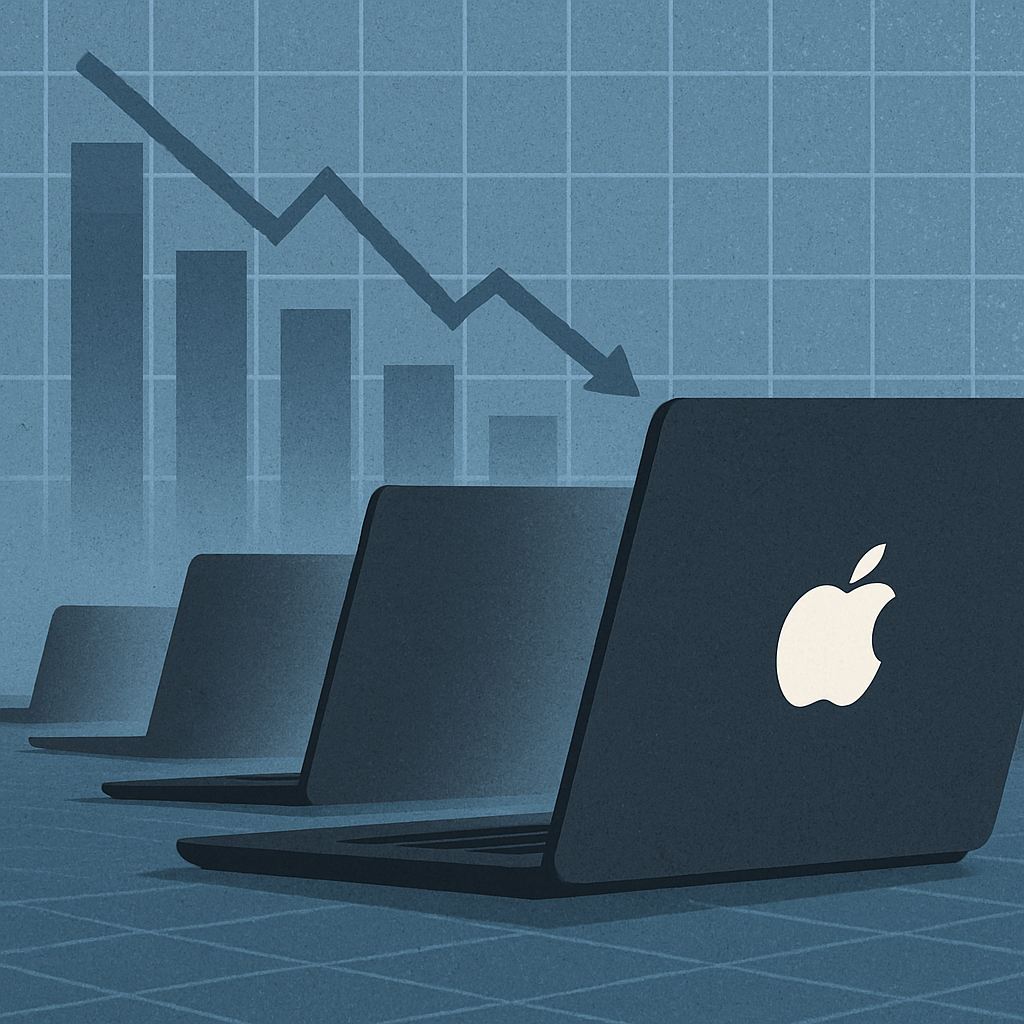
Global PC shipments took a sharper dive than expected in the third quarter of 2026, but Apple managed to carve out a larger slice of a shrinking pie. Despite shipping fewer Macs year-over-year, Apple lifted its share of the PC market due to steeper drops at the top.
Sharp Decline Across the PC Landscape
Overall shipments of PC devices tumbled 20.1% in Q3 2026 to 62.7 million units, down from 78.5 million units in the same quarter a year earlier. This follows a more modest 3.8% annual dip in the prior quarter. Usually a period of strong demand, the summer months still fell short, with Q3 showing a 9.1% decrease from Q2. Analysts point to a mix of weak buying momentum and elevated costs taking a toll across the category.
Apple’s Mac Line: Smaller Volume, Bigger Share
Apple shipped approximately 5.9 million Macs between July and September, compared with about 6.7 million in Q3 2025 — a drop of 11.3%. But with rivals bleeding more ground, Apple’s market share rose to 9.5%, up from 8.5% a year ago. Apple retained its fourth-place ranking among PC vendors.
Leaders in the PC arena didn’t fare as well. Lenovo held on to first place with 14.9 million units shipped, suffering a 22.6% year-over-year decline. HP followed with 10.3 million units — down nearly 31% — and Dell shipped 7.6 million units as shipments dropped by about 25%. ASUS rounded out the top five at 5.5 million units, standing out with a smaller decline than most peers but still experiencing an 8.6% slide.
Factors Driving the Downturn
Several headwinds converged to deepen the decline. Inventory built up earlier in the year — distributors and manufacturers ordered ahead to hedge against rising memory prices — left less need for fresh orders during Q3. Tight components and overall higher costs put pressure on prices. Apple itself raised Mac pricing in June, attributing the move to sharply increasing expenses for memory and supply chain inputs.
Market watchers are also growing cautious about demand trends. The combination of supply chain challenges and inflationary pressure is clouding the outlook for the remainder of 2026. Some companies may offer discounts to move unsold stock, but prices are unlikely to return to year-ago levels, and weakening consumer sentiment could push further declines into early 2027.
Even in tough conditions, Apple’s relatively smaller drop in shipments meant it came out ahead in market share. Its fourth-place rank was preserved, but what’s notable is how it is holding up against vendors facing steeper volume erosion.
Why This Matters: For Apple, the shift is strategic. Bigger market slice with fewer units billed suggests consolidation among PC makers, cost pressures reshaping supply chains, and consumers holding off on upgrades. For competitors, the challenge is steeper: steep drops in demand and rising component costs aren’t going away anytime soon. Industry watchers should keep an eye on Q4 pricing moves, inventory levels among top vendors, and whether Apple can turn share gains into sustained profit.