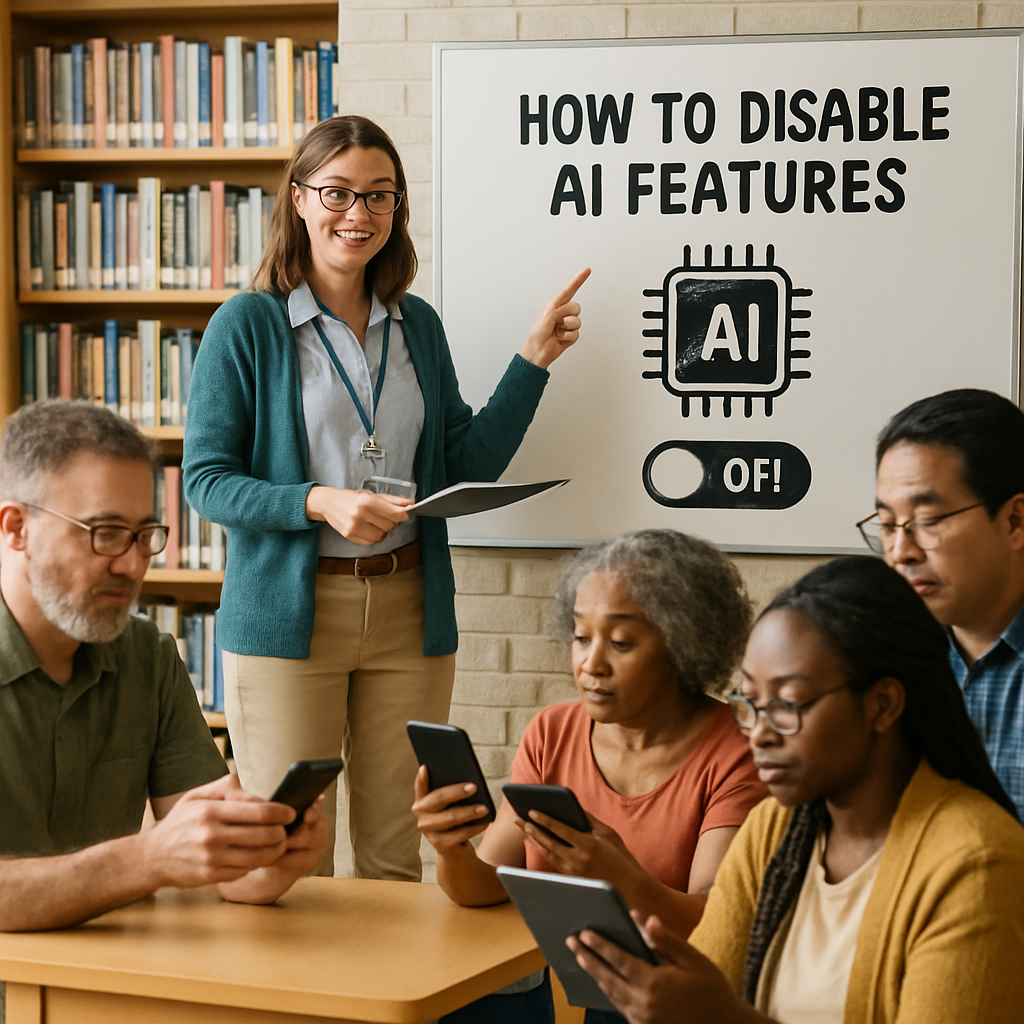
In response to increasing public concern over the pervasive integration of artificial intelligence (AI) into daily life, librarians across the United States are organizing workshops aimed at educating individuals on how to minimize their interactions with AI technologies. These sessions, dubbed “Avoiding AI,” have gained significant traction, reflecting a broader societal apprehension toward the rapid adoption of AI by major tech companies.
Charlie Bailey, a librarian based in South Philadelphia, recently conducted one such workshop. Addressing a group of over 20 adults, Bailey guided attendees through the process of disabling AI features on their devices, including Apple Intelligence and Gemini. The workshop commenced with an overview of AI chatbots and consumer AI tools, discussing both their potential benefits and reasons one might choose to opt out of using them. Bailey emphasized the importance of digital literacy and empowering individuals to make informed decisions about their technology use.
The inspiration for these workshops traces back to Hannah Cyrus, a librarian from Maine, who initiated the “Avoiding AI” program after noticing a surge in patron inquiries about unwanted AI features. Cyrus observed that many individuals were frustrated by AI tools being integrated into their devices without consent, leading her to develop a workshop that not only educates participants on the basics of AI but also provides step-by-step instructions on disabling these features. The overwhelming response to her initial sessions, which attracted around 70 participants each, underscored the public’s desire for such information.
Bailey, inspired by Cyrus’s initiative, introduced the workshop in Philadelphia, where it received an unprecedented response. A promotional post about the event garnered over 2,000 likes and 220 shares on social media, a significant increase compared to the library’s typical engagement. The high demand led to the scheduling of additional sessions to accommodate interested participants.
These workshops highlight a growing movement among librarians to address public concerns about AI’s role in everyday life. By providing practical guidance on managing and disabling AI features, librarians are positioning themselves as crucial resources in the ongoing discourse about technology’s place in society. This trend reflects a broader skepticism toward the unchecked proliferation of AI tools and underscores the need for accessible education on digital autonomy.
As AI continues to permeate various aspects of daily life, the success of these workshops suggests a significant portion of the population seeks greater control over their technological interactions. This movement not only emphasizes the importance of digital literacy but also signals a demand for more user-centric approaches in technology development. Moving forward, it will be essential for tech companies to consider user consent and autonomy, ensuring that AI integration aligns with the diverse preferences and comfort levels of their user base.