New benchmark results suggest Apple might be developing an M6 Pro chip—contradicting prior reports that the M6 generation would skip higher-end variants like Pro, Max, and Ultra. A Geekbench 7 listing for a machine labeled “Mac18,6” reportedly shows the M6 Pro with 18 cores and some substantial performance gains. The leak could mean Apple plans to extend more device options in the current chip line than many expected.
What the benchmark shows
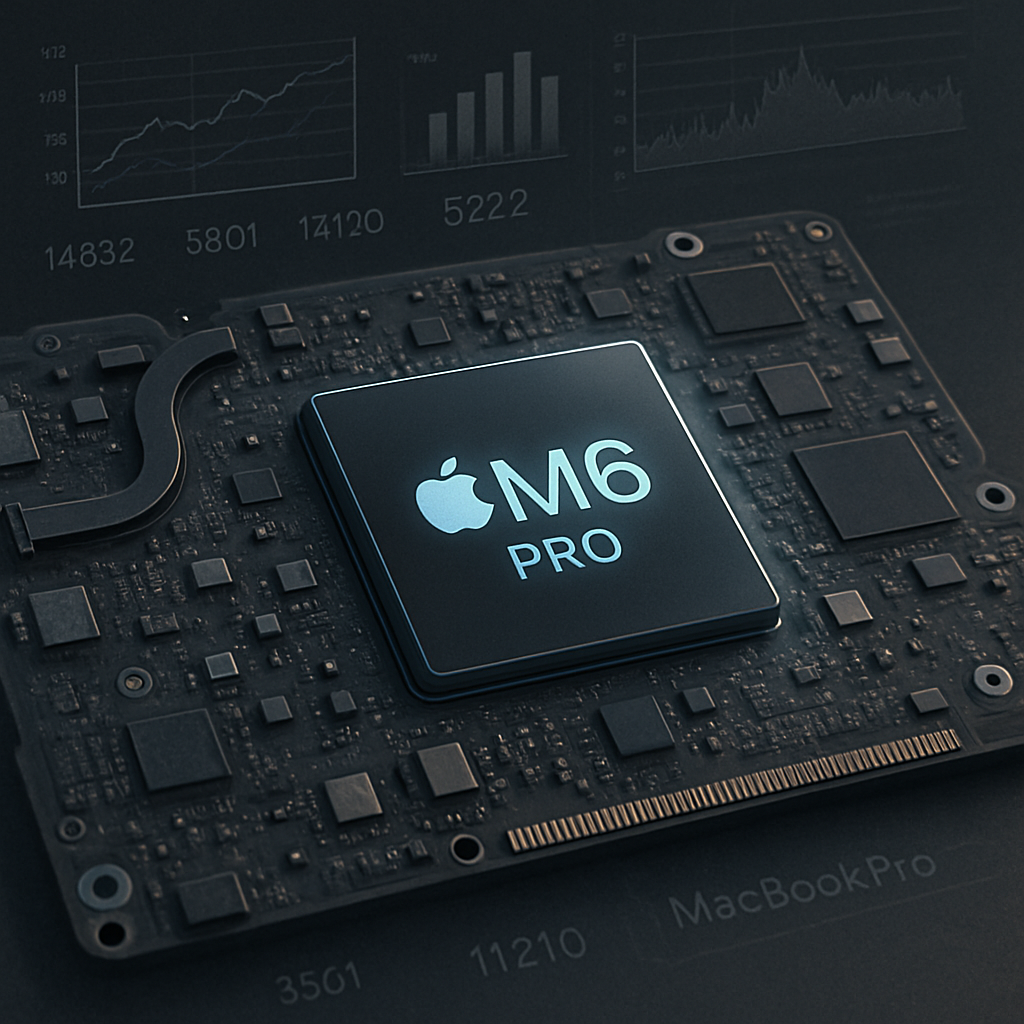
The benchmark entry, dated September 18, 2026, claims the “Mac18,6” device runs on an “Apple M6 Pro” featuring 18 CPU cores—a split of six higher-performance cores (branded as “Super” cores in the listing) paired with 12 efficiency cores. The chip also reportedly runs at a base clock speed of 4.78 GHz (aligning with the Super cores), and the test machine is configured with 48 GB of RAM. In single-core testing, it scored 4,150 points, while its multi-core result came in at 37,565. These numbers outpace recent leaks for the standard M6 Mac mini in multi-core tests and exceed what the M5 Pro in the 16-inch MacBook Pro achieved.
What this could mean—and what still isn’t clear
Prior rumors, especially those circulating in mid-2026, claimed that the M6 generation would be short-lived, lasting only about six months. These rumors also suggested Apple might forego releasing Pro, Max, or Ultra variants within the M6 lineup, jumping straight to M7—expected in early 2027 with AI-focused enhancements. If the benchmark is genuine, it may indicate Apple intended all along to include higher-tier M6 chips, casting doubt on earlier reports that the higher variants would be skipped.
However, there are important caveats. The authenticity of the Geekbench listing is not confirmed; leaks can be misattributed or even fabricated. And while the scores suggest a meaningful boost over current silicon, they also reflect incremental enhancements rather than dramatic leaps, particularly since core count plays a strong role in multi-core performance.
Should the M6 Pro materialize, it could extend the relevance of the M6 generation beyond what many analysts expected. A Pro version would offer stronger performance for power-users and creative professionals in Macs that pair performance and efficiency.
In sum, this alleged benchmark may signal that Apple’s chip roadmap is more complex than recent commentary implied. If verified, the M6 Pro could reshape expectations for Apple Silicon’s middle generation, offering more choice before the AI-optimized M7 rolls out. What to look for next: official confirmation from Apple, consistency in further benchmarks, and whether any Mac models emerge running an M6 Pro in the wild.