AI agents are no longer just software — when they power things in the physical world, failures can have serious consequences. Ann Arbor-based startup Laplace Intelligence has built a platform to “red-team” robots, self-driving cars, and other physical AI systems in high-fidelity simulations before deployment.
What Laplace Does
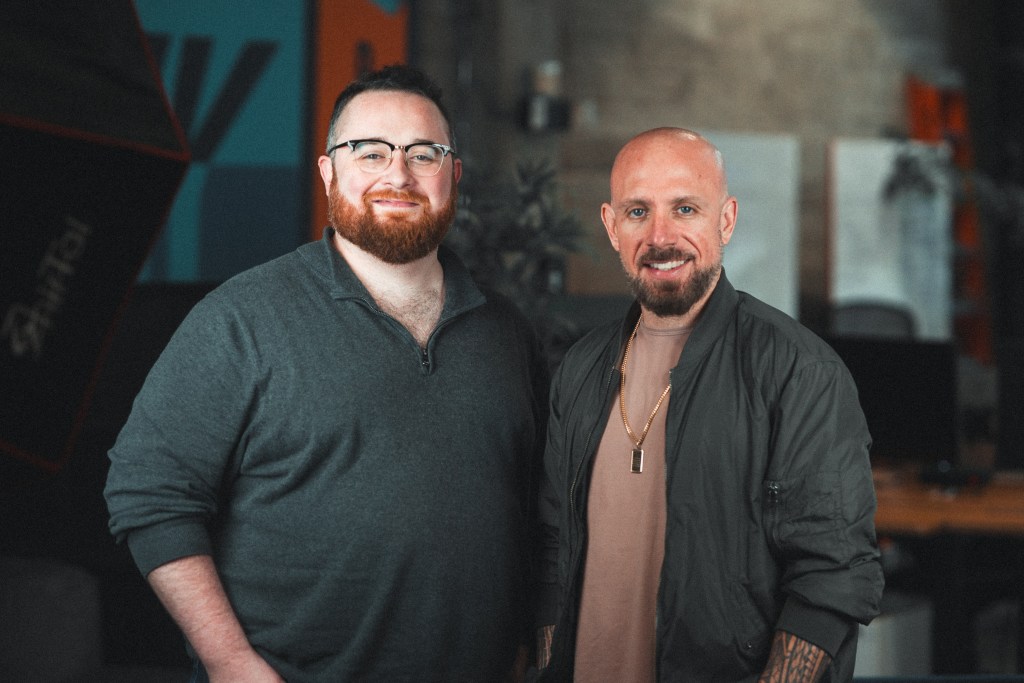
Founded a year ago by Howie Sun and Henry Liu out of the University of Michigan, Laplace recreates real-world environments digitally so AI-powered machines can be stress-tested safely. Sun spent years in academia focused on challenging autonomous driving systems via simulation, and he and Liu published work on this in 2023. That academic effort evolved into a commercial product designed to uncover safety issues before physical AI hits the road.
The core of Laplace’s offering is a simulation engine based on Nvidia’s Cosmos platform, enhanced with real world map and image data. Environments are reconstructed to scale — for example, by using Google Street View images as references to generate full streetscapes. Users can manipulate scenarios in real time — adding traffic, changing time of day, even creating rare but dangerous “corner cases” such as a vehicle veering into oncoming lanes while others respond realistically to avoid collisions. Laplace bolsters the environmental realism by integrating live congestion and navigation data from providers like TomTom.
Automated Red-Teaming & Business Traction
What makes Laplace stand out is the ability to design those tricky, rare edge cases automatically — using AI agents that dig through sources like news reports or crash data to challenge autonomous systems. Historically, autonomous vehicle makers have depended on recorded driving footage and human-designed scenarios to prepare their systems. Laplace aims to reduce human guesswork by enabling AI to generate and test scenarios that humans might not anticipate.
On the business side, Laplace is already generating revenue and even modest profits, despite being pre-series A. Its primary customers are in autonomous driving — for example, Bot Auto (a U.S. autonomous trucking company) and a major Japanese automotive OEM. Beyond that, Laplace has pilot programs with Nvidia and T-Mobile in San Jose focused on smart city traffic operations, and it has begun work with partners building humanoid robots for warehouses. Right now most contracts are project-based, but Laplace aims to shift toward recurring revenue.
Competition and Positioning
One of Laplace’s biggest competitors is Applied Intuition — a well-established player in the physical AI testing space, with over $1 billion raised and a $15 billion valuation. Still, Laplace believes its strength lies in its methodology: using simulation grounded in the real world, with AI agents actively seeking out failure points rather than relying purely on human insight. According to Laplace, this is a paradigm shift in testing physical AI, making the process dynamic and interactive rather than static and fragmented.
Laplace is debuting publicly this week as it competes at Startup Battlefield 200 during TechCrunch Disrupt in San Francisco. Participating in such visibility-driving events is part of the startup’s strategy to raise funds, scale up, and enhance its competitive moat.
What this means: as AI continues to move off the screen and into cars, robots, traffic systems, safety becomes far more complex and critical. Laplace’s approach — simulating the messy, unpredictable real world, and using AI to stress-test AI — may become a crucial standard. For developers, insurers, and regulators, the demand will increasingly favor proven simulation-based safety. Watch for how Laplace and rivals scale up defensible data, real-world validation, and long-term contracts as physical AI goes mainstream.