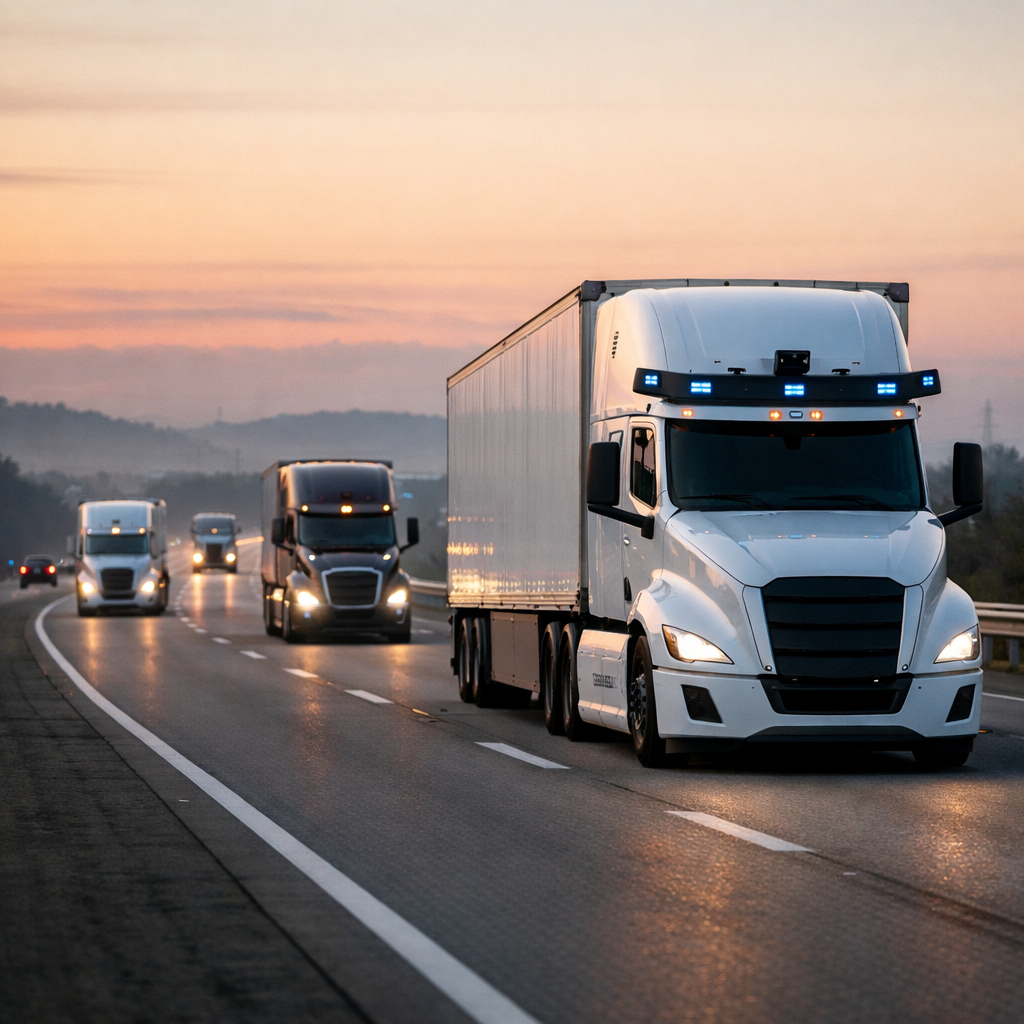
Kodiak AI has locked in its first binding commercial agreement to supply 75 driverless semi-trucks on public highways, starting in 2028, with DTL Transport as its customer. This is a major milestone for Kodiak, as it marks the shift from testing to revenue-generating deployments for heavy-duty autonomous freight on interstates. The company, which went public in September 2025, is preparing to launch fully driverless highway service in December on I-45 between Dallas and Houston.
Details of the Contract
DTL Transport—a California-based mid-market carrier hauling fresh produce and grocery goods—will deploy Kodiak’s tech on multiple interstate routes, starting with two: Dallas to El Paso in Texas, and I-20 between Dallas and Atlanta. Both routes have already been tested by Kodiak under its driverless system.
The deal uses Kodiak’s Driver-as-a-Service (DaaS) model, under which customers own and operate the trucks with Kodiak licensing its autonomous driving technology per mile. DTL represents Kodiak’s first on-highway DaaS customer. Before this, Kodiak’s revenue mainly came from its Trucking-as-a-Service (TaaS) model, in which it owns and operates the trucks. Customers under TaaS include Charger USA, Roehl Transport, and Werner Enterprises. Kodiak now shifts toward being “asset-light,” licensing its system rather than running all the trucks itself.
Financials and Projections
The company didn’t release the dollar value of the DTL deal, but previous investor presentations suggest a potential vehicle licensing fee of about $0.97 per mile, with annual mileage projected around 225,000 miles per truck. Based on those figures, as many as US$150,000 to US$190,000 in recurring revenue per truck per year is expected. If all 75 trucks are deployed as planned, the arrangement could bring in more than US$11 million annually once the full fleet is in operation.
Kodiak already serves Atlas Energy Solutions in off-road settings in West Texas’ Permian Basin under DaaS, with 35 driverless trucks in operation and plans to expand to about 100 by mid-2027. However, this DTL deal is its first binding commercial contract explicitly for public highway, long-haul operations.
The agreement also builds momentum just ahead of Kodiak’s December goal to remove human safety operators from the cab on the I-45 corridor, when goods transported for IKEA will be carried fully autonomously. This transition represents a core test of trust for regulators, shippers, and autonomous vehicle stakeholders.
Kodiak’s stock performance adds context: since its IPO in September 2025, its shares have dropped nearly 87% from opening price. The contract with DTL could help reverse that trend if revenue figures play out.
What This Means
This deal shifts Kodiak from piloting and developing to commercially deploying autonomous trucking on public roads, signaling growing maturity in the driverless freight sector. For Kodiak, success hinges on regulatory safety, reliability across long stretches of interstate highway, and the economics of licensing vs. owning fleets. If the DTL rollout delivers as promised, this could set the template for how autonomous trucking companies win scale and profitability. The industry should watch regulatory approvals, the actual safety record, and how competitors respond.