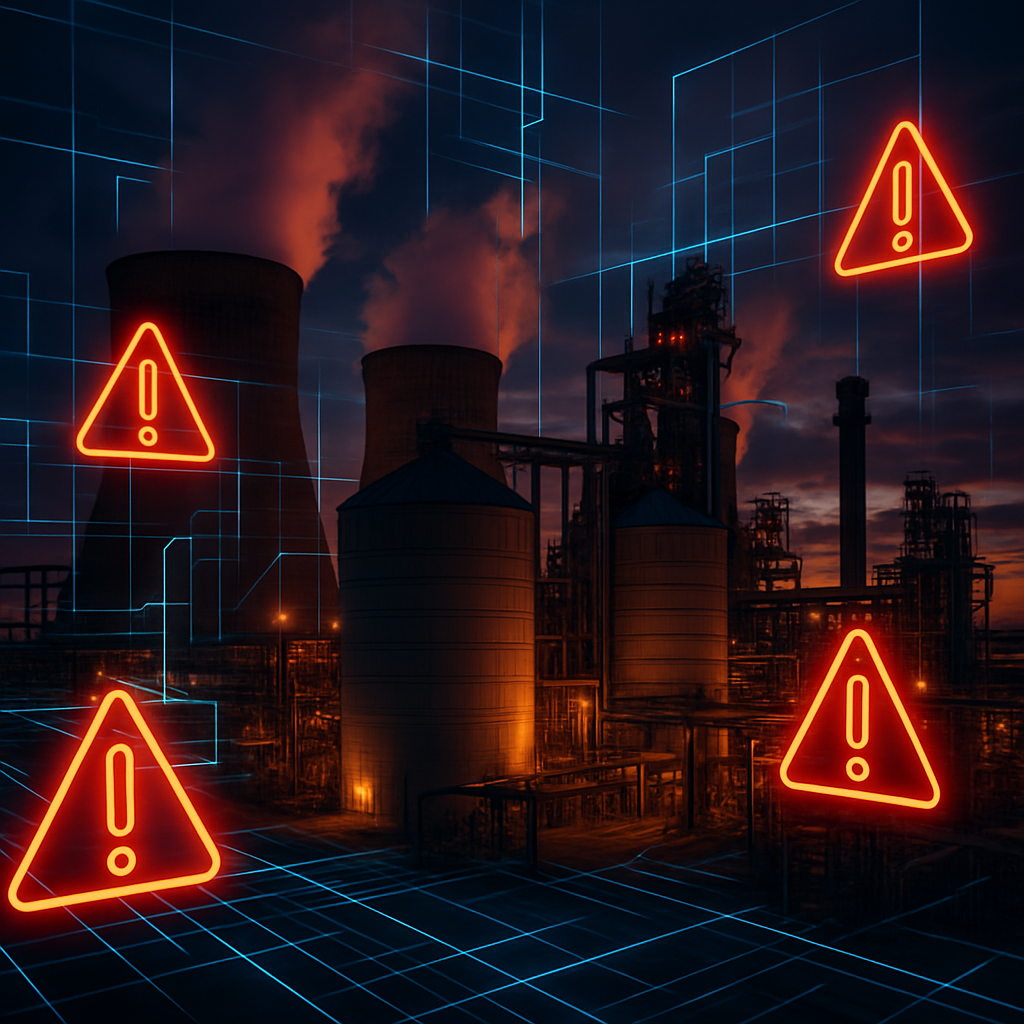
In July, a British energy facility reportedly went offline for about four days after suffering a cyber incident allegedly linked to Iran. While the outage did not affect customers, the episode has raised alarm over vulnerabilities in lesser-known energy generators. The breach was made public on August 22, following reports that attributed the disruption to Iranian-affiliated actors. The Department for Energy Security and Net Zero later confirmed a cyber event involving a small-scale generator, though it withheld details about the operator or the precise site.
What We Know So Far
The facility in question was described as a 15 megawatt gas-powered peaking plant—a type of generator tasked with stepping in during peak demand or supply shortfalls. Due to its modest size, officials maintained that its temporary shutdown did not threaten national energy security.
Security analysts from ThreatMon emphasized that many technical specifics are still unknown. There is no public information yet about malware use, the entry point of the attack, or whether industrial control systems were compromised. While there are unverified claims involving phishing, a breached engineer workstation, lateral movement inside the network, and activity in control systems, none have been confirmed.
Wider Context & Risks
This incident underscores growing concerns about Iran-linked cyber activity targeting exposed industrial systems. But experts caution that suggesting a specific Iranian group or malware strain is premature—no verified evidence has emerged to confirm those links.
The shutdown’s four-day duration itself highlights how long recovery from such incidents can take. Reestablishing safe operations often means more than ejecting intruders: teams must inspect controller logic, ensure safety checks are intact, validate remote administration paths, and rebuild confidence in systems before they can go back online.
Security guidance for industrial and energy operators recommends removing industrial controllers from direct internet exposure whenever possible, using strong multi-factor authentication, restricting remote access, and properly separating operational technology networks from standard IT systems. Maintaining offline backups, controlling supplier access, and ensuring visibility into engineering changes are also crucial.
While the loss of one 15 MW facility may be absorbed by national grids, smaller plants play vital roles in stabilizing energy supply—especially during peak demand or stress periods. Recent vulnerabilities in industrial controllers, like instances targeting Siemens S7 PLCs, show how exposed systems remain soft targets. Until forensic investigations publish more precise findings, any claim of a particular Iranian group or tool should be treated cautiously.
What this means: This event serves as a warning that even modest industrial assets are at risk—and that resilience isn’t just for large power stations. What matters most now is whether industry operators speed up detection, enforce tighter remote access controls, and treat safety oversight with urgency before the next threat forces another shutdown.