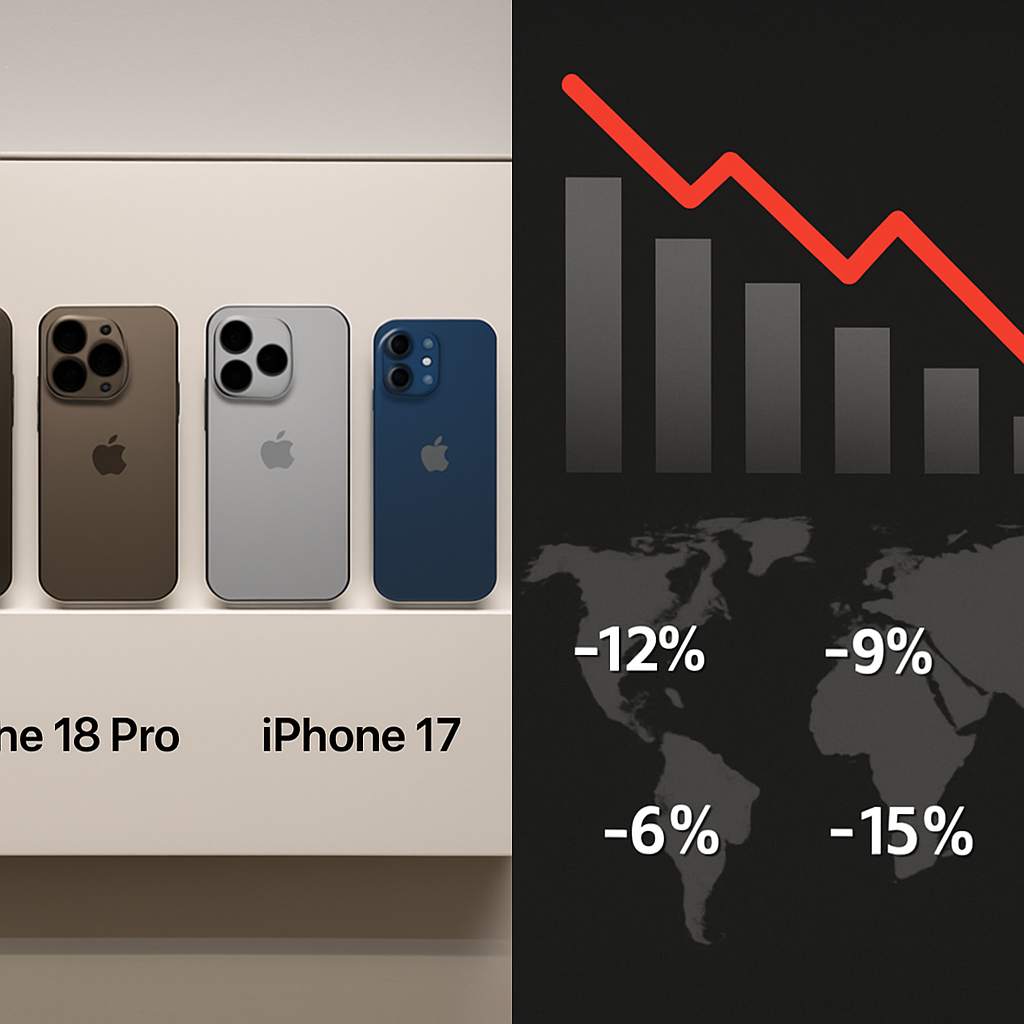
Apple has broken its own record this past quarter: iPhones accounted for 22% of global smartphone shipments in Q3 2026, the highest Q3 share ever, up from 18% in the same period last year. That was nearly enough to unseat Samsung, which just held on to the top spot with a 23% share. The context, though, is grim—global smartphone shipments plunged about 20% year-over-year. It marks the lowest third-quarter shipment volume in 14 years.
What’s driving Apple’s gains amid a wider slump
The broader decline is tied to an ongoing memory shortage and rising components costs that have hazed the entire industry. These pressures, along with inflation and weaker consumer purchasing power, are reducing demand for new devices.
Despite that, Apple’s iPhone 18 Pro line got off to a stronger launch particularly in India and China, helping compensate for weaker performance by its base iPhone 18 model. The absence of a full lineup comparable to last year’s iPhone 17 series meant Apple’s total number of units sold was still down, but pricing strategies and strong demand for high-end devices helped lift market share.
Samsung remained the world leader by shipments but saw its share shrink slightly. Behind Apple and Samsung, Xiaomi, OPPO, and vivo all experienced drop-offs in their Q3 shares compared to a year earlier.
What comes next for the market
The report suggests the rest of the year won’t bring much relief. Companies are increasingly chasing profit margins over sheer volume, due to ongoing cost pressures. For many brands, especially those targeting more price-sensitive consumers, rising device costs and constrained supply chains are particularly challenging.
Components shortages and high prices are expected to continue limiting growth. Analysts say we’re unlikely to see a full rebound in shipment volumes until cost curves improve and affordability returns for buyers.
Why this matters: Apple’s ability to increase its share during such an industry-wide collapse turns the spotlight on its supply chain resilience, pricing strategy, and strength in premium segments. For rivals, the key takeaway is that in a shrinking market, differentiation—especially via features, pricing, or supply advantages—matters more than ever. The yearend will likely separate those companies that can maintain profitability under pressure from those that struggle just to stay afloat.