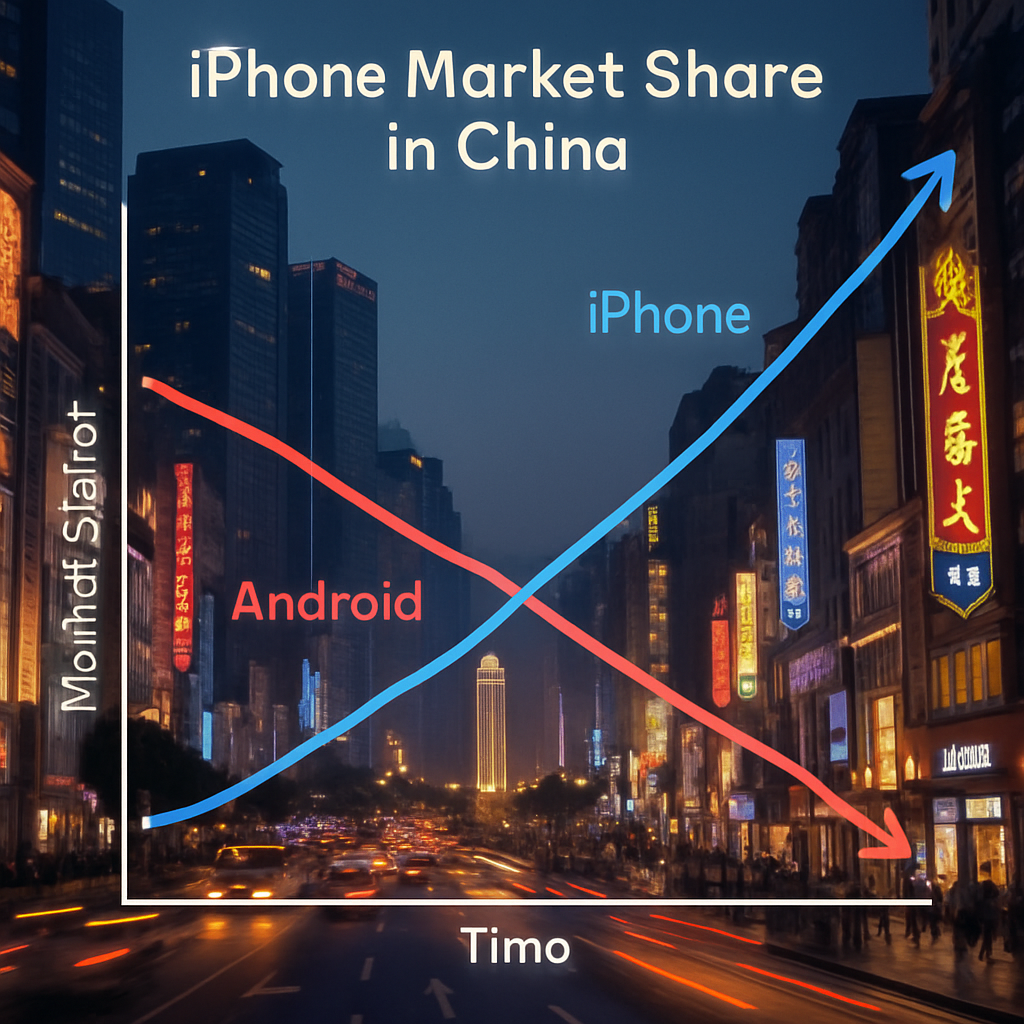
In the second quarter of 2026, Apple’s iPhone experienced significant growth in the Chinese smartphone market, contrasting with the overall market’s decline. According to preliminary data from IDC, iPhone shipments in China increased by 24.4% year-over-year, elevating Apple’s market share from 13.9% to 18.1%. This surge positioned Apple as the fastest-growing smartphone brand in China during this period.
Conversely, the Chinese smartphone market as a whole contracted by 4.3% in Q2 2026, marking the fifth consecutive quarter of decline. Among major vendors, only Apple and Huawei reported growth, with Huawei’s shipments rising by 19.4%. In contrast, Xiaomi faced the steepest decline, with shipments dropping by 21.7%.
A significant factor contributing to this market divergence is the escalating cost of memory components, driven by increased demand from AI data centers. This surge has led to higher production costs for smartphones, particularly affecting budget and mid-range Android devices. Manufacturers like Xiaomi, Oppo, Vivo, and Honor have been compelled to raise prices, with new models released after March 2026 seeing price hikes of at least RMB 1,000 ($146). Some mid-to-high-end flagship models have experienced increases of RMB 2,000 to 3,000.
In contrast, Apple’s premium product portfolio and robust supply chain management have enabled the company to absorb rising costs without passing them on to consumers. This strategic approach has made iPhones more attractive to price-sensitive consumers, especially as Android competitors implement price increases.
Apple’s growth in China is further bolstered by the sustained strong performance of the iPhone 17 series, promotional price cuts, and government subsidies. These factors have collectively contributed to Apple’s rising market share, even as the overall market faces challenges.
Looking ahead, the global memory shortage is expected to persist, potentially leading to continued price increases for Android devices. Apple’s ability to maintain stable pricing and manage supply chain challenges positions it favorably to capture additional market share in China. This trend underscores the importance of strategic pricing and supply chain resilience in navigating the complexities of the current smartphone market.