Apple’s first eclipse of the slab-phone paradigm arrives with the iPhone Duo—an ambitious foldable that delivers far more than novelty. It’s far from perfect, but this debut isn’t just a tech demo. It looks like the coming-of-age story foldables have been waiting for.
Display & Design: a fold, not a fall
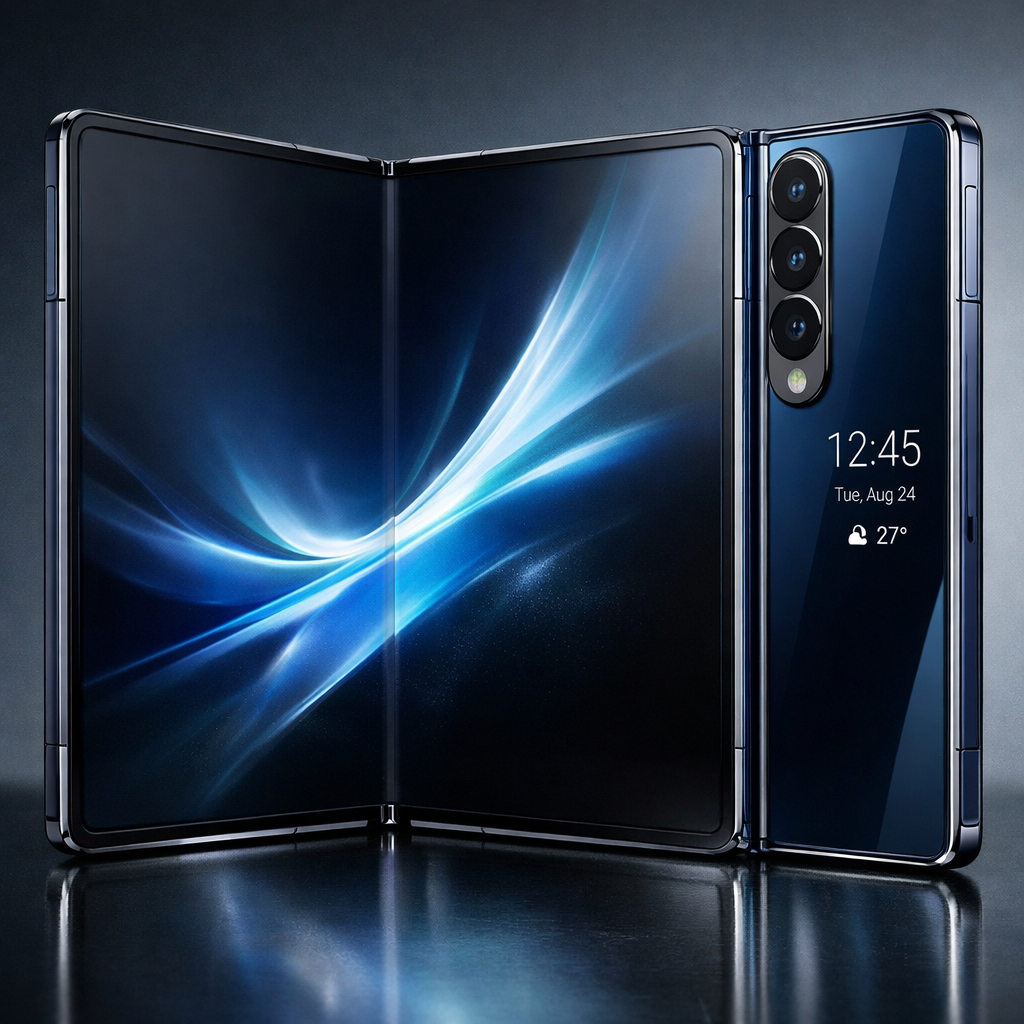
Opened, the Duo unfolds to a 7.6-inch inner OLED with a matching outer display of 5.4-inches—both Super Retina XDR, color-accurate, 120Hz ProMotion screens that peak near 3,000 nits. Identical aspect ratios between the two displays make multitasking feel seamless when you swing the device open, and split-view mode shows apps on the inner display just as they appear on the outer one. The outer screen is compact and handy, ideal for quick checks, while the inner one turns the device into almost a tablet without becoming unwieldy.
The hinge and Nano Texture inner screen are standout builds. The texture helps tame reflections and conceals the fold-crevice, while the hinge feels sturdy and refined—effective across multiple angles. Apple also engineered the edge detailing so that the inner display has a tiny lip to protect itself when closed. The rear glass, finished in a striking blue, has a painted look that picks up scratches too easily, and there’s no front displays’ protective lip at the edges. Still, in hand the Duo closes and opens without a second thought.
Cameras & performance: trade-offs that mostly land
Apple’s new “Dual Fusion” camera system delivers impressive real-world output though it skips some high-end pro features. You don’t get ProRaw, ProRes, LiDAR, or a variable aperture, and the telephoto lens is absent. However, the 48MP main sensor—with Apple’s powerful image signal processor—offers new tools like manual white balance settings and Smart Focus Tracking, enhancing control over certain shots. The Ultra Wide lens matches what’s in the iPhone 18 Pro. Selfies over the outer display are serviceable; using the rear camera via the outer display is a more polished option when framing and lighting are right.
Under the hood sits the A20 Pro chip, shared with the iPhone 18 Pro line, yielding strong performance in a device with two batteries. For most users battery life hits around 39 hours in mixed use. Surface heat from intensive tasks is slightly noticeable but insignificant—Apple’s vapor chamber and component layout manage even heavy loads well. Dual battery health indicators are a novelty but useful. Omission of Face ID in favor of Touch ID may disappoint some, but the physical button works reliably across orientations, and unlocks via Apple Watch make it less of a pain.
Software & daily use: more natural than novelty
iOS for Duo is not just stretched UI; it’s redesigned for folding. Animations, wallpapers, and system behaviors shift depending on whether the device is open, closed, or tented. Innovative modes like StandBy—which shows widgets or photos when the Duo is partially open or tented—bring fresh utility. Split views are especially well-thought, letting users lock in app pairings. But early in the launch, most third-party apps aren’t optimized for these new form factors. In time, that will improve.
Everyday use affirms the Duo’s hybrid promise: quick tasks stay on the outer display; longer sessions use the inner canvas. Pressing into Apple Pencil support gives a familiar touch for drawing or note-taking. Yet some corners cut: the glass is slippery and prone to scratches; the cutout for the front-facing camera is visible under certain light; FaceTime-quality of the under-display camera is limited.
Where Duo lands in the foldables landscape
Breakdowns so far show that screen failures aren’t widespread. After launch, Apple visited 20 stores reporting just six broken screens total—not enough to raise service volumes above a normal year. Warranty options like AppleCare remain the fallback. MagSafe returns, though old accessories won’t always fit, given the different profile. Accessory makers are already charting squat-wallets and tailored cases. Users without Apple Watch will feel Face ID’s absence more keenly.
Pros:
- Two superb displays with identical aspect ratio and excellent peak brightness
- Cameras that deliver impressive output, even without full pro features
- Strong hinge design showing durability and utility
- Software and hardware integration that leverages foldable potential
Cons:
- Painted glass scratches easily; build feels delicate in parts
- Considerable weight when folded
- Face ID is missing; Touch ID replaces it imperfectly
- No MagSafe accessories from past generations fit perfectly
Overall rating: 4.0 out of 5.
This device is necessarily a compromise—it gives up some pro-level camera specs and the sure feel of slab phones. But this isn’t the vision of a company making a splash; it’s one laying a foundation. The iPhone Duo isn’t just Apple’s first foldable—it’s a signal of what’s possible for foldables: when you do them with design precision, software depth, and hardware cohesion.
Why it matters: Foldables have long been a novelty for Android rivals, often weighed down by compromises. With Duo, Apple has turned that into something you could want—not despite compromises, but because of carefully chosen ones. What to watch: durability over months, how quickly third-party apps adopt its multitasking tools, and where Apple takes this form factor in size, weight, and camera performance next.