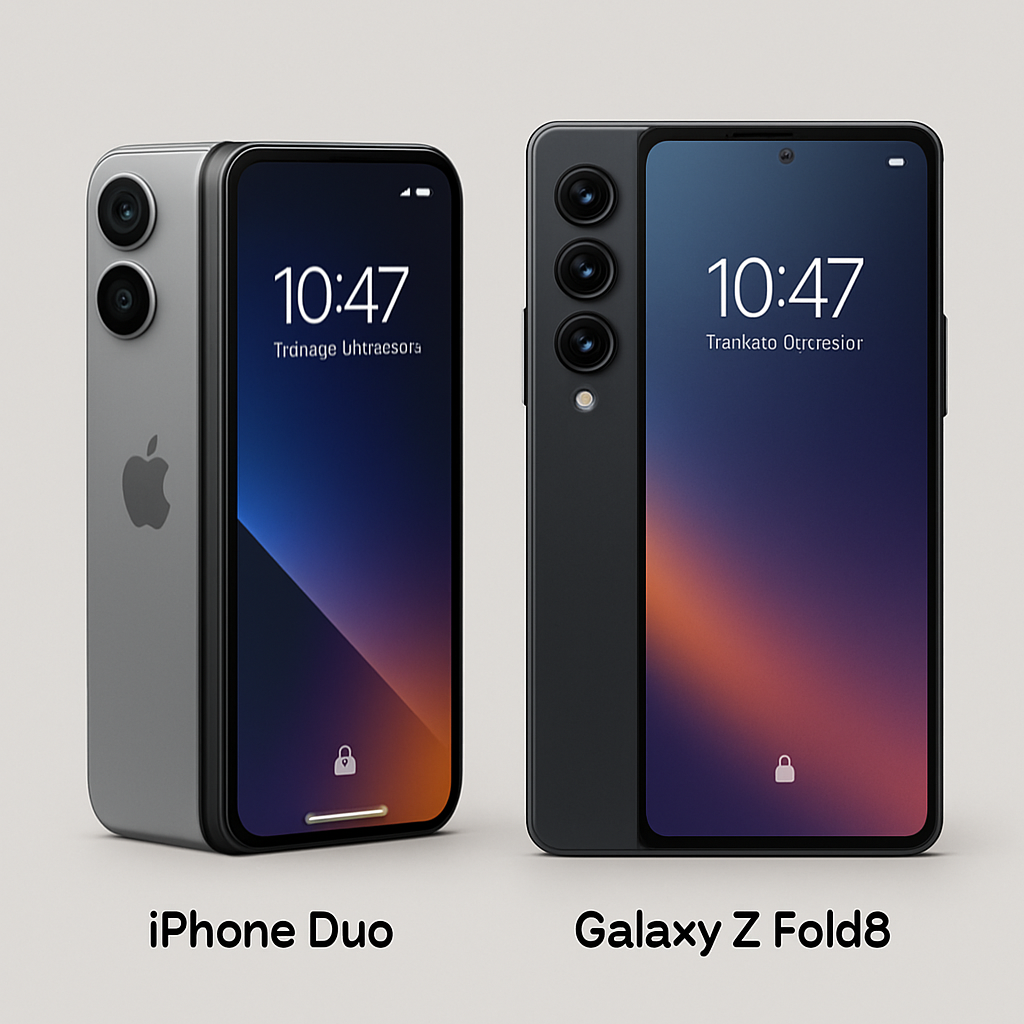
Apple’s new foldable, the iPhone Duo, is facing criticism not for its hinge or durability, but for how its software handles the outer display. While hardware certainly plays a role in any foldable’s usability, it appears the iPhone Duo’s software is constraining what users might have expected to be a more flexible interface.
What’s the issue with the iPhone Duo’s small screen?
The iPhone Duo includes a 5.4-inch external display intended for quick interactions and content previews. Rather than allowing that screen to display content across its full width, Apple has introduced a sidebar to aid navigation. While the idea may be to streamline use, this sidebar pushes content to only part of the display and leaves the rest essentially blank—resulting in wasted space and a layout that many feel underutilizes the hardware.
Beyond the sidebar, navigation itself has taken hits. In comparison to Samsung’s Galaxy Z Fold 8, the iPhone Duo reportedly feels harder to use with one hand. Samsung’s outer display, being taller and narrower, allows thumbs and fingers easier reach, especially for gestures and navigation. When using the Fold 8 in gesture mode, there’s little to no wasted screen area—every pixel serves the content or interface. On the Duo, though, that sidebar arrangement exacerbates limitations in how users can interact naturally.
How does Galaxy Z Fold 8 get it right?
Samsung’s Galaxy Z Fold 8 delivers a more expansive and inclusive experience on its outer display. It provides a broader canvas for wallpapers, notifications, media controls, and app previews—without inserting design elements like sidebars that block off space. Even in modes where navigation buttons are used instead of gestures, Fold 8 accepts and intelligently maps interactions without forcing rigid layout restrictions. This creates stronger parity between what the outer screen can physically show and what it actually delivers.
Shortly after the iPhone Duo launched, reviewers including technology writers like those from The Verge noted the disparity. Such feedback highlights how Apple’s software choices—especially around navigation and UI layout—can be just as impactful as the foldable form factor itself.
The iPhone Duo is already available in certain markets, though its wider rollout remains limited. Meanwhile, Samsung’s Galaxy Z Fold 8 continues to build on its reputation for delivering foldable devices that feel polished and less compromised by software constraints.
This debate over screen space isn’t just about preference—it’s about what users expect from new form factors. A display that looks like a tablet but acts like a tiny slider can feel disappointing. As foldables become more mainstream, optimizing software to match hardware will be essential. Apple will need to reassess how iOS treats its secondary display if it hopes to compete cleanly in this evolving space. What to watch: whether Apple issues updates that adjust the Duo’s interface, or whether future hardware shifts toward a more “full-width” external screen. The software-hardware gap might well decide whose foldable wins fans.


