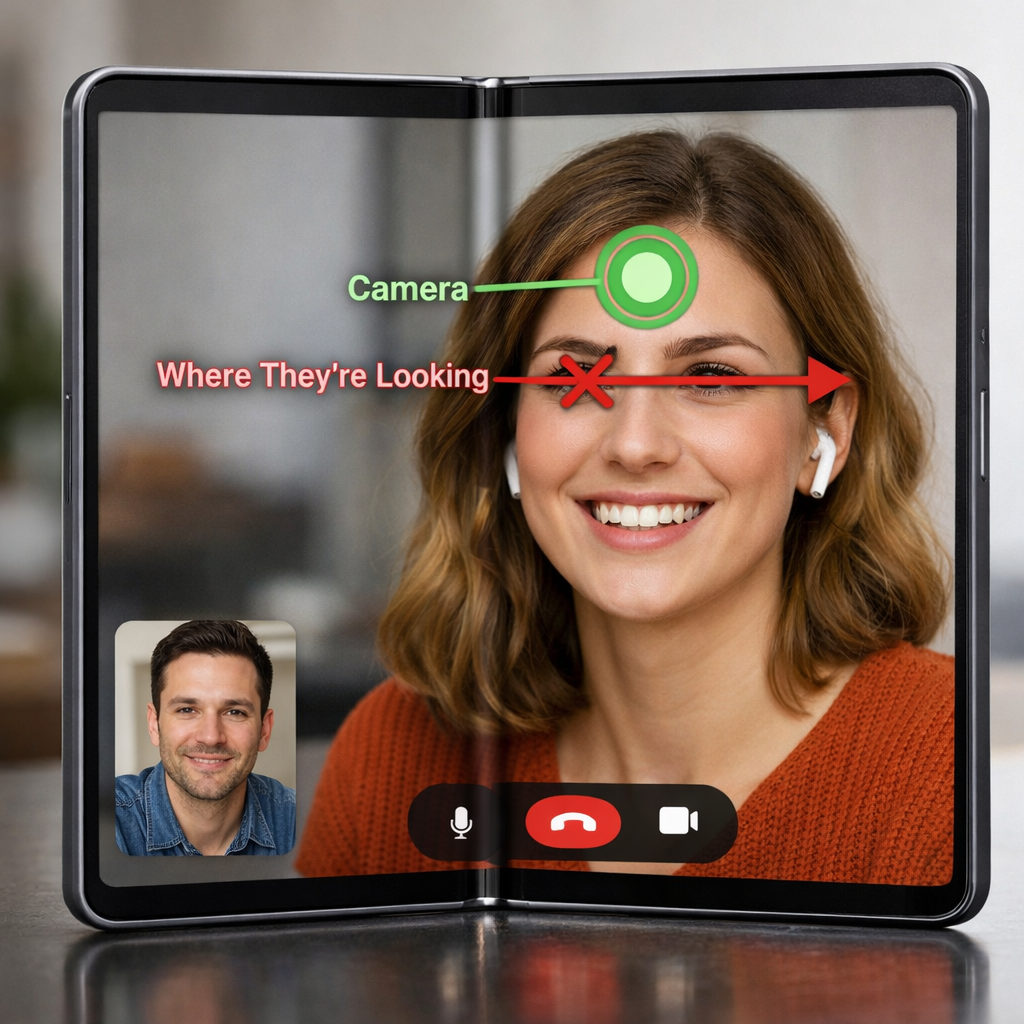
Apple’s newly released iPhone Duo does not support the Eye Contact feature in FaceTime—a setting designed to make video calls feel more natural by adjusting your gaze to look like you’re looking directly at the camera. Users noticed their eyes appearing slightly strange during calls, and MacRumors has confirmed that the setting is absent from Duo’s system settings.
What is the Eye Contact Feature?
Eye Contact was introduced with iOS 14. It uses machine learning to subtly shift your eyes during FaceTime or video calls so that you appear to be looking into the lens rather than at the person’s face on your screen. The goal is to create a more authentic and engaging video call experience.
Why It’s Missing from the Duo
The absence of Eye Contact on the Duo isn’t believed to be tied to Face ID or the TrueDepth camera system—models like the iPhone SE, which use Touch ID instead, still include Eye Contact.
Instead, it appears the Duo’s unique hardware layout is to blame. The camera is placed toward the right side of the under-display screen instead of centered. That means the system would need to compensate for a much larger horizontal offset than it does on other iPhones, which typically only correct for a vertical gap.
Another factor is how the device is used. In its dual-display form, the relative position between the user’s gaze and the camera changes depending on which screen is active and whether the Duo is folded or unfolded. Apple already limits certain accessibility features like Eye Tracking to moments when the Duo is fully open.
As of now, Apple hasn’t offered a technical explanation or timeline for adding Eye Contact support—if that’s even under consideration. Users who value this feature should be aware that the Duo ships without it.
Why It Matters:Eye Contact isn’t just a gesture—it plays a role in social cues, engagement, and trust in video interactions.
Background:The iPhone Duo is Apple’s latest dual-screen smartphone. Its design includes two displays connected by a hinge and an under-display camera located on the inner screen. It represents a new form factor for Apple, and some features designed for traditional single-screen phones may require adaptation. Eye Contact is one of those.
What to Watch:Keep an eye out for software updates that might bring Eye Contact functionality to the Duo, especially since Apple has with prior models updated feature support post-launch. Also note that any fix would likely need to account for the Duo’s foldable camera alignment and how it’s housed between displays. Users curious if this feature will arrive should watch Apple’s accessibility and FaceTime settings documentation, and test future iOS versions once released.