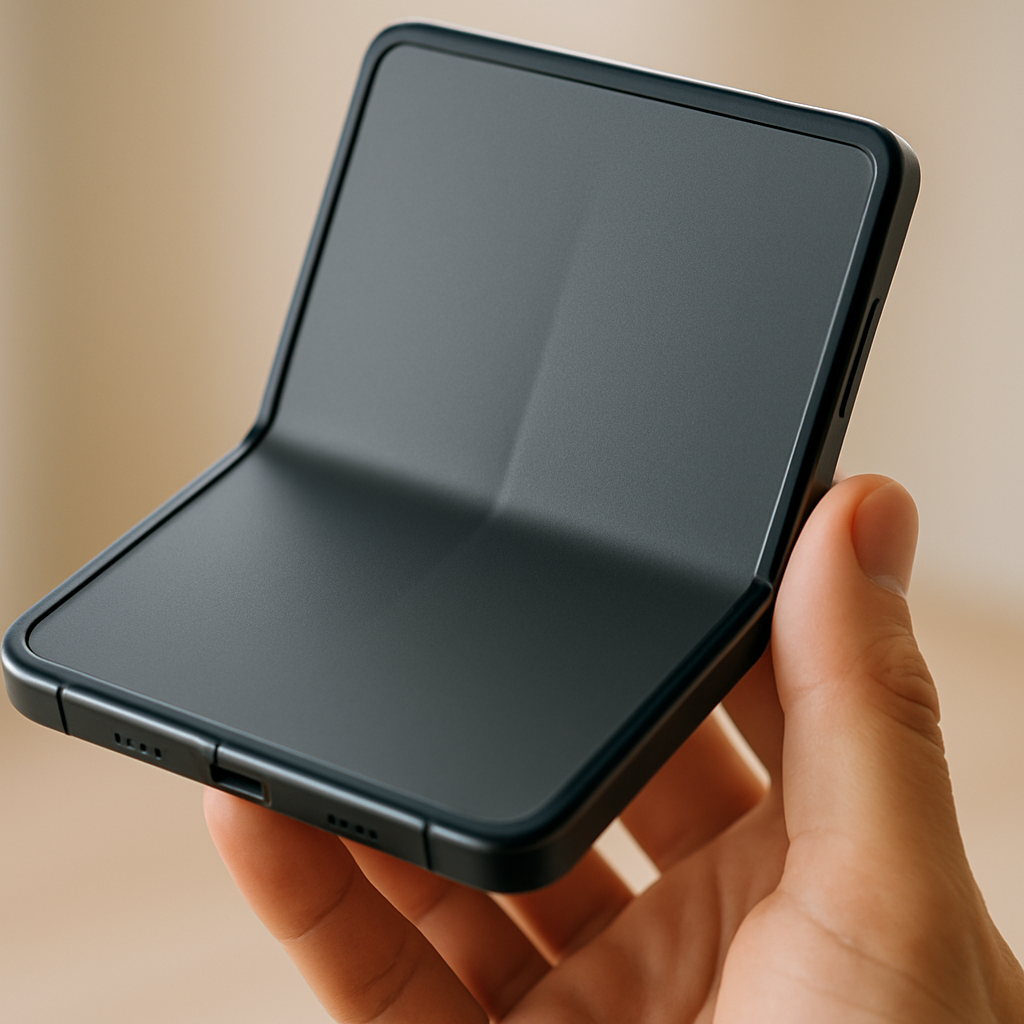
Apple has finally stepped into the foldable phone arena with the iPhone Duo, and early reviews suggest it delivers the refinement many expected—but not without baggage inherited from Android predecessors. As units reach customers this week, full reviews are landing, painting a picture of promise mixed with familiar frustrations. The Duo doesn’t reinvent foldables, but in Apple’s hands, it starts to feel like what the future of iPhones could look like.
Design, Display & Hinge: A Solid Foundation
The inner screen’s nanotexture matte finish is immediately noticeable as a strength. Reviewers agree that the crease—the telltale sign of foldables—is far less distracting visually compared to most Android models. You’ll mostly sense it by touch rather than see it when casually glancing. The folding mechanism, too, earns praise for resilience: in one review the Duo was folded over 32,000 times during testing, and the hinge still performed without issue.
Still Unsolved: Software & Everyday Usability
Apps not optimized for foldables remain a key sticking point. Many third-party titles still treat the unfolded Duo as just a larger screen, without redesigning interfaces to take advantage of the extra real estate. However, several mainstream apps—including Instagram, Threads, Slack, and Google’s own app—have already begun repositioning navigational elements and improving layouts to better suit the foldable’s expanded canvas.
The cover screen is another recurring complaint. At just barely usable dimensions per reviewers, it often pushes users toward unfolding the device to get real work done. When it’s folded shut, the outer display just doesn’t cut it for prolonged use. Combined with the device’s thickness and weight, this makes one-handed or on-the-go interactions feel awkward more often than not.
And while Apple has somehow achieved hinge durability, it hasn’t quite nailed heat management. During extended use, the Duo gets noticeably warm—particularly when both halves are active. That “hand warmer” sensation is something Android foldable users will recognize all too well. For many, it’s a tradeoff that comes with the form factor rather than a dealbreaker.
Polish vs. Promise
It’s clear that Apple hasn’t just imitated Android foldables—it’s refined the idea. The polish is evident in build quality, hinge engineering, display finish, and the burst of optimization among major apps. But some problems—software scaling, cover screen limitations, device heft, and thermal behavior—aren’t solved; they’re just slightly less painful than before.
For first-generation efforts, the iPhone Duo stands out for offering something more coherent than most competitors showed at this point. It may not change the game yet, but it raises the bar for what we should expect from foldables going forward.
What this means: the iPhone Duo is a milestone, not a revolution. It solidifies that Apple understands foldable expectations, but its flaws remind us how challenging the format is. Going forward, success will depend on deeper software optimization, striking a better balance in size and weight, and handling heat more gracefully. If those come together, the Duo could lead the next wave of mainstream foldable adoption.