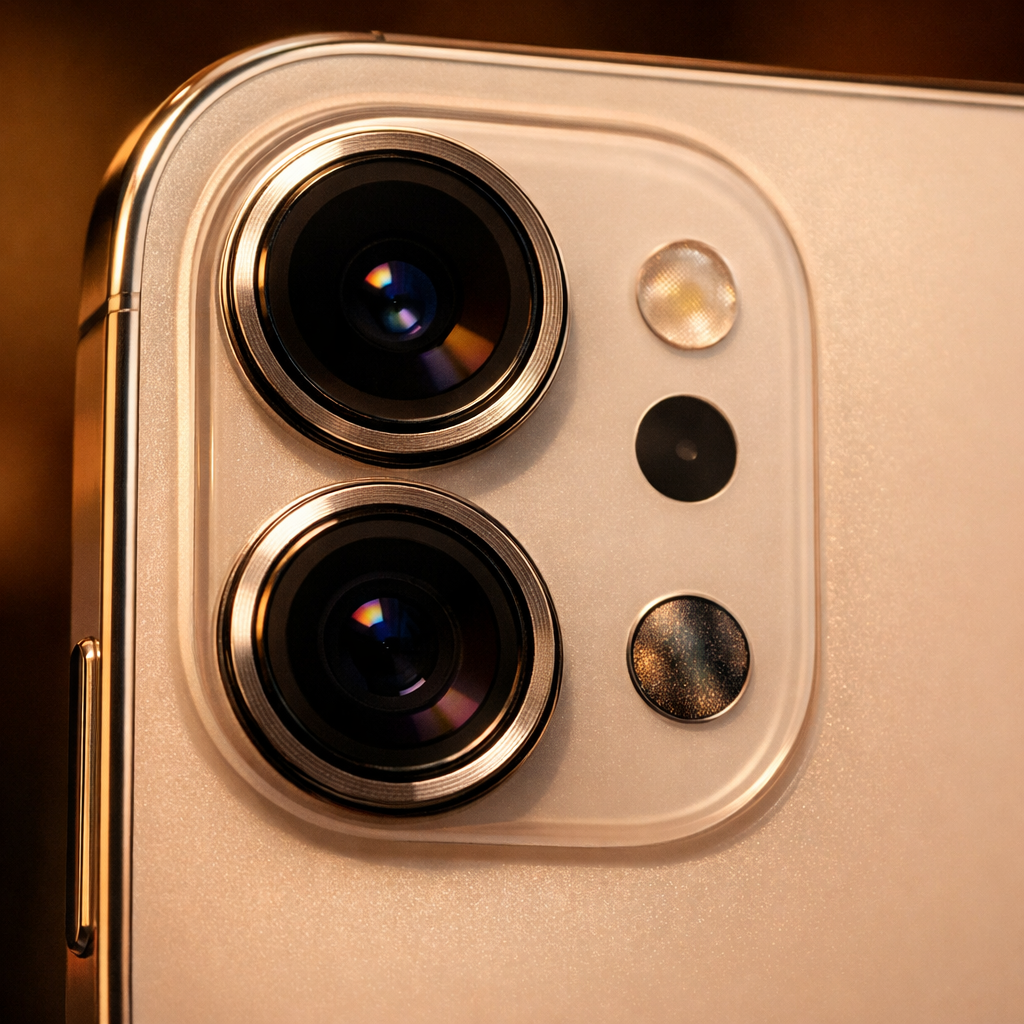
The iPhone Duo packs a capable 48MP Dual Fusion camera system with Main and Ultra Wide lenses, delivering excellent results in daylight—but its weaknesses become apparent when lighting turns dim, especially compared to Apple’s Pro-line models.
Low-Light Limitations Compared to the Pros
The Main camera on the Duo comes with a smaller 1/1.56-inch sensor, whereas the iPhone 18 Pro Max sports a larger 1/1.3-inch sensor. The Duo also forgoes 100% Focus Pixels, using “Hybrid Focus Pixels” in their place, and its aperture is slower at f/1.6, while the Pro models start around f/1.48. These differences mostly show up when lighting gets challenging. In daylight or well-lit interiors, the advantages are minimal and often only visible when you zoom into the image edges or pixel-peep.
In moderately low light—think dim restaurant corners or scenes without overhead illumination—the Duo starts relying more on Night Mode, exposing longer and cranking up ISO. Moving subjects often blur, fine textures vanish, and shadows grow muddy. Pro models still struggle in pitch-black settings, but they hold up notably better.
Where the Duo Shines
For everyday users, the Duo’s camera offers plenty of strong features. A newly updated image signal processor offers improvements in how shadows and noise are handled; white balance can now be controlled manually. Photographic Styles 3 brings texture control into the mix. These updates combine to let the Duo sometimes beat older iPhones, particularly for daylight portraits or scenes with complex lighting.
The Ultra Wide lens (same as that on the iPhone 18 Pro) isn’t used often unless you’re going for macro shots, but the Duo’s shorter minimum focus distance helps it capture close subjects with more natural perspective and detail without always needing to switch to macro mode.
Extra Camera Features Unique to Duo
Duo adds a few tools you won’t find in all iPhones. The outer display can act as a viewfinder using the rear cameras when closed, enabling rear self-portraits with better quality. The “Kid Cue” feature uses fun animations to get a child’s attention for photos. “Smart Take” makes it easier to snap a photo when you don’t have a tripod or stand, which helps with stability. On the selfies side, both an outer and inner camera pair with separate functions—standard selfies, FaceTime, etc.—and the rear camera selfie mode with the outer screen feels beneficial once you adapt to framing while holding a folding device.
The Verdict: Trade-Offs vs. Upside
The iPhone Duo doesn’t match the full photography feature set of Apple’s Pro models—it lacks optical telephoto, LiDAR, ProRAW / ProRes, and advanced spatial capture tools. But unless your photography often hits severe low-light zones—night street scenes, indoor events without controlled lighting—you’ll likely find the Duo delivers most of what matters. In decent lighting, it’s more than competent. In darker conditions, it requires more effort, patience, or even gear.
Ultimately, the Duo’s camera system demonstrates that Apple can build a folding device without sacrificing too much photographic capability. It’s not for professionals who need every tool, but for most users, its strengths—white balance control, texture and style tools, and smart accessory features—outweigh the low-light limits.
Why this matters: The iPhone Duo highlights the tight balance Apple has struck between device form factor and camera performance. Folding hardware introduces physical constraints—sensor size, aperture, lens design—that make competing with a Pro-grade camera trickier. Users deciding between the Duo and Pro models should consider lighting habits: if you shoot in low or no light often, a Pro iPhone still delivers. But for daylight, portraits, and general usage, the Duo gives you most of the experience at a presumably lower cost or different build.


