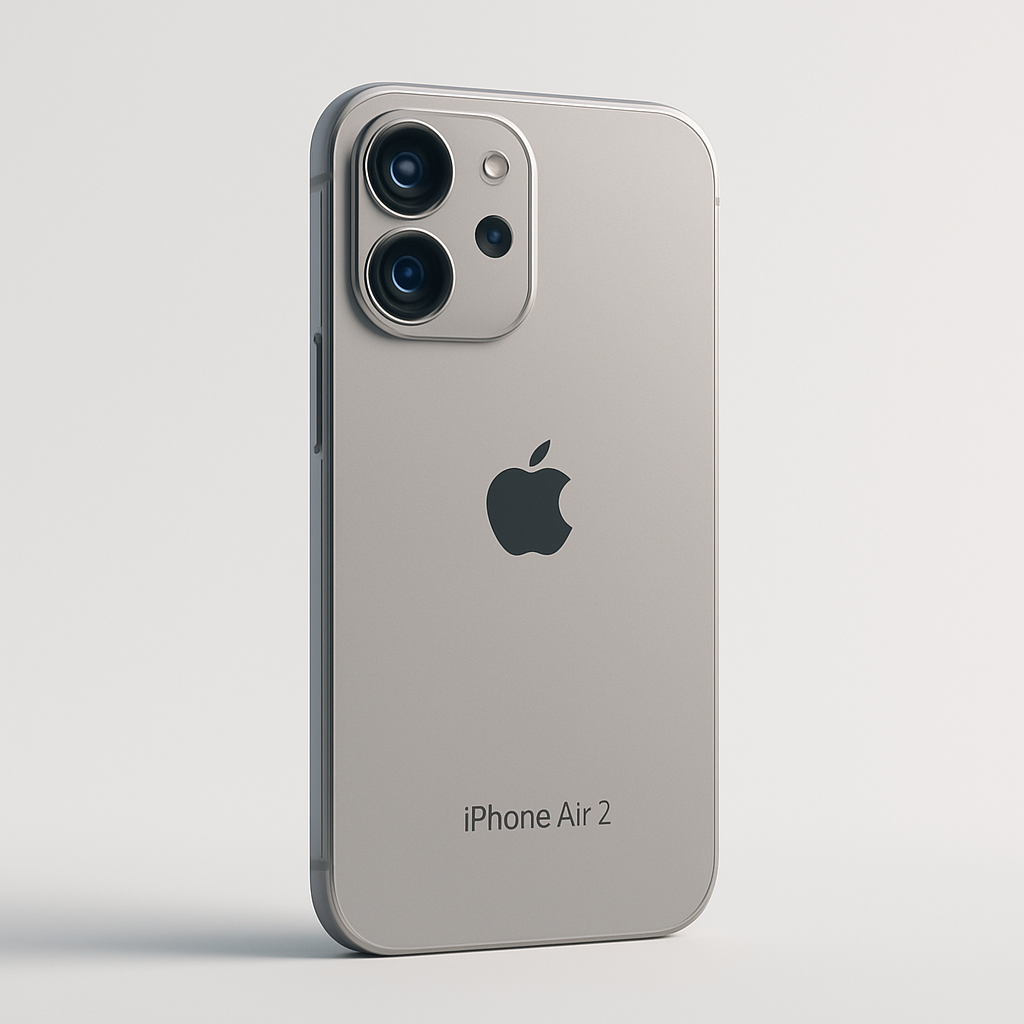
Apple’s upcoming iPhone Air 2 is set to address one of the primary criticisms of its predecessor by introducing a second rear camera. The original iPhone Air, while praised for its ultra-thin design, faced backlash for its single-camera setup, which limited its photographic versatility compared to other models in Apple’s lineup.
Recent reports indicate that the iPhone Air 2 will feature an ultrawide lens alongside the existing wide-angle camera. This addition aims to enhance the device’s capability to capture expansive landscapes and group shots, aligning it more closely with the standard iPhone 17’s camera system. The inclusion of an ultrawide lens is expected to provide users with a broader field of view, making it particularly useful for architectural photography and immersive scenes.
However, some users advocate for a telephoto lens as the second camera. A telephoto lens would enable optical zoom capabilities, allowing for clearer close-up shots without compromising image quality. This feature is especially beneficial for portrait photography and capturing distant subjects, offering a different set of advantages compared to an ultrawide lens.
The decision between an ultrawide and a telephoto lens involves considering user preferences and typical usage scenarios. While an ultrawide lens enhances the ability to capture more expansive scenes, a telephoto lens provides the flexibility to zoom in on subjects without loss of detail. Each option caters to different photographic needs, and the choice reflects Apple’s strategy in balancing design constraints with user demands.
Incorporating a second camera into the iPhone Air 2 signifies Apple’s commitment to improving the device’s photographic capabilities. This move addresses previous criticisms and positions the iPhone Air 2 as a more competitive option in the smartphone market. As the release approaches, it will be interesting to see how this enhancement influences consumer reception and whether it meets the diverse needs of iPhone users.