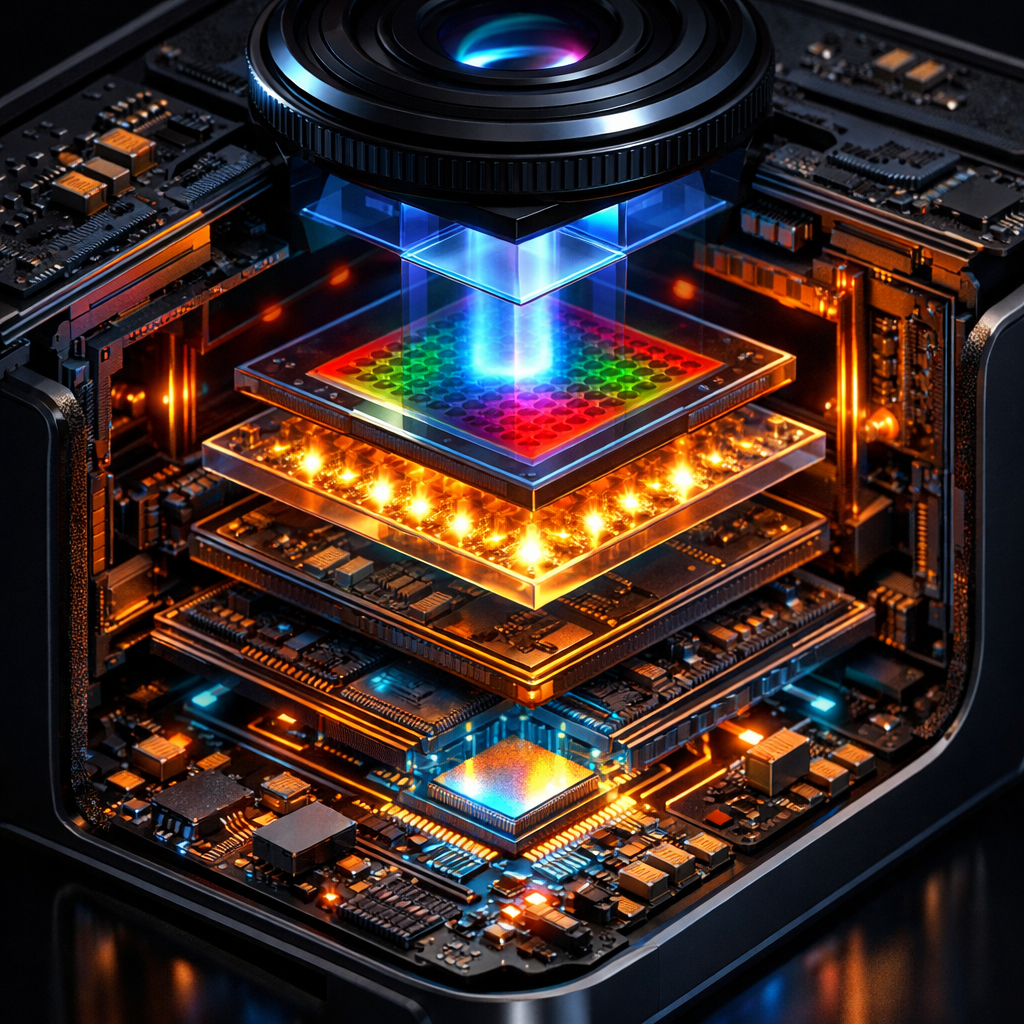
The next iPhone Pro expected in fall 2027—rumored to be Apple’s 20th-anniversary model—may include a major upgrade in its primary camera sensor. The logic circuitry layer is said to move from its current scale to a 17-nanometer process node, potentially improving speed, power efficiency, and image quality. These claims stem from a leaker known as Ice Universe on Weibo, who provided no further technical specifics beyond the process size.
Why the 17-nm shift matters
Modern stacked smartphone image sensors split the light-capturing pixels and the logic layer that reads out and processes that pixel data. A smaller process node—17 nm versus larger previous generations—can allow for faster readout, reduced power draw, and more complex on-sensor processing. These are critical for improving burst speeds, low-light performance, and dynamic range.
An earlier Omdia report already noted that Samsung has been developing a 17-nm Low Power Value (17LPV) process aimed specifically at the signal-processing circuitry in CMOS image sensors. That development suggests Apple may be aligning with silicon fabrication trends toward more efficient sensor logic layers.
What we still don’t know—and Apple’s current sensor efforts
There’s no confirmation about which part of the logic layer the 17-nm process applies to, or whether this upgrade is part of Apple’s in-house imaging work. Apple and Samsung are reportedly collaborating on higher-end camera sensor development in Apple’s Austin, Texas facility. Previously, leaks have described a three-layer stacked image sensor in their partnership, though it’s unclear whether the 17-nm logic layer is part of that sensor.
Apple is also rumored to be developing a sensor using LOFIC technology—designed to improve dynamic range and preserve detail in highlights and shadows. However, it’s not yet known if the 17-nm logic layer will be applied in this LOFIC sensor or in the standard stacked one.
The next iPhone Pro model is expected to debut in September 2027. Apple may skip “iPhone 19” as a name, echoing the move it made with iPhone 9 prior to the iPhone X launch in 2007.
What this means: If the 17-nm process for the logic layer becomes reality, it could represent one of the most significant camera upgrades in recent iPhone generations—potentially boosting image performance, battery life, and computational photography. For Apple this would mark another step forward in combining custom sensor design with cutting-edge semiconductor fabrication. Tech watchers should look for corroborating evidence—such as sample images or preprocessing benchmarks—and any official confirmation that this new sensor design will arrive form-factor intact in the 2027 iPhone 20 Pro.