Apple’s revamped iPad mini, released today, introduces OLED for the first time in the mini lineup—but stops short of bringing ProMotion to the device. Although the display now boasts deeper blacks, dramatic brightness boosts, and even a nano-texture option, the refresh rate remains capped at 60Hz rather than offering the 10-120Hz variable ProMotion range found in iPad Pro models.
What’s Changed with the 2026 iPad mini
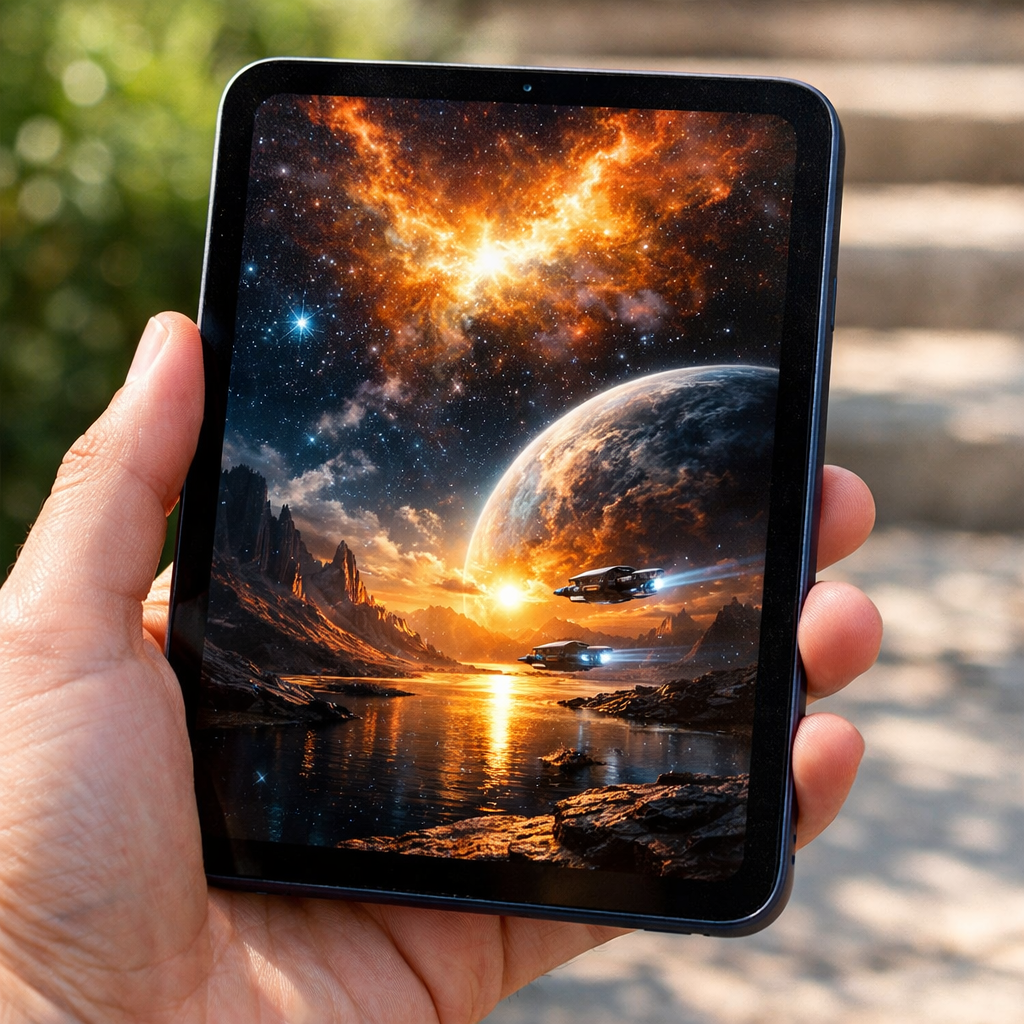
The standout upgrade is the iPad mini’s new 8.5-inch OLED display. It delivers significantly improved contrast, peak HDR brightness up to 1,200 nits, and a contrast ratio around 2,000,000:1. Users who prefer reduced glare outdoors can opt for the nano-texture finish carried over from higher-end models.
On the performance side, Apple has introduced the A20 Pro chip—built on a 2-nanometer process—with enhanced capabilities in graphics and AI. The tablet now includes Apple’s latest in wireless tech and cellular options, water and dust resistance with an IP67 rating, a landscape-oriented 12MP Center Stage front camera, and a redesigned audio system using an Acoustic Display for stronger bass and more immersive sound.
The ProMotion Question: Why It’s Still Absent
Despite the OLED upgrade, Apple did not include ProMotion—its signature adaptive refresh technology—in this mini version. ProMotion allows screens to vary between 10Hz and 120Hz depending on what’s being displayed, reducing power use and smoothing motion, as seen in iPad Pro models.
Several observers point out that omitting ProMotion helps keep the mini at a lower cost threshold, especially as OLED panels and higher-performance chips already add manufacturing complexity. While some reviews see this as a missed opportunity for smoother scrolling, gaming, and animation, others note the trade-off seems deliberate to maintain a distinction between the mini and Pro product tiers.
Pricing starts at $699 for the Wi-Fi model and $849 for Wi-Fi + Cellular. Pre-orders begin October 28, 2026, with shipments starting November 6 across 36 countries. Storage options include 128GB, 256GB, and 512GB, with finishes in midnight and starlight.
One key comparison: iPad Pro models still offer ProMotion’s fluid 120Hz refresh rate and often superior display tech (including tandem OLED in some cases), confirming Apple’s usual pattern of reserving “Pro tier” visual experience for select devices. For users who prioritize smooth motion over raw display contrast and brightness, Pro remains the gold standard.
For longtime mini users, the new model delivers many of the upgrades that have been long requested: OLED, better performance, tougher build, and enhanced audio and video capabilities. Still, for those expecting everything seen in iPad Pro—especially ProMotion—it may feel like progress with a caveat.
Analysis:Apple has clearly pushed the iPad mini forward in ways that improve visuals, performance, and durability. But the absence of ProMotion remains a deliberate trade-off, likely aimed at preserving price points and product hierarchy. For many users, the improved OLED display will bring a noticeable upgrade. Yet Apple’s decision suggests ProMotion will continue to be a premium differentiator—something to watch closely as competition heats up and OLED becomes more common in smaller form factors. If fluid refresh rates increasingly become expected across all segments, Apple may face pressure to bring ProMotion to future minis—even as it tries to reserve parts of its toolkit to justify the extra cost of its Pro line.