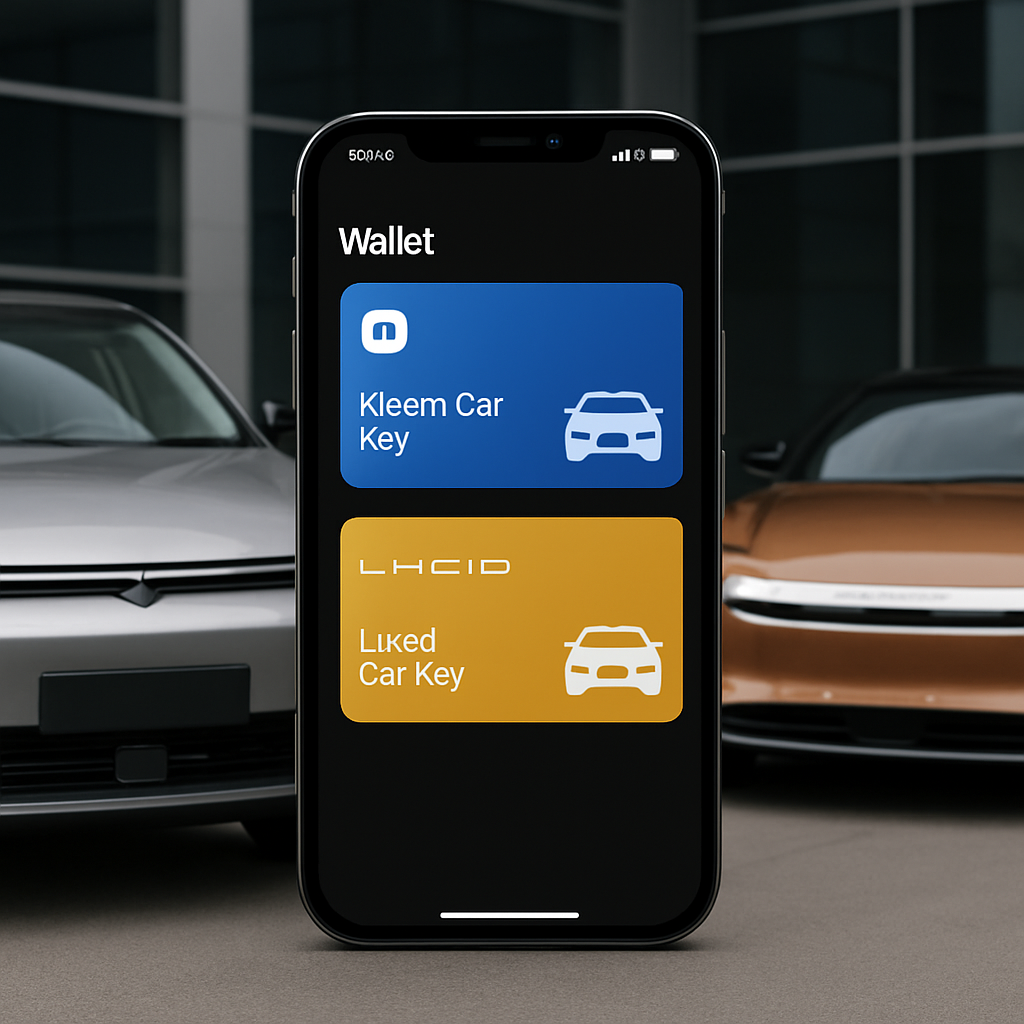
Recent findings in the iOS 27 beta code indicate that Apple is preparing to extend its Wallet app’s car key functionality to include vehicles from Xiaomi and Lucid Motors. This development suggests that users may soon be able to use their iPhones and Apple Watches to control cars from these manufacturers.
Apple’s car key feature, introduced in 2020, allows users to add digital car keys to the Wallet app, enabling them to lock, unlock, and start their vehicles using their devices. The implementation of this feature varies among automakers, offering options such as passive entry, proximity-based entry, and remote control via the Wallet app. Additionally, the feature supports Express Mode, allowing users to operate their vehicles without unlocking their devices, and provides the ability to share car keys through Messages, Mail, and AirDrop.
At the Worldwide Developers Conference (WWDC) in 2025, Apple announced that Lucid Motors would support the car key feature. However, there have been no significant updates since that announcement. The recent discovery in the iOS 27 beta code suggests that this support may be forthcoming. Notably, Xiaomi had not been previously mentioned as a potential partner for this feature, making its inclusion a new development.
While the specific models from Lucid and Xiaomi that will support the car key feature have not been disclosed, the presence of related code in the iOS 27 beta implies that the functionality could be introduced with the public release of the update, potentially in September.
This expansion aligns with Apple’s ongoing efforts to broaden the adoption of its car key feature. Earlier this year, reports indicated that Apple’s backend systems were updated to include Volkswagen in the list of automakers supporting or planning to support the car key functionality. Additionally, Toyota began rolling out support for the feature in February 2026, starting with the 2026 RAV4 model.
The integration of digital car keys into the Apple Wallet app represents a significant step toward enhancing user convenience and streamlining the driving experience. As more automakers adopt this technology, users can anticipate a more seamless interaction between their vehicles and Apple devices. The inclusion of Xiaomi and Lucid Motors in this initiative not only broadens the range of supported vehicles but also underscores the growing trend of digital integration in the automotive industry.