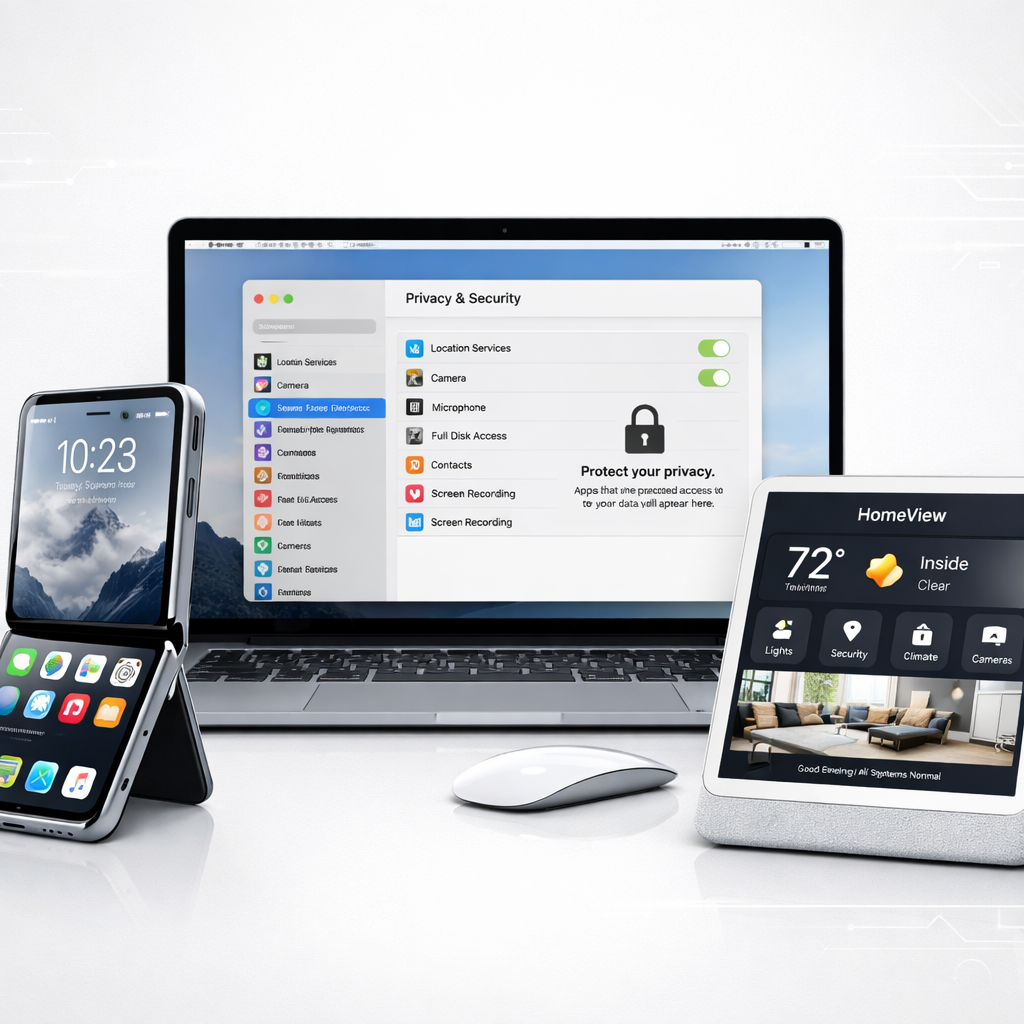
Apple has released several updates this week across its devices, addressing long-standing complaints about HomeView’s Siri functionality and upgrading the iPhone Duo with new software features. With iOS 27.3 beta 2 and macOS 27.3 making progress on privacy controls, users are getting better control over permissions — and more convenient unlock options.
HomeView 27.2.1: Siri bugs squashed
The HomeView smart home hub received version 27.2.1 on November 18, just days after its initial launch. The patch tackles three major issues: Shared Album setup could prevent Siri from installing its support on the Photos face; pairing with devices running iOS 27.3 betas sometimes broke Siri requests; and adding another home hub wrongly removed HomeView from a user’s home configuration. While the update doesn’t add new features, users have also noted—but Apple hasn’t officially confirmed—improvements in alarm and timer responsiveness. Several known problems are still outstanding, including voice-controlled door and garage lock troubles, expected to be fixed in a future release.
iPhone Duo gets unlock with face (lite version)
In the iOS 27.3 developer beta 2 (build 24C5049d), iPhone Duo users can now unlock the device using the front selfie camera via a new setting called “Unlock with Front Camera.” This isn’t Face ID — it uses the outer camera and doesn’t include secure functions like Apple Pay, passwords, or app unlocks. Face unlocking works only when the device is folded shut, and only for 45 minutes after a more secure method (Touch ID or passcode) has been used. After that, or when hinged open, users must revert to Touch ID or passcode.
Also added is a “Close to Lock” option under Display & Brightness that allows the Duo to automatically lock whenever folded. Previously, folding the Duo simply transitioned content between its displays without securing the device.
Privacy controls gain more depth in macOS 27.3
macOS 27.3 beta 2 introduces revamped privacy settings, particularly in the handling of Full Disk Access and Device Control/Data Access APIs. Users can now better distinguish between System & App Protection Override and Accessibility permissions. The new system offers more transparency — showing what apps can access, allowing users to grant permissions at the app or folder level, require repeated access requests, or get alerted when an app uses System & App Protection Override. Existing permissions users have granted so far remain unchanged.
These updates are part of Apple’s effort to embrace user trust and privacy more explicitly, helping users understand exactly what level of data access they’re granting to apps and services.
Across these changes, the trend is clear: Apple is patching its recent launches (like HomeView), refining foldable-device experience on the Duo, and giving users more nuanced control over privacy and unlock behavior. For users, that means fewer frustrations with Siri automation, better unlock workflow on Duo, and clearer permission boundaries on Mac.
This rollout lays groundwork for Apple’s future updates — the final version of iOS 27.3 may arrive by late November or early December — and will be closely watched by those who prioritize device security, smart-home reliability, and seamless unlocks.