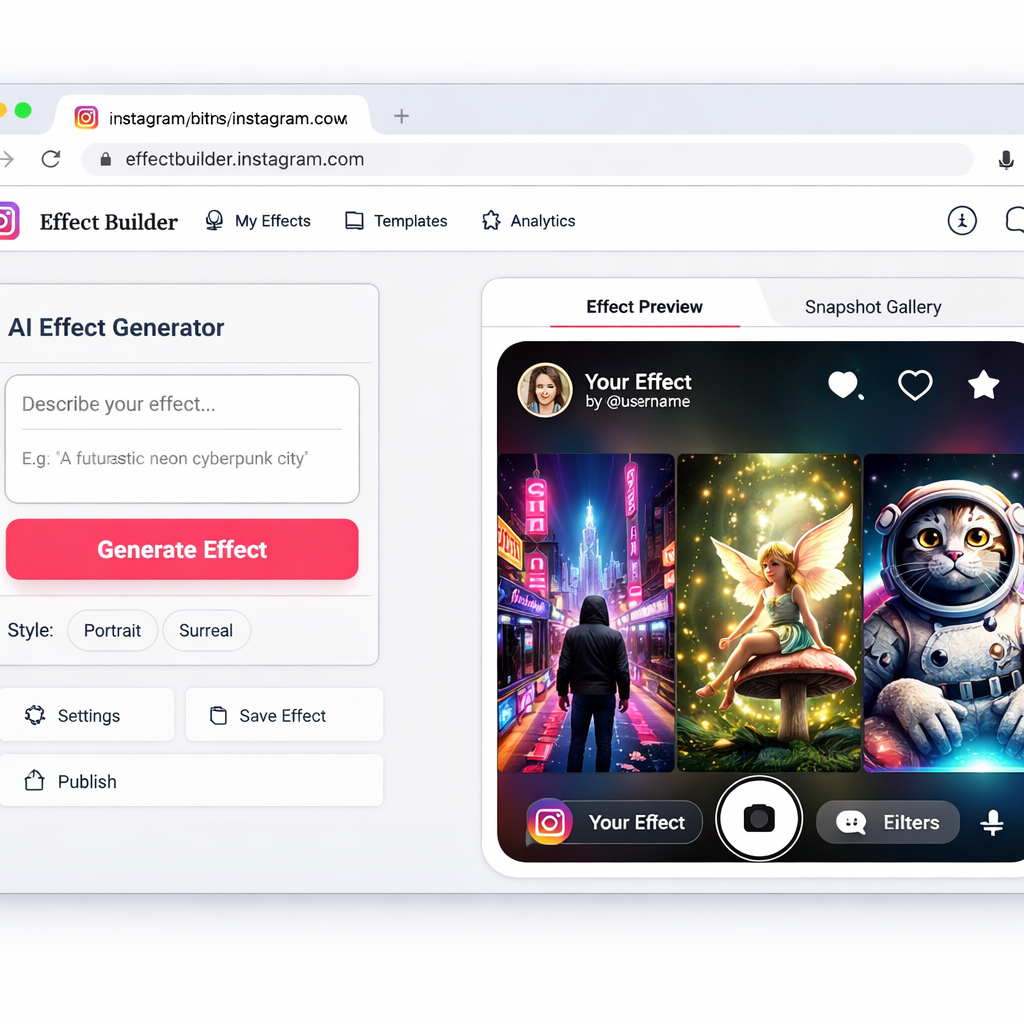
Meta has rolled out a new web-based tool called Effect Builder, allowing Instagram users to generate visual effects for Stories simply by typing a prompt. Designed as an expansion of the Instagram Edits app, Effect Builder aims to make effects accessible even to those without design or coding expertise. Users can describe the aesthetic they want, preview random effects on their own photos, and publish them for anyone on Instagram to use. When someone uses an effect, the creator’s profile is automatically credited.
The Edits app, introduced in 2025 for iPhone and recently released for Mac, is a free editing tool that supports features such as multiple aspect ratios, export options, uploads, and more precise controls including keyboard shortcuts. Effect Builder extends that editing ecosystem by letting users focus on visual effect creation using AI-generated imagery. The tool functions entirely online, removing the need for app-based downloads for effect sharing and publishing.
What’s New, and Who Can Use It
With the launch of Effect Builder, effects created via text prompts are not localized—once published, they’re available globally to all Instagram users who wish to use them in Stories. Whenever an effect is used, the creator’s username is linked so viewers can discover who made it. This transparency ensures credit is appropriately assigned.
As of now, the web app is restricted to adult users located in the United States. Meta hasn’t announced when it will expand to other regions or age groups. The move to release such a tool reflects an escalating trend in integrating AI-driven creativity tools directly into social media platforms.
Why This Matters
AI-based effects enhance engagement by enabling anyone to generate custom visuals without graphic design experience, potentially leveling the playing field for creators who lack technical skills. It also signifies Meta’s continued investment in embedding generative AI features into its products, challenging competitors in the social media space.
But the open disclosure of effect creators—a built-in attribution system—is especially relevant in a digital environment rife with plagiarism concerns. Allowing any user to publish effects that anyone else can use, while linking back to their profile, could help with transparency and content discoverability.
While the US-only rollout is limited, it may serve as a testing ground for feedback and performance before a broader release. It’s likely we’ll see more refined controls for content moderation, regional customization, and perhaps integrations that bring Effect Builder into Instagram’s mobile apps.
Analytical Angle: Effect Builder is more than just another tool—it represents Meta’s strategy to democratize visual content creation using AI. By merging AI prompt-based generation with social media effect sharing and attribution, Instagram could set a new standard in the creator economy. Moving forward, the key will be balancing open creativity with moderation and expanding access while retaining a consistent user experience. Watch for how Effect Builder evolves globally, and how it stacks up against similar features from TikTok, Snapchat, and emerging AI-driven creative platforms.