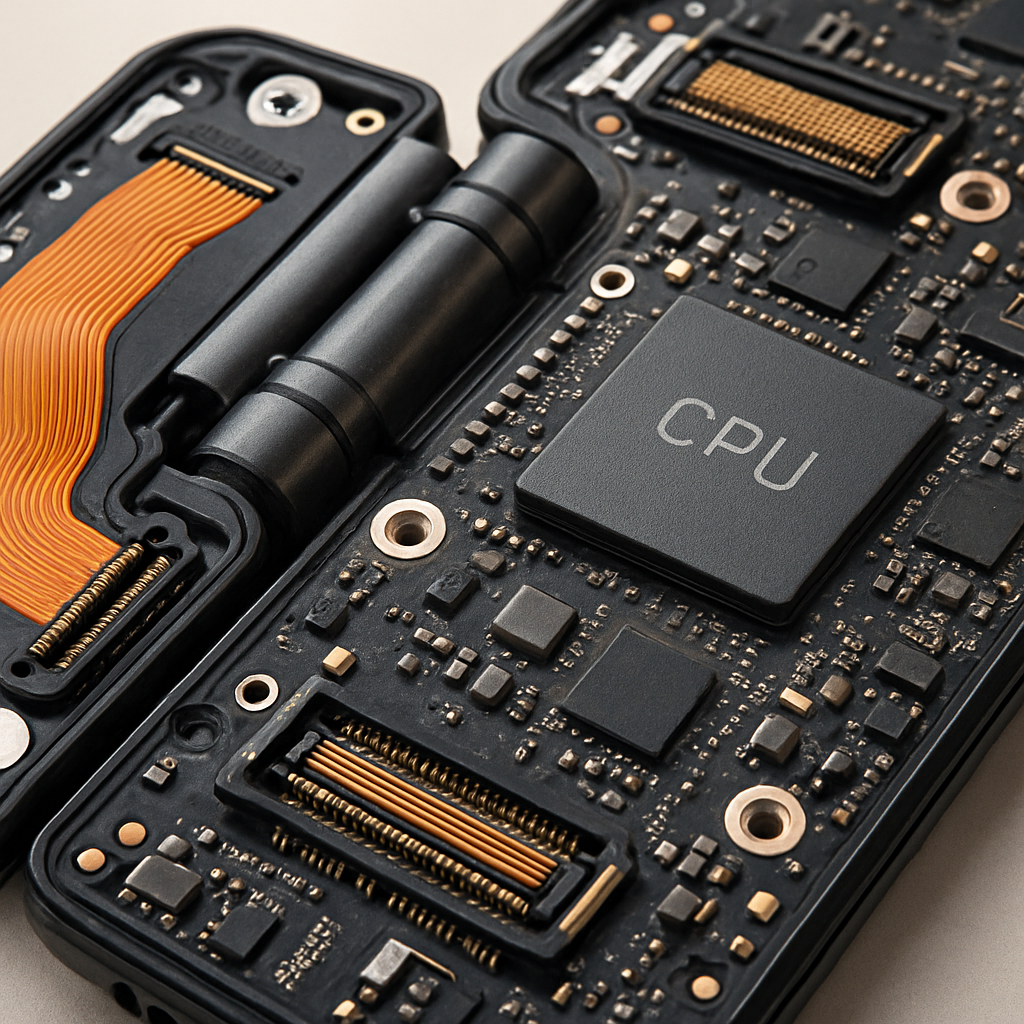
New images recently circulated on X and Chinese tech forums claim to show the motherboard and internal layout of Apple’s much-anticipating foldable iPhone. The visuals—including a video and annotated images—highlight key components like what’s labeled as the CPU, hinge connector, and various ribbon cable slots, pointing toward advanced internal design. These posts also overlap with a repair parts vendor’s schematic, which aligns many of the same parts. The authenticity hasn’t been confirmed, but they align closely with previous rumors, suggesting Apple’s first foldable device is nearing production.
What’s Expected Based on These Leaks
Based on the components identified and earlier speculation, this foldable iPhone is expected to sport a 5.5-inch cover display and—and when unfolded—a 7.8-inch main screen. Under the hood, rumors suggest it’ll use Apple’s A20 Pro chip, pack a 5,000mAh battery, and house a dual rear camera setup centered on a 48-megapixel sensor. Selfie cameras on both the inner and outer displays are also expected to land at around 18 megapixels each. Pricing whispers put the new handset at a starting point close to $2,000.
Launch Timing & Industry Signal
Sources point to the foldable iPhone being unveiled alongside the iPhone 18 Pro line next month. If that holds, it would mark a major milestone for Apple, entering the foldable segment during a period with rising competition and strong user interest in dual-screen designs. These leaks—whether fully accurate or misdirected—paint a picture almost finalized enough for mass production.
This alleged motherboard spill matters because it suggests Apple is working through the hard engineering problems: hinge mechanics, compact component placement, and perhaps cooling or battery placement. If these leaked schematics reflect the final internal architecture, they could offer clues about weight distribution, repairability, and performance characteristics. The convergence of multiple sources showing nearly the same layout strengthens the possibility that these are not random prototypes but refined, close-to-release designs.
Why this matters: foldable phones remain niche, often due to durability, cost, and complex engineering. If Apple’s version succeeds in merging usability, strong build, and high-end specs without massive price inflation, it could recalibrate consumer expectations in this emerging category. What to watch: whether Apple confirms screen sizes or chip specs, how pricing ultimately lands (especially outside the U.S.), and how the “final vs leaked” version compare once the device officially arrives.