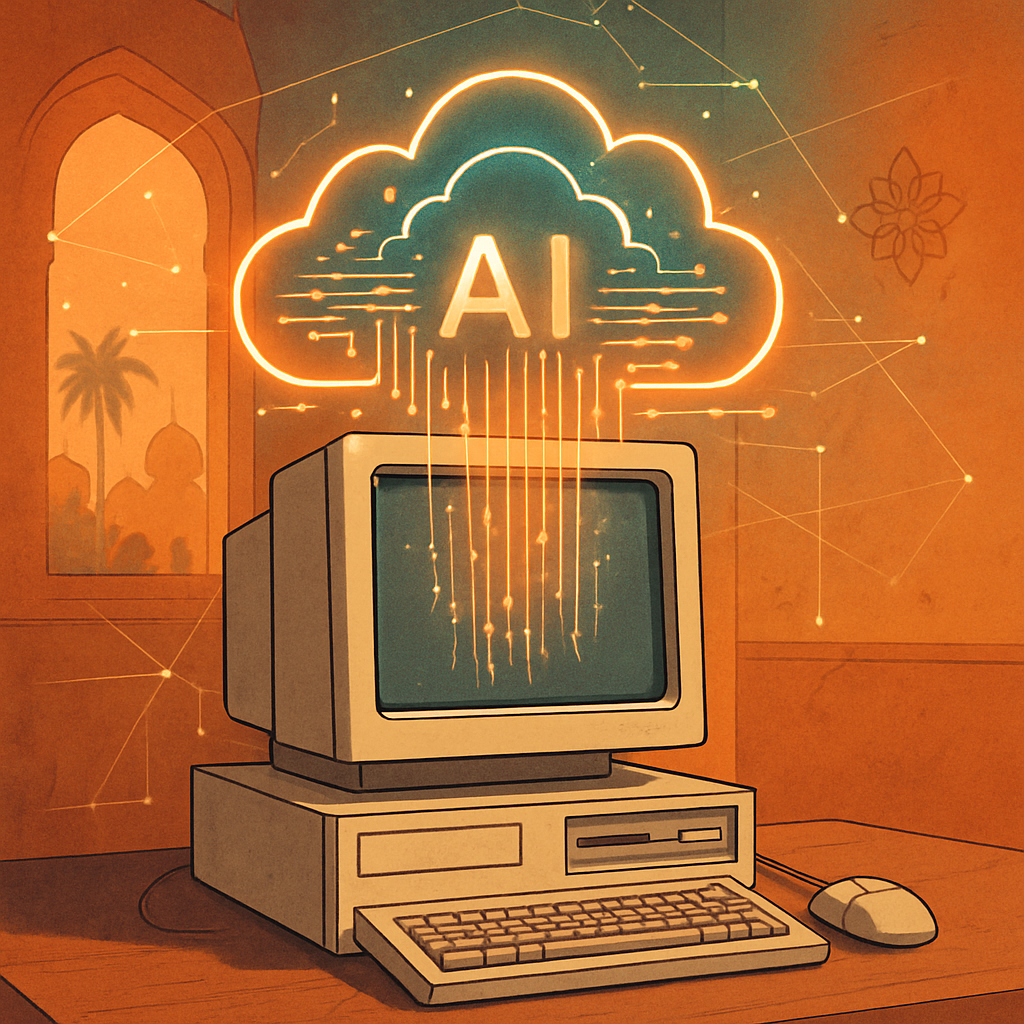
Reliance Jio, led by India’s wealthiest business figure, is opening up its JioPCcloud PC service to any internet-connected user in India—no broadband provider affiliation needed. Previously reserved for its own subscribers, the move could let even aging machines run modern AI applications without hardware upgrades. Plans start at roughly ₨1,000 (~US$11) for two months and go up to ₨5,000 annually for more premium specifications.
Virtual PCs for Legacy Devices
Launched in July 2025, JioPC streams a virtual PC from Reliance’s cloud infrastructure to devices that would struggle with newer software demands. One plan delivers 8 virtual CPUs, 16GB RAM, and 1TB storage—enough to handle many AI tools—while a lower-tier option offers 8GB RAM and 500GB storage. All you need is a stable internet connection.
Reliance insists even PCs up to eight years old can tap into this power through JioPC, sidestepping the usual five-to-six-year replacement cycle most Indian consumers follow. Businesses are also holding back hardware refreshes: enterprise upgrades have stretched to about four years, up from three.
Pros, Trade-Offs & the Competitive Landscape
Experts say this model transforms computing from a one-time purchase into a service. For many students, low-income households, or second-line users, paying for virtual performance may make more sense than investing in expensive new hardware.
But it’s not without limits. JioPC depends entirely on reliable internet access—something not always available in smaller towns or rural areas. Also, unlike physical PCs built for the new AI wave, JioPC doesn’t highlight any embedded AI accelerators, which are key for on-device generative AI tasks. Refurbished PCs remain a strong, offline alternative.
Market Size & Timing
In 2025, India had over 65 million PCs in active use—34 million for personal use and 31 million commercial machines. Market analysts expect that number to rise to 69 million by the end of 2026.
The timing is critical. Replacement cycles are stretching out due to economic pressures and supply constraints, meaning there’s a growing backlog of machines that struggle to keep up with AI demands. Jio hopes to fill the gap by delivering cloud-level power over the network, letting old PCs keep breathing.
For Jio, this is more than a product launch—it challenges established norms in Indian computing. It asks consumers to buy time and capability instead of hardware. The bet is whether virtual PCs can feel like reliable daily tools rather than occasional substitutes. If successful, JioPC could mark a shift in how computing resources are consumed and who gets access to AI, bypassing hardware limitations in some of India’s most remote and underserved regions.