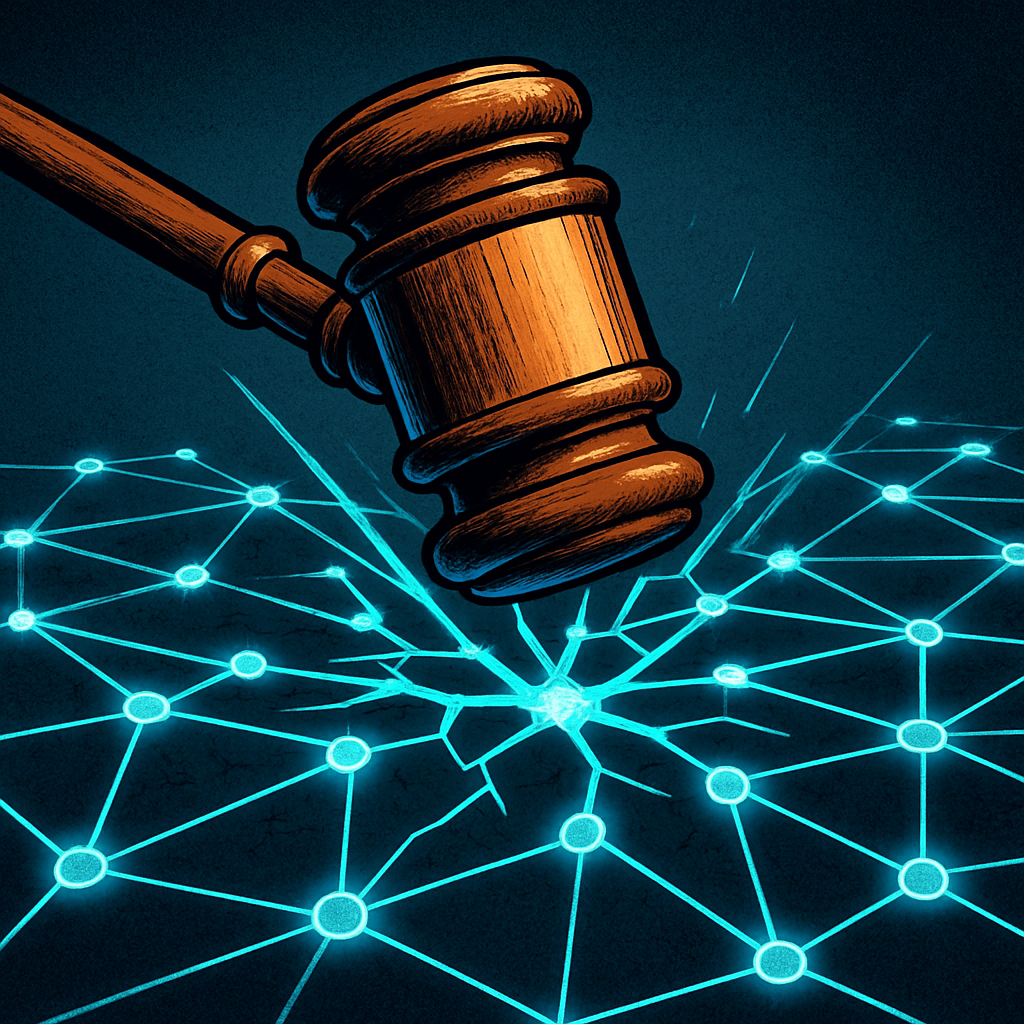
India’s Ministry of Home Affairs has directed GitHub to disable access to repositories associated with Bitchat, a decentralized messaging application developed by Jack Dorsey. The order, issued by the Indian Cyber Crime Coordination Centre (I4C), cites concerns that Bitchat’s anonymous and decentralized nature could facilitate unlawful activities and impede lawful surveillance efforts.
Bitchat enables users to communicate over Bluetooth mesh networks without relying on internet connectivity or centralized servers. This functionality allows for encrypted, registration-free messaging, which authorities fear could be exploited to bypass internet shutdowns and organize illicit activities. The government’s notice specifically highlights the app’s potential to obstruct lawful interception, attribution, and investigations.
The directive comes amid ongoing student-led protests in New Delhi, where demonstrators have been advocating for the resignation of Education Minister Dharmendra Pradhan following alleged examination paper leaks. In response to the unrest, authorities have imposed internet restrictions in parts of the city. Reports indicate that some protesters have turned to offline messaging apps like Bitchat and Briar to maintain communication during these shutdowns.
Digital rights organizations have raised concerns about the legal basis of the government’s order. The Internet Freedom Foundation (IFF) has labeled the move as unconstitutional and authoritarian, arguing that the cited legal provisions do not clearly authorize the removal of an entire software project based on its functionality rather than specific illegal content. The IFF emphasizes that such actions could set a precedent for the suppression of open-source software and free speech.
Jack Dorsey publicly shared the government’s notice on X, stating that the Indian government opposes technologies like Bitchat and seeks their removal. The notice demands that GitHub disable access to three specific Bitchat repositories within three hours, invoking Section 79(3)(b) of the Information Technology Act, 2000, and Rule 3(1)(d) of the 2021 IT Rules.
In recent days, Bitchat has experienced a surge in popularity in India. Data from market intelligence provider Sensor Tower indicates that between July 17 and July 23, India accounted for approximately 85% of the app’s global downloads, a significant increase from about 1% in the preceding 30 days. The app was downloaded over 91,000 times in India during this period, with daily active users reaching more than 330,000 on July 23.
This situation underscores the tension between governmental efforts to regulate digital platforms for security purposes and the principles of free speech and open-source development. The outcome of this directive could have significant implications for the future of decentralized technologies and their governance in India.