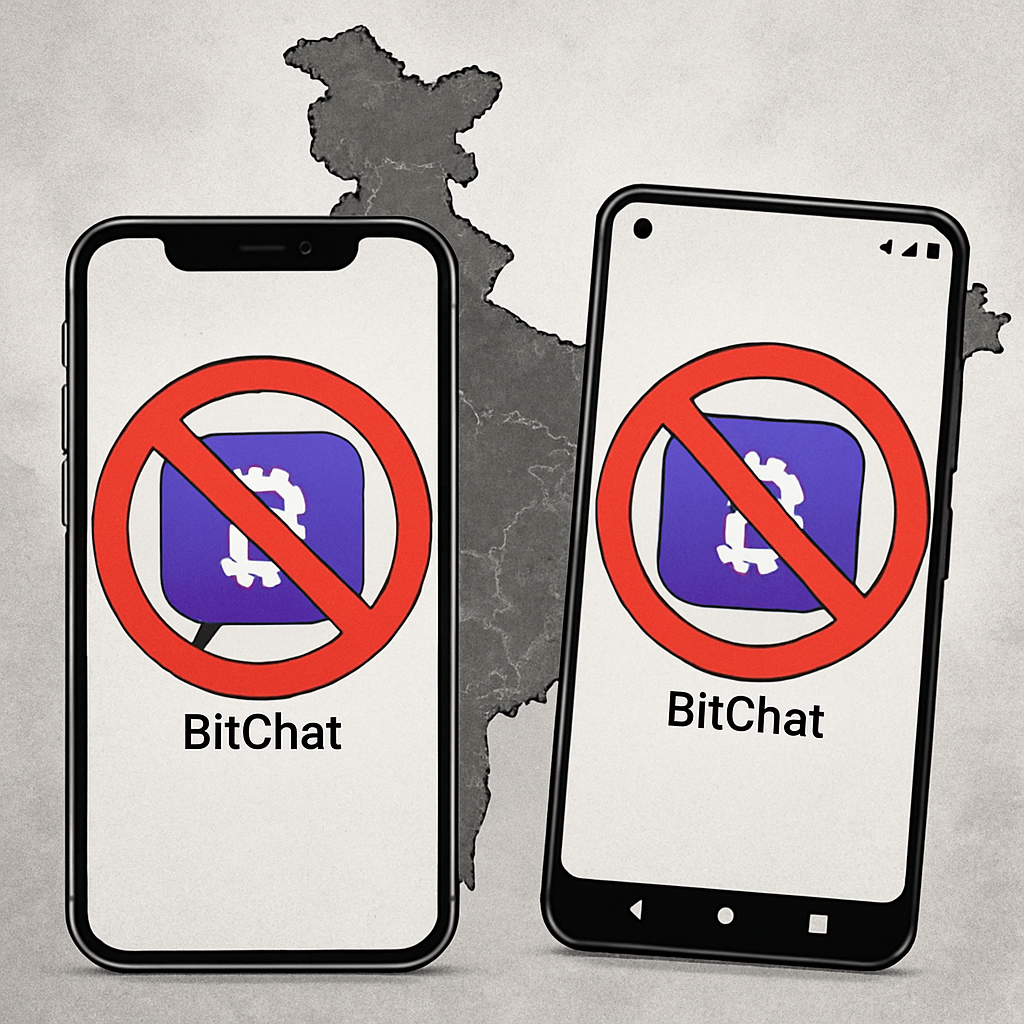
Bitchat, a messaging app co-founded by Jack Dorsey designed for encrypted peer-to-peer communication without relying on internet or centralized servers, has vanished from both Apple’s and Google’s app stores in India. This follows an order from India’s central government under Section 69A of the Information Technology Act. The takedown affects both public availability and TestFlight access for iOS users in India, while Apple confirmed the app remains accessible elsewhere globally. Android users in India can no longer download Bitchat from Google Play, and several internet service providers have blocked access to its website, though it’s unclear whether this part was legally mandated.
The Legal Pushback
Earlier in July 2026, Indian authorities instructed GitHub to remove Bitchat’s open-source repositories. The justification cited was that the app’s architecture hampers law enforcement’s ability to trace users or intercept messages—features seen in its ability to function even during internet shutdowns. At the time, the government used provisions concerning intermediary liability under the IT Act. The current order, however, leverages Section 69A, which governs the blocking of online content deemed unlawful.
Public and Political Consequences
Interest in Bitchat has surged among Indian users—even more so during recent protests over alleged voter roll manipulations—due to its resilience in outages and curbs on internet access. Data shows that between July 17 and 23, 2026, roughly 85% of global downloads came from India, a jump from about 1% in the preceding 30 days. Critics, including digital rights groups, say the government has provided neither the text of the blocking order nor proof of any unlawful content justifying it. They argue that banning an app for its ability to operate offline exceeds the scope of Section 69A.
India has witnessed youth-led demonstrations in recent days sparked by claims of voter registry tampering. In response, protest hotspots—especially around Jantar Mantar in New Delhi—saw internet shutoffs for about 12 hours, pushing protesters toward tools like Bitchat and rival platforms such as Briar to communicate when online networks were disabled.
The government’s action comes amid broader concerns over digital freedoms in India. The central IT ministry, Apple, and Google have not issued public explanations beyond official notices. Observers are scrutinizing the legal basis for the ban, with human rights advocates emphasizing transparency and proportionality in government interventions under technology laws.
What this means: India’s removal of Bitchat reflects growing tensions between state control and decentralized tech. Technologies that offer offline or mesh-based communication are increasingly viewed by authorities with suspicion when they evade surveillance or censorship. As tensions escalate—especially during protests or political unrest—expect more regulatory crackdowns. What remains to watch is whether legal challenges succeed and how companies respond to balancing user privacy with compliance under sweeping internet laws.


