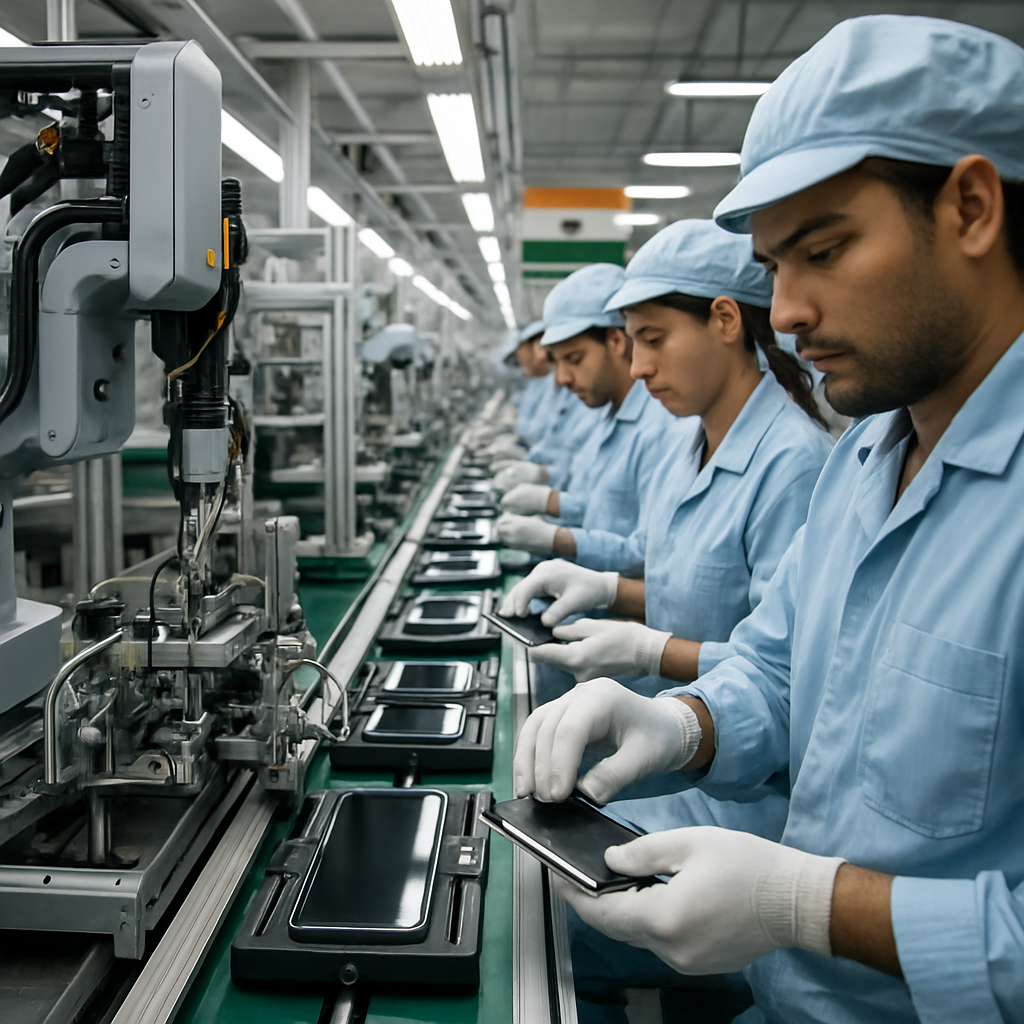
India has announced a substantial investment aimed at bolstering its smartphone manufacturing capabilities, seeking to reduce reliance on China and strengthen its position in the global electronics supply chain. The government introduced the Mobile Phone Manufacturing Scheme, allocating ₹625 billion (approximately $6.5 billion) over five years. This initiative offers incentives ranging from 2.25% to 5% based on eligible sales, with an additional 1.5% for sourcing key components and sub-assemblies domestically.
In addition to this, India has committed ₹1.28 trillion (around $13.3 billion) to enhance domestic semiconductor manufacturing. This expansion builds upon a $10 billion chip incentive program launched in 2021, now providing greater support for chip equipment, materials, design, and research.
Over the past decade, India has emerged as a significant hub for smartphone manufacturing, attracting production from major companies such as Apple, Samsung, and Chinese brands like Xiaomi, Oppo, and Vivo. Apple began assembling iPhones in India in 2017 and has since expanded production through suppliers including Foxconn and Tata Group. Currently, about 25% of Apple’s iPhones are manufactured in India, reflecting the company’s efforts to diversify its supply chain beyond China.
Recent developments indicate a broader manufacturing push. The Indian government approved a joint venture between China’s Vivo and Indian electronics manufacturer Dixon Technologies, aiming to produce smartphones domestically. Additionally, the government has removed import duties on certain phone and electronics components, a move that could lower production costs for companies operating in India.
Despite these efforts, India faces challenges in matching China’s dominance in smartphone manufacturing. In 2025, China accounted for 63% of global smartphone production, while India’s share stood at 18%, according to Counterpoint Research. This disparity highlights the extensive manufacturing and supplier ecosystem that India aims to develop.
The new initiatives represent a strategic shift from merely assembling devices to fostering deeper research and development, as well as increasing local value addition. By strengthening its manufacturing and export capabilities, India aims to provide companies like Apple with greater confidence to diversify production away from China and encourage supply-chain partners to source more components locally.
The Mobile Phone Manufacturing Scheme is set to run through March 2031, with the Indian government projecting mobile-phone production during this period to total approximately ₹39 trillion (around $405 billion). The program is also expected to create about 60,000 direct jobs, contributing to the country’s economic growth and technological advancement.
These substantial investments underscore India’s commitment to becoming a global leader in smartphone manufacturing. By enhancing domestic production capabilities and reducing dependency on imports, India is positioning itself as a competitive alternative to China in the electronics manufacturing sector. This strategic move not only aims to attract more global manufacturers but also to strengthen the country’s economy and technological infrastructure.