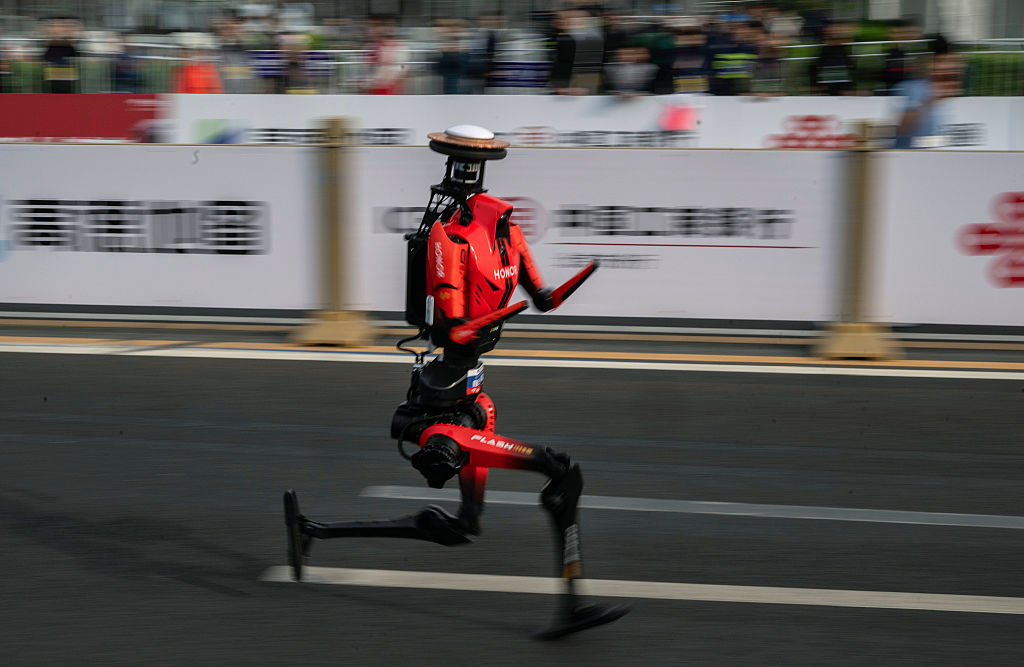
Robots Surpass Human Records at Beijing Half-Marathon
In a groundbreaking event that underscores the rapid advancements in robotics, a humanoid robot has outpaced human records at the Beijing Half-Marathon. The autonomous robot, developed by Chinese smartphone manufacturer Honor, completed the 21.1-kilometer race in an impressive 50 minutes and 26 seconds, significantly surpassing the human world record of 57 minutes recently set by Jacob Kiplimo.
This remarkable achievement highlights the swift progress in robotic capabilities. Just a year prior, the fastest robot in the same marathon finished in two hours and 40 minutes, a time that was considered unimpressive for human runners. The leap from that performance to breaking human records within a year is a testament to the rapid evolution in the field of robotics.
The event featured a diverse array of participants, with approximately 40% of the robots operating autonomously and the remaining 60% being remote-controlled. Notably, another robot from Honor completed the race in 48 minutes and 19 seconds. However, this robot was remote-controlled, whereas the 50:26 robot operated autonomously, leading to its victory based on weighted scoring criteria.
Despite these successes, the race was not without its challenges. Some robots faced difficulties, with one falling at the starting line and another colliding with a barrier. These incidents underscore the complexities involved in developing robots capable of navigating dynamic environments and maintaining balance over extended distances.
The Beijing Half-Marathon serves as a significant platform for showcasing advancements in humanoid robotics. The substantial improvements observed between the 2025 and 2026 races reflect the rapid pace of innovation in this field. As robots continue to achieve feats once thought exclusive to humans, questions arise about the future roles of robotics in sports and other human-centric activities.
The implications of such advancements are profound. Beyond the realm of sports, humanoid robots are being developed for various applications, including search and rescue missions, healthcare assistance, and industrial tasks. The ability of robots to perform complex physical activities autonomously opens new possibilities for their integration into daily life.
However, these developments also prompt discussions about the ethical and societal impacts of robotics. As robots become more capable, considerations about their roles, the potential displacement of human workers, and the need for regulatory frameworks become increasingly important.
In conclusion, the performance of humanoid robots at the Beijing Half-Marathon marks a significant milestone in the field of robotics. The ability to not only match but surpass human athletic performance in such a short timeframe highlights the rapid advancements being made. As technology continues to evolve, it is crucial to engage in thoughtful discussions about the integration of robotics into society and the implications for the future.