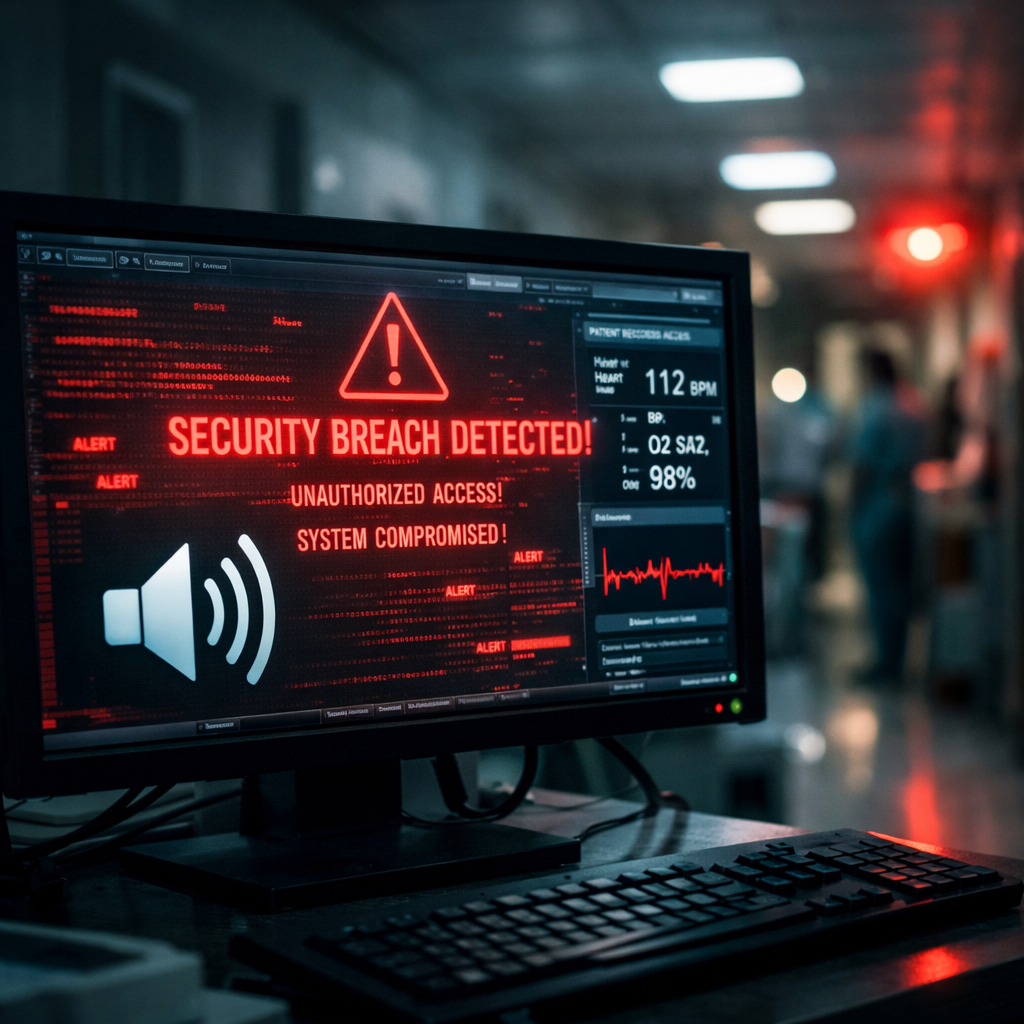
Hospitals and universities across the U.S. have been targeted in a wave of disturbing cyberattacks where hackers calling themselves “BYOD” played ransom messages over public speakers on infected computers, rather than quietly encrypting systems first.
The Audio Attacks
At the University of New Mexico Health Sciences Center on October 26, users heard audio claims that patient, employee, and student data had been stolen. And two weeks later, at Vanderbilt University, a voice recording declared, “You have been compromised by BYOD.” These audio messages made the attacks impossible to ignore — pulling what is typically private until investigation into public view.
Operational Disruptions & Claims
The impact has been serious. New Mexico’s Level 1 trauma center diverted ambulances for two hours, and over 30 clinics canceled appointments and outpatient surgeries. Vanderbilt shut down all university devices and disconnected from campus Wi-Fi while its IT teams investigated, though they restored Wi-Fi and services later in phases.
BYOD claims that UNM had 36,000 systems compromised, including Microsoft Entra and Oracle databases involved. However, UNM has stated that the incident affected end-user devices only, not core servers or infrastructure.
At Vanderbilt, the group alleges they stole over one million Social Security numbers and encrypted databases, but these claims remain unsubstantiated in public reporting. In both examples, the attackers used loud audio messages to make clear their presence before institutions had fully assessed the scope.
Other Victims and Tactics
Researchers connected the BYOD campaign to at least nine organizations between October 5 and November 9, 2026. Among them, Michigan State University reported unexpected login prompts in early October, followed by a campus-wide password reset and a claim by BYOD of having stolen data belonging to 1.3 million students — a claim yet to be verified. MSU clarified there was no evidence that their central Active Directory was compromised or any data accessed.
The BYOD group claimed multiple means of compromise: unusual file or permission changes, new administrative privileges, and bulk exports of data. The only clear indicator at Vanderbilt was the ransom note filename, “README_BYOD_31.txt,” but no malware samples or cryptographic hash values have been shared publicly. Network indicators like IPs and domains tied to the group remain unverified.
What Experts Recommend
Researchers advise institutions to monitor activity across identity, endpoint, and cloud logs. It’s crucial to review everything accessed by an account before its password was changed, including shared files and admin settings.
Hospitals especially need playbooks for when internal networks are compromised — rehearsing how to operate when computers are offline, how to continue patient care, and how to manage public communications. Providing clear routes for students, patients, or staff to report ransom claims or unusual login prompts is also vital, especially ahead of any public attack disclosures.
Indicators of compromise have so far been limited. No malware hashes or domains tied to BYOD are verified. The known IOCs include: the unusual playing of audio messages across multiple machines, repeated login prompts, brand new unexpected administrative privileges, and files being bulk downloaded or exported beyond normal workflows.
This campaign highlights a growing trend in ransomware: using noise, visibility, and public pressure rather than stealth to force attention. As institutions scramble to respond not just to breaches but to how and when the public is alerted, readiness across identity, network, and communication systems will make all the difference. Expect more cases where attackers weaponize visibility itself.