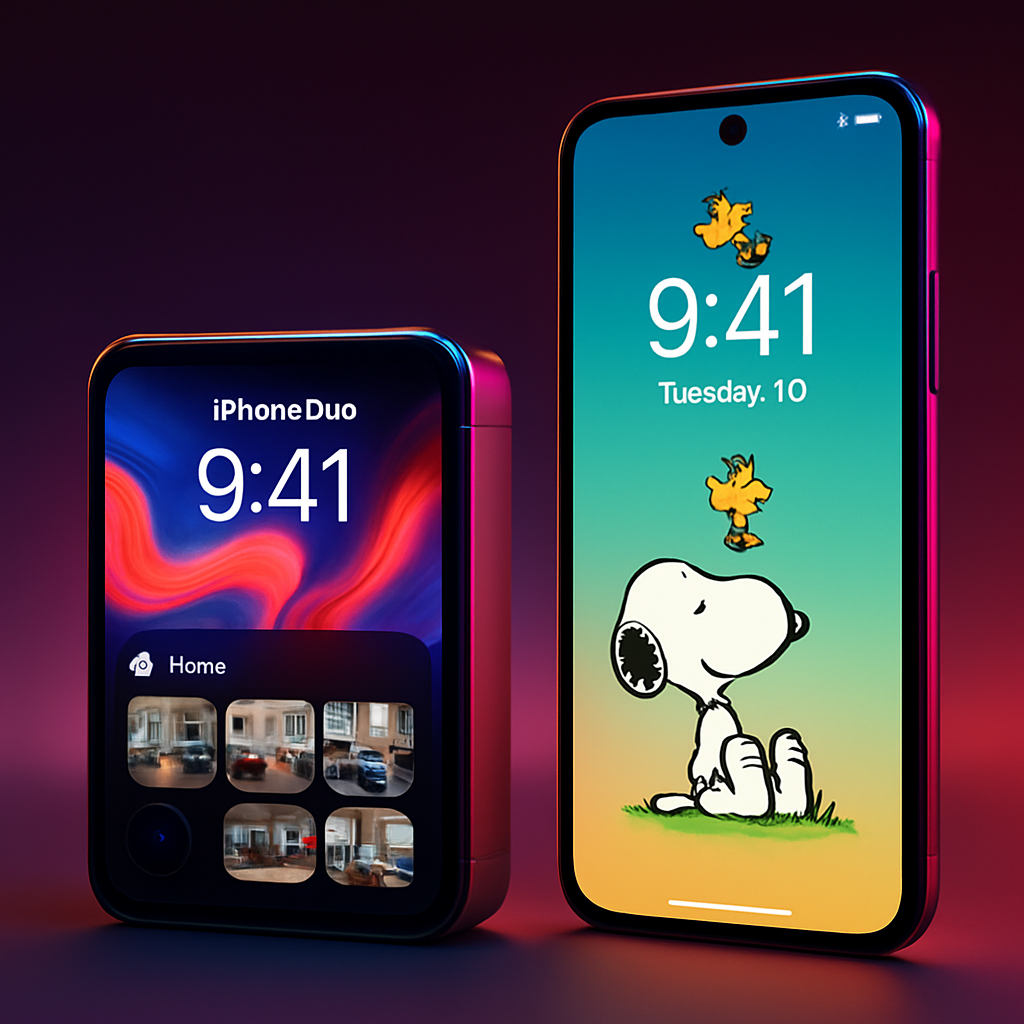
The iPhone Duo, set to launch on October 23, is showing off new hidden features that weren’t announced at its initial reveal. Buried in Apple’s code are references to five previously unseen StandBy views—called Home Camera, Home Modular, Flow, Fade, and Snoopy—that will join existing options when the device finally arrives. The discoveries come from a leak via Apple’s internal files visible in previews of iOS 27.1.
More StandBy options & customization
StandBy mode on the iPhone Duo works whether the device is charging or not—a departure from earlier iPhones. The mode supports multiple physical configurations: folded or unfolded, in landscape or portrait orientations, with “standing” and “seated” postures each triggering different display behaviors. Apple already demonstrated several StandBy views during its unveiling, but these five new faces were not among them.
The leaked StandBy view names hint at what’s ahead. “Home Camera” appears to allow viewing of a single smart home camera feed, while “Home Modular” could offer either a camera grid or custom home control modules. “Flow” might show dynamic, responsive art, and “Fade” could be a transition-style visual, though exact behavior is unclear. “Snoopy” is expected to resemble the tvOS screensaver-style animations.
These faces will join several views that were already announced or seen, including Analog, Digital, Classic Calendar, Weather, Photos, Memories, Shared Albums, and Modular. The leak also shows strings and assets in Apple’s software that suggest a new customization interface specifically for iPhone Duo StandBy views.
Why this matters
Even before its official launch, iPhone Duo is shaping up to be Apple’s most flexible phone yet—not just because of its two-display form factor but through how it adapts visually and functionally. StandBy mode represents a growing emphasis on ambient device experiences: Apple’s pushing to make your devices not just tools but living parts of your space.
These new faces may seem cosmetic, but they’re part of a bigger shift. As phones gain more display real estate and sophistication, how those screens behave when you aren’t actively using them (or when plugged in) becomes a key UX battleground. A richer, more customizable StandBy could influence how people interact with their devices at rest.
For users curious about Apple’s path, these leaks point to how much design and software polish happens behind the scenes. When iPhone Duo lands, its StandBy mode may turn out to be a strong selling point—something worth exploring rather than just another glance. What will matter most is how seamless and useful these standby views feel in daily use: do they inform, delight, or distract? That’s what we’ll be watching in the lead-up to release.